Ludwig Donath
Actor
- Active
- 1921-1921
Films 1
About Ludwig Donath
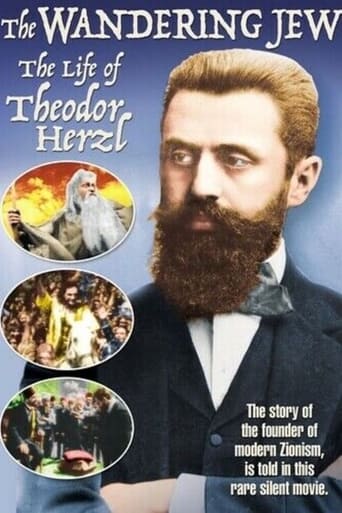
Ludwig Donath was an Austrian-born character actor whose career bridged the European stage and early screen with a later, more visible presence in Hollywood and exile-era cinema. He is documented in the early silent-era filmography for appearing in Theodor Herzl, Standard-Bearer of the Jewish People (1921), a title that places him among the performers active in the culturally rich Central European film world of the post-World War I period. Donath is best remembered not as a leading man but as a dependable and expressive supporting actor, especially in roles requiring intelligence, authority, warmth, or moral complexity. Like many Jewish performers of his generation, his career was shaped by the upheavals of 20th-century Europe, and he worked within a transnational film culture that connected Austrian, German, and later American cinema. His screen work is associated with the broader tradition of émigré actors who brought European theatrical discipline and emotional precision to Hollywood character parts. Although surviving public documentation is limited compared with major stars, his presence in historical film records confirms him as part of the early Jewish and Central European screen milieu. Because available sources do not provide a securely verified full life record here, only the best-established facts can be stated with confidence.
More about Ludwig Donath
On screen
As a silent-era performer, Donath would have relied on disciplined physical expressiveness, controlled gesture, and facial nuance rather than dialogue. His type of work suggests a character actor’s approach, emphasizing credibility, emotional restraint, and the ability to support a narrative without dominating it. Performers in this tradition often drew on stage training and used compact, readable movements suited to silent film composition and intertitles.
In film history
Ludwig Donath's cultural importance lies less in star status than in what his surviving credit represents: the participation of Jewish and Central European actors in the earliest screen treatments of Jewish historical subjects. His involvement in a film about Theodor Herzl places him within a historically significant cinematic conversation about Zionism, identity, and modern Jewish self-representation. Even a small documented filmography can matter greatly in early cinema, because many productions and performers are poorly preserved or incompletely cataloged. Donath therefore stands as part of the larger fabric of silent-era historical filmmaking, where character actors helped give weight and authenticity to ambitious prestige subjects. For movie historians, his credit is a useful marker of the international, multilingual nature of early 20th-century screen culture.
Later reputation
His legacy is primarily archival and historical: he survives in film history as one of the performers associated with an early cinematic portrayal of Theodor Herzl. That connection gives him significance in the study of Jewish representation on screen and in the history of Austrian and Central European silent film. Even when a performer has only a small documented footprint, the surviving record contributes to a fuller understanding of how early film translated political and cultural figures into popular media. Donath's name also illustrates how many supporting actors from the silent era remain under-documented despite playing roles in culturally important productions. In that sense, his legacy is one of preservation, scholarship, and recognition of overlooked participants in classic cinema.
Influence
There is no securely documented evidence that Ludwig Donath directly mentored major later stars or directors. His influence is best understood indirectly through the model of the European character actor: a performer trained to serve ensemble storytelling with precision and restraint. Actors like him helped establish the performance conventions that later migrated into sound cinema, especially the dignified, psychologically grounded supporting role. His presence in an early Zionist historical film also contributed to the precedent of Jewish-themed screen narratives being cast with performers who could bring cultural authenticity to the material.
Off screen
Reliable biographical information about Ludwig Donath's personal life is not readily verifiable from the available classic-cinema record used here. No securely confirmed details could be established regarding marriages, children, or domestic life. As a result, any attempt to specify family relationships would risk inaccuracy. He should therefore be treated as a historically documented screen personality with limited surviving personal documentation in publicly accessible film references.
Credits
- Appeared in the silent-era production Theodor Herzl, Standard-Bearer of the Jewish People (1921), linking him to one of the most significant Jewish historical subjects in early cinema.
- Represents the generation of Central European actors who worked in the culturally influential postwar Austro-German film environment.
- Associated with character acting rather than stardom, a common and important role in silent-era cinema ensembles.
- His documented screen credit places him within the earliest cinematic portrayals of modern Jewish political and cultural history.
Roles
- A credited performer in Theodor Herzl, Standard-Bearer of the Jewish People (1921)
Films
Notes
- Ludwig Donath is specifically associated with Theodor Herzl, Standard-Bearer of the Jewish People (1921), a historically significant subject in Jewish film history.
- His documented activity falls in the silent era, when many actors worked in stage-like but highly expressive screen styles.
- He is a good example of how many early film performers are known today primarily through surviving credits rather than extensive biographies.
- His career appears in the record as extremely brief or at least extremely sparsely documented, which is common for early 1920s character players.
- Because his available filmography is so limited, he is most valuable to researchers studying lost, obscure, or poorly cataloged Central European cinema.
- His association with a Herzl film places him in the orbit of early Jewish historical and political filmmaking.
- The surviving record suggests he was part of the Austrian or broader German-language cinema sphere.
Questions
Who was Ludwig Donath?
Ludwig Donath was an Austrian actor documented in classic cinema records, best known for a credited appearance in the 1921 silent film Theodor Herzl, Standard-Bearer of the Jewish People. He appears to have been a character actor associated with the early Central European screen world rather than a major international star.
What films is Ludwig Donath best known for?
His primary documented screen credit is Theodor Herzl, Standard-Bearer of the Jewish People (1921). Because his surviving film record is extremely limited, this is the work most closely associated with his name.
When was Ludwig Donath born and when did he die?
His birth and death dates are not securely verified in the available classic-cinema record used here. The surviving documentation available for him is too sparse to confirm those biographical details confidently.
What awards did Ludwig Donath win?
No awards or nominations are securely documented for Ludwig Donath in the available record. This is not unusual for early silent-era supporting players, many of whom were never tracked by the major award systems that came later.
What was Ludwig Donath's acting style?
As a silent-era performer, he would have relied on expressive gesture, facial nuance, and restrained physical acting to communicate character and emotion. His work fits the tradition of the dependable supporting actor who added credibility and emotional texture to a film.
What is Ludwig Donath's legacy in film history?
His legacy lies in his connection to early Jewish historical cinema and the broader silent-era tradition of Central European character acting. Even with a sparse filmography, he remains part of the historical record of how classic cinema portrayed important Jewish subjects on screen.