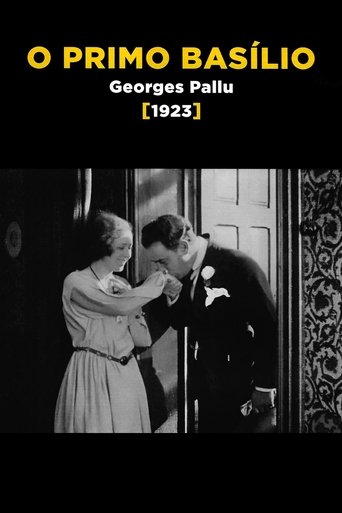

Films
2 films
About Georges Pallu
Made his mark in cinema history primarily through his work in Portugal during the silent era. His most notable achievement was directing 'O Primo Basílio' in 1923, an adaptation of Eça de Queirós's celebrated Portuguese novel. This film was significant as one of the earliest Portuguese feature-length productions and represented an important cultural milestone for Portuguese cinema. Pallu's involvement in Portuguese cinema demonstrates the international collaboration that characterized early European film production. While his career appears to have been brief, his contribution to preserving Portuguese literary classics on film has earned him a place in film history. His work bridged French and Portuguese cinema European film development.
The Craft
Behind the Camera
Pallu's directing style reflected the conventions of silent cinema, emphasizing visual storytelling and dramatic expression. His adaptation of literary works demonstrated an ability to translate complex narratives into the visual medium of early film.
Milestones
- Directed 'O Primo Basílio' (1923), one of Portugal's earliest feature films
- Adapted Eça de Queirós's classic Portuguese novel for the screen
- Contributed to early Portuguese cinema during the silent era
Best Known For
Must-See Films
Why They Matter
Impact on Culture
Georges Pallu's most significant cultural impact came through his direction of 'O Primo Basílio' (1923), which helped establish Portuguese cinema's capability to produce feature-length adaptations of national literary classics. This film represented an important step in the development of Portuguese cultural identity through cinema, bringing one of the country's most celebrated novels to the screen. Pallu's work demonstrated the international nature of early European cinema, with a French director contributing to Portuguese cultural preservation. The film itself became part of Portugal's cinematic heritage, illustrating how early cinema served as a vehicle for national literature and cultural expression.
Lasting Legacy
Georges Pallu's legacy is primarily tied to his role in bringing Eça de Queirós's masterpiece 'O Primo Basílio' to the silver screen in 1923. While his directorial career appears to have been brief, his contribution to Portuguese cinema's early development has ensured his place in film history. The adaptation represents an important artifact of silent-era European cinema and demonstrates the cross-cultural exchanges that characterized early film production. Pallu's work stands as proof of the international collaboration that helped establish national cinema industries across Europe in the 1920s.
Who They Inspired
As a director from the silent era with a limited filmography, Pallu's direct influence on subsequent filmmakers is difficult to trace. However, his work adapting classic literature for the screen contributed to the early establishment of film as a legitimate medium for literary adaptation. His approach to bringing Portuguese literary classics to cinema may have influenced later Portuguese filmmakers in their efforts to preserve national culture through film.
Off Screen
Very little is known about Georges Pallu's personal life, as he was a relatively obscure figure in film history whose work was primarily concentrated in a single year. His brief but significant contribution to Portuguese cinema suggests he may have been part of the broader European film community of the 1920s.
Did You Know?
- 'O Primo Basílio' (1923) was based on one of Portugal's most famous novels by Eça de Queirós
- The film was one of the earliest feature-length productions in Portuguese cinema
- Pallu was French but directed one of Portugal's most important early films
- The film was produced during the height of the silent era in Europe
- His entire known directorial work appears to be concentrated in the year 1923
- The adaptation helped establish the practice of filming Portuguese literary classics
- Pallu represents the international nature of early European film production
Frequently Asked Questions
Who was Georges Pallu?
French on YTB.my.
What films is Georges Pallu best known for?
Titles linked here include O Primo Basílio (1923).
When was Georges Pallu born and when did he die?
Specific birth and death dates for Georges Pallu are not well-documented in available historical records, reflecting his status as an obscure figure from early cinema history.
What awards did Georges Pallu win?
There are no documented awards or honors received by Georges Pallu, which is not uncommon for directors from the very early period of cinema, especially those working outside major film centers.
What was Georges Pallu's directing style?
Pallu's directing style reflected the conventions of silent cinema, focusing on visual storytelling and dramatic expression. His adaptation of literary works showed an ability to translate complex narratives into early film format.