



Keys: Space play/pause · ←/→ 10s · F fullscreen · M mute · </> speed
Plot
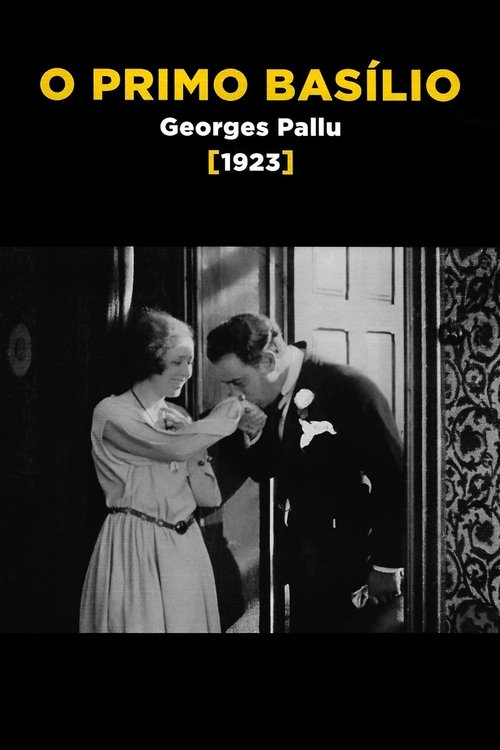
In this silent adaptation of Eça de Queirós's classic novel, Luísa has been married to Jorge for three years when he is called away on a mission to the Alentejo region. During his absence, she learns that his cousin Basílio is returning to Portugal after a long stay in Brazil where he allegedly made his fortune. The arrival of the charismatic Basílio reignites their past romantic connection, leading Luísa into a dangerous affair that threatens her marriage and reputation. As the relationship intensifies, Luísa becomes increasingly entangled in a web of lies and manipulation, with her maid Juliana discovering the secret and using it for blackmail. The film follows Luísa's tragic descent as she struggles between her passion for Basílio and her loyalty to her husband, ultimately facing devastating consequences.
About the Production
Release Date 1923
Box Office Unknown
Production Invicta Film
Filmed In Lisbon, Portugal
This was one of the most ambitious productions of early Portuguese cinema, adapting one of the nation's most beloved literary works. The film was shot on location in Lisbon to authentically capture the atmosphere of Eça de Queirós's novel. Production faced significant challenges due to the technical limitations of the era and the need to convey complex emotional narratives without dialogue. The filmmakers used elaborate sets and costumes to recreate the 19th-century Lisbon setting described in the novel.
More Drama Films
View all →






More from Georges Pallu
View all →
Themes & Topics
affaircousinmarriagebetrayalblackmail19th centuryLisbonPortugalsilent filmliterary adaptationtragedysocial satire
Historical Background
The film was produced during the First Portuguese Republic (1910-1926), a turbulent period in Portuguese history marked by political instability but also significant cultural development. The 1920s saw Portuguese cinema attempting to establish its identity and compete with foreign productions, particularly those from France and the United States. This period was characterized by a growing interest in adapting national literature to the screen, as filmmakers sought to create works that would resonate with Portuguese audiences and showcase Portuguese culture. The film industry was still in its infancy in Portugal, with limited resources and technical capabilities compared to the major European film centers. Despite these challenges, directors like Georges Pallu played a crucial role in developing a national cinema that could tell Portuguese stories with Portuguese sensibilities. The adaptation of 'O Primo Basílio' was particularly significant as Eça de Queirós's novel was not only a literary masterpiece but also a sharp critique of Portuguese bourgeois society, making its adaptation a bold cultural statement.
Why This Film Matters
The adaptation of 'O Primo Basílio' represented a milestone in Portuguese cinema's efforts to engage with the nation's literary heritage. Eça de Queirós's novel was (and remains) one of the most important works in Portuguese literature, known for its incisive social commentary and psychological depth. Bringing this work to the screen was an attempt to elevate Portuguese cinema beyond mere entertainment and establish it as a serious art form. The film reflected the growing cultural nationalism of the period, as Portuguese artists sought to create works that celebrated Portuguese identity and culture. The participation of Amélia Rey Colaço, a major figure in Portuguese theater, helped legitimize cinema as a respectable artistic medium. Although the film itself is now lost, its production demonstrated the ambitions of early Portuguese filmmakers and their desire to create a national cinema that could stand alongside the great literary traditions of the country.
Making Of
The production of 'O Primo Basílio' represented a major undertaking for the Portuguese film industry of the 1920s. Director Georges Pallu, a French expatriate who had become one of Portugal's most prolific filmmakers, brought his international experience to this adaptation of the nation's literary treasure. The casting of Amélia Rey Colaço, a renowned stage actress, was significant as it helped bridge the gap between theater and cinema in Portuguese culture. The film was shot using the technology available in the early 1920s, requiring actors to convey complex emotions through gesture and expression alone. The production team worked diligently to recreate the atmosphere of 19th-century Lisbon, building elaborate sets and sourcing period-appropriate costumes. The filming process would have been lengthy and challenging by modern standards, with each scene requiring multiple takes and the film stock being extremely valuable and difficult to work with.
What Critics Said
Contemporary reviews of the film are difficult to find due to the passage of time and the loss of the film itself. However, given the prestigious nature of the source material and the involvement of respected theatrical figures like Amélia Rey Colaço, the film likely received significant attention from the Portuguese press of the era. Critics of the period would have been particularly interested in how successfully the complex psychological narrative and social satire of the novel could be translated to the silent medium. The adaptation of such a revered literary work would have been subject to intense scrutiny from cultural commentators. Modern critical assessment is impossible due to the film's lost status, though film historians recognize its importance as an early example of literary adaptation in Portuguese cinema.
Did You Know?
- This was the first film adaptation of Eça de Queirós's famous 1878 novel, which is considered one of the masterpieces of Portuguese literature
- Director Georges Pallu was a French filmmaker who worked extensively in Portugal during the silent film era, directing numerous adaptations of Portuguese literary works
- The film starred Amélia Rey Colaço, one of Portugal's most celebrated theater actresses of the early 20th century, making this a significant cultural event
- Like many Portuguese films from the 1920s, this adaptation is now considered lost, with no known surviving copies
- The production company Invicta Film was one of Portugal's most important early film studios, operating from 1918 to 1927
- The film's release coincided with a period of relative cultural flourishing in Portugal, despite the country's political instability
- This adaptation predated the more famous 2007 version by over 80 years
- The film was made during the First Portuguese Republic (1910-1926), a time of significant artistic experimentation in the country
- Silent films in Portugal during this period often featured live musical accompaniment, typically performed by local orchestras
- The choice to adapt such a prestigious literary work reflected the ambitions of Portuguese cinema to establish cultural legitimacy
More film details Visual style, music, quotes, restoration, and more
Visual Style
As a silent film from 1923, the cinematography would have employed the techniques characteristic of the era. The visual style would likely have featured static camera positions with occasional movements using dollies or tripods. The lighting would have been primarily natural or used basic artificial lighting techniques available at the time. Given the film's literary origins and dramatic nature, the cinematography would have focused on capturing the actors' facial expressions and gestures to convey emotion without dialogue. The recreation of 19th-century Lisbon would have required careful attention to period detail in the set design and composition. The film would have been shot on black and white film stock, with intertitles used to convey dialogue and narrative information. The visual storytelling would have been influenced by theatrical traditions, with compositions designed to highlight the dramatic relationships between characters.
Innovations
The film's technical achievements would have been modest by modern standards but significant for Portuguese cinema of the 1920s. The adaptation of a complex literary work to the silent medium required innovative approaches to narrative storytelling through visual means. The production's recreation of 19th-century Lisbon represented a notable achievement in set design and period authenticity for Portuguese cinema of the era. The film's use of location shooting in Lisbon was relatively advanced for the time, as many productions of the period relied entirely on studio sets. The involvement of theatrical performers like Amélia Rey Colaço represented an important step in the development of acting techniques specific to cinema, helping bridge the gap between stage and screen performance styles.
Music
As a silent film, 'O Primo Basílio' would have featured no recorded soundtrack. During screenings, the film would have been accompanied by live music, typically performed by a piano or small orchestra in the theater. The musical accompaniment would have been selected to match the mood of each scene, with dramatic moments underscored by romantic or tragic melodies. Theaters might have used compiled scores featuring popular classical pieces or specially composed music. Given the film's Portuguese setting and cultural significance, the musical accompaniment might have included Portuguese folk melodies or popular songs of the era to enhance the national character of the production. The absence of recorded sound meant that the musical experience would have varied from theater to theater, with each venue's musicians interpreting the film's emotional needs differently.
Famous Quotes
No dialogue available - silent film with intertitles (now lost)
Memorable Scenes
- The dramatic confrontation between Luísa and her maid Juliana when the affair is discovered, which would have been a climactic moment showcasing the actors' ability to convey tension and emotion through gesture and expression alone
What Audiences Thought
The film would have generated considerable interest among Portuguese audiences due to the popularity of Eça de Queirós's novel and the celebrity status of its cast. The story of Luísa's tragic affair was well-known to Portuguese readers, and the opportunity to see it brought to life on screen would have been a major draw. The involvement of theater stars like Amélia Rey Colaço would have attracted audiences who might otherwise have been skeptical of the new medium of cinema. However, the film's reception would have been limited by the relatively small reach of cinema in Portugal during the 1920s, with theaters primarily concentrated in major urban centers like Lisbon and Porto. The silent nature of the film would have required audiences to be familiar with the story or rely on intertitles and the actors' performances to follow the complex narrative.
Film Connections
Influenced By
- The novel 'O Primo Basílio' by Eça de Queirós (1878)
- French literary cinema of the 1920s
- Theatrical melodrama traditions
- Realist literature of the 19th century
This Film Influenced
- Subsequent adaptations of Eça de Queirós's works
- Later Portuguese literary adaptations
- The 2007 film adaptation of 'O Primo Basílio' directed by Daniel Zúñiga
Film Restoration
The film is considered lost. No known copies of this 1923 adaptation survive, which is unfortunately common for Portuguese silent films of this era. The loss represents a significant gap in the history of Portuguese cinema, particularly given the film's importance as an early adaptation of one of Portugal's most celebrated literary works. Film archives and historians continue to search for any surviving fragments or documentation of the film, but as of now, it remains among the many lost treasures of early Portuguese cinema.
Where to Watch
- Not available - the film is lost and no known copies exist