Alfredo de Felice
Actor
- Active
- 1923-1923
Films 1
About Alfredo de Felice
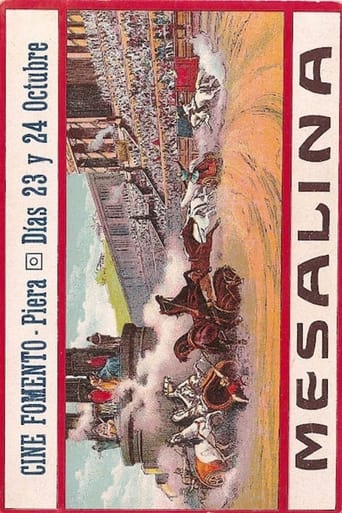
Alfredo de Felice is a very obscure screen actor from the silent-era Italian cinema record, best known for appearing in the historical film Messalina (1923). Surviving reference material about him is extremely limited, and his career appears to have been brief or at least poorly documented in accessible film histories and databases. The available evidence places him in Italian silent cinema during the early 1920s, a period when many performers appeared in a small number of productions and then disappeared from the surviving record. Because no reliable biographical profiles, interviews, or extended filmographies are readily verifiable, many details of his life, training, and later career remain unknown. His name survives primarily through cast listings associated with Messalina and related silent-film reference sources. As a result, Alfredo de Felice is remembered today more as a fragment of early Italian screen history than as a documented celebrity figure. His surviving credit nonetheless contributes to the broader understanding of the many lesser-known actors who helped populate Italy's historical and peplum-style silent productions.
More about Alfredo de Felice
In film history
Alfredo de Felice's cultural impact is best understood within the context of early Italian silent cinema, where even short-lived or minimally documented performers contributed to the production of lavish historical dramas. His presence in Messalina places him within the wave of post-World War I Italian period films that drew on Roman antiquity, theatrical pageantry, and star-driven spectacle. Although there is no evidence that he achieved star status, his credit helps preserve the names of working actors who formed the connective tissue of silent-era film production. For modern researchers, such names are valuable because they document the labor pool behind films that shaped Italy's early screen identity.
Later reputation
His legacy is archival rather than celebrity-based: Alfredo de Felice survives in the historical record as a named participant in one of the many silent films that defined early Italian costume cinema. Because so little else is known, his importance lies in the fact that he is traceable at all, offering evidence of cast participation in a production from 1923. For film historians, figures like de Felice are reminders that the silent era was built not only by major stars and directors but also by lesser-known actors whose careers were often fleeting and poorly documented. His name remains part of the surviving mosaic of silent film history.
Influence
There is no verifiable evidence that Alfredo de Felice directly influenced later actors or directors in a documented or measurable way. Any influence he had would have been indirect, as one of many performers contributing to the style and scale of Italian historical cinema in the early 1920s. The broader industry influence comes from the films of that era rather than from his individual persona, and his contribution is best seen as part of that collective performance tradition. As a surviving cast credit, he helps historians reconstruct the human network behind silent Italian productions.
Off screen
No reliable public information is readily available about Alfredo de Felice's personal life, family background, marriages, or later years. Standard reference sources accessible for silent-era performers do not currently provide verifiable details about his private life. It is therefore not possible to confirm spouses, children, education, or post-film career activity with confidence. His biography remains largely confined to his documented screen credit.
Credits
- Appeared in the silent historical film Messalina (1923), the primary surviving credit associated with his name
- Worked in Italian cinema during the silent era, when historical and costume epics were a major part of the national screen industry
- Represents the many lesser-documented supporting performers whose names are preserved in cast records even when broader biographical data is lost
Roles
- Cast member in Messalina (1923)
Films
- Messalina (1923)
Notes
- He is primarily documented through a single known film credit: Messalina (1923).
- He appears to have worked in the Italian silent era, not the later sound era.
- No reliable public record currently confirms his birth date or death date.
- He is an example of a historical actor whose name survives even though personal details have been lost or remain inaccessible.
- His surviving credit connects him to the Roman-themed historical spectacle tradition popular in early Italian cinema.
- Because documentation is sparse, he is sometimes overlooked in favor of better-known contemporaries from the same period.
- His record highlights how many silent-era performers existed mainly in cast lists rather than in surviving publicity material.
Questions
Who was Alfredo de Felice?
Alfredo de Felice was an Italian silent-era actor whose name is primarily associated with the 1923 film Messalina. Beyond that credit, surviving biographical information is extremely limited, and he remains one of many lesser-documented performers from early Italian cinema.
What films is Alfredo de Felice best known for?
He is best known for Messalina (1923), which is the principal surviving screen credit linked to his name. No additional filmography can be confirmed with confidence from readily accessible reference material.
When was Alfredo de Felice born and when did he die?
His birth date and death date are currently not verifiable from accessible classic-cinema reference sources. The surviving record primarily confirms only that he was active in 1923.
What awards did Alfredo de Felice win?
No awards or nominations are currently known for Alfredo de Felice. Silent-era supporting actors were often under-documented, and no verifiable honors have surfaced for him.
What was Alfredo de Felice's acting style?
There is no surviving critical description of his individual acting style. As a silent-era performer, he would have worked within the expressive visual conventions of early Italian cinema, but specific techniques or trademarks cannot be confirmed.
What is Alfredo de Felice's legacy in film history?
His legacy is primarily archival: he is one of the many named performers who helped populate early Italian silent films, even if their personal histories are now obscure. His credit in Messalina preserves a small but real trace of the workforce behind the silent era.