Messalina
Plot
Set in imperial Rome, Messalina presents a stylized historical melodrama centered on the rise and moral corruption of the notorious wife of Emperor Claudius. Through intrigue and seduction, Messalina helps bring about the death of Caligula and then uses her influence to push Claudius toward the throne, establishing herself as a dominant force at court. Her passions soon shift to Marcus and then to the slave Ennio, whose love is not returned because he is drawn instead to the Greek slave Ela, while the Egyptian princess Mirit also vies for his attention. The story moves toward jealousy, betrayal, and political manipulation, blending private desire with imperial power in the grand manner of Italian silent spectacle.
About the Production
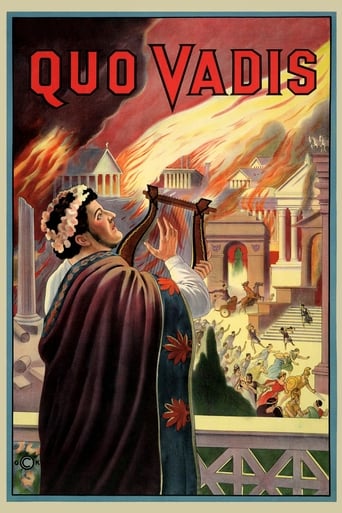
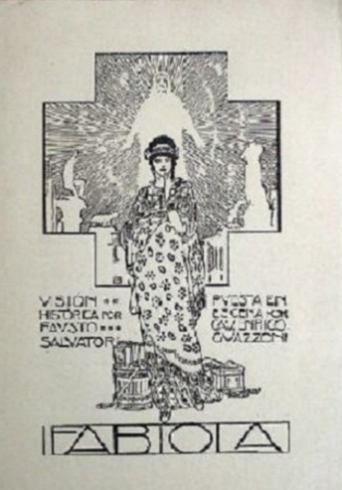
Messalina was mounted as one of the late silent Italian historical spectacles associated with director Enrico Guazzoni, a filmmaker already famous for large-scale ancient-world productions such as Quo Vadis? and Fabiola. Like many prestige Italian films of the period, it relied on elaborate sets, costumes, and pageantry rather than location shooting, aiming to recreate an opulent, theatrical vision of ancient Rome. Surviving documentation for exact production logistics is limited, but the film is consistently identified with the Pittaluga production context in Italian silent cinema during the early 1920s. Because the film is from 1923, detailed budget and earnings figures are not generally preserved in standard reference sources.
Historical Background
Messalina was made in 1923, during a transitional period for Italian cinema. The country had once been a world leader in feature-length historical spectacles, but the industry had been weakened by the war, changing economics, and competition from Hollywood. Filmmakers like Guazzoni continued to draw on Rome's imperial past because it offered a visually rich, internationally legible setting for melodrama and moral spectacle. The subject of Messalina also reflected early twentieth-century tastes for decadent antiquity, a theme that resonated with both opera and silent film audiences and allowed the industry to market prestige productions through lavish costume and set design.
Why This Film Matters
The film is significant as part of the continuum of Italian silent historical cinema that shaped later ideas of the peplum and the ancient-world epic. Its subject matter helped reinforce the cinematic image of Messalina as a byword for decadence, sexual intrigue, and imperial decline, an image that remained influential in later European films and popular culture. As an Enrico Guazzoni production, it also represents the continuation of a distinctly Italian approach to antiquity on screen: grand, theatrical, and visually architectural. For film historians, Messalina is valuable not only as a narrative of Roman scandal but also as evidence of how Italy continued to use classical history as a national cinematic calling card in the early 1920s.
Making Of
Messalina was produced in the context of Italian cinema's effort to sustain its international prestige through lavish historical productions after the World War I era. Enrico Guazzoni was especially associated with spectacles that emphasized monumental sets, disciplined crowd choreography, and theatrical staging, and Messalina fits squarely within that aesthetic. The film likely depended on studio-built interiors and carefully designed ancient Roman exteriors rather than extensive on-location realism, reflecting the production methods of the time. As with many silent Italian epics, the surviving behind-the-scenes record is fragmentary, but the film is notable for continuing Guazzoni's interest in combining historical pageantry with sensational dramatic plots involving power, eroticism, and betrayal.
Visual Style
The film is associated with the visual strategies typical of early Italian historical cinema: composed tableaux, carefully arranged depth within large interiors, and an emphasis on costume and architectural spectacle. Guazzoni's films often favored a painterly framing style that allowed the grandeur of Roman settings and the ceremonial quality of imperial power to dominate the image. The cinematography would have relied on static or gently moving cameras, strong frontal compositions, and dramatic contrasts between courtly luxury and scenes of emotional tension. As a silent production, visual clarity and expressive staging were essential to carrying the story's political and erotic conflicts.
Innovations
The film's principal achievements are artistic and production-based rather than technological in the modern sense. It exemplifies the silent Italian epic's ability to create an immersive ancient world through set design, costume design, crowd staging, and carefully controlled composition. Guazzoni's handling of large-scale historical melodrama helped maintain continuity with the technical and visual ambitions of earlier Italian spectacles. Any technical distinctions would lie in the scale and coordination of production elements rather than in pioneering special effects or sound techniques.
Music
No original synchronized soundtrack is known, as this was a silent film. Like most releases of the period, it would have been accompanied by live music in theaters, with accompaniment varying according to venue, country, and exhibitor practice. If modern presentations exist, they are likely to use a reconstructed or newly commissioned score, but a single authoritative original cue sheet is not generally documented in standard sources.
Memorable Scenes
- The assassination intrigue surrounding Caligula, which establishes Messalina's role as a manipulator of imperial power.
- The court scenes in which Messalina exerts influence over Marcus and positions Claudius for elevation.
- The romantic triangle involving Ennio, Mirit, and Ela, which shifts the film from political scheming into melodramatic desire.
- The opulent depictions of Roman court life, where costume and staging are used to express decadence and authority.
Did You Know?
- The film was directed by Enrico Guazzoni, one of the most important architects of the Italian historical epic in the silent era.
- Messalina draws on the long-standing fascination with the scandalous Roman empress, a figure repeatedly reimagined in literature and cinema as a symbol of sexual power and political corruption.
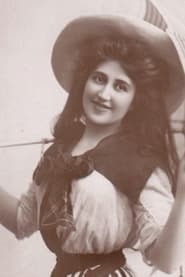
- Rina De Liguoro, who plays the title role, was one of the notable Italian screen actresses of the silent period and was often cast in glamorous or aristocratic roles.
- The film belongs to the tradition of Italian peplum-style ancient-world dramas made before the sound era, emphasizing spectacle, court intrigue, and moral melodrama.
- Silent-era documentation for many Italian films of this period is incomplete, so exact contemporary review coverage and box-office data are difficult to reconstruct.
- The plot combines several historical names and figures from the Roman imperial household with melodramatic invention, which was common in early historical cinema.
- Enrico Guazzoni had a reputation for staging large crowd scenes and imposing architecture in a way that influenced later historical filmmaking.
- The film is often discussed in film-historical contexts as part of the declining but still artistically significant post-World War I Italian silent production boom.
- Because the film predates synchronized sound, musical accompaniment would have varied from venue to venue rather than being fixed to a single official score in the modern sense.
What Critics Said
Contemporary critical documentation survives unevenly, but the film was positioned as a prestige historical drama rather than a modest melodrama, and its appeal would have rested on spectacle, costumes, and the notoriety of its subject. Modern critical interest is largely historical rather than popular: scholars of silent Italian cinema value it for its place in Guazzoni's oeuvre and for what it reveals about the surviving traditions of pre-sound epic filmmaking. Because the film is little seen today and may survive only in incomplete or archival form depending on preservation records consulted, its modern reputation is primarily that of an important historical artifact rather than a widely reviewed classic.
What Audiences Thought
There is no robust surviving audience data for the film, but it would have appealed to viewers attracted to historical spectacle, scandalous court intrigue, and glamorous star-driven melodrama. In the silent era, productions like Messalina were often marketed as prestigious entertainments suitable for urban theaters and international export. Today, general audiences are unlikely to know the film unless they are interested in silent cinema, early Italian film history, or antiquity on screen.
Film Connections
Influenced By
- Ancient Roman historiography and legend surrounding Messalina and the Julio-Claudian court
- Theatrical melodrama and opera about decadent antiquity
- Earlier Italian historical epics such as Quo Vadis? and Fabiola
This Film Influenced
- Later Italian peplum and sword-and-sandal films
- Subsequent screen portrayals of Messalina in European cinema
- Historical melodramas centered on decadent imperial courts
You Might Also Like
More Drama Films
View allMore from Enrico Guazzoni
View allFilm Restoration
Survival status is not clearly documented in standard general references; the film is not widely available and appears to survive, if at all, only in archival or specialized-circulation form rather than as a broadly accessible restored title.