Marc Antony and Cleopatra
"Enrico Guazzoni's Italian Antony and Cleopatra pageant."
Keys: Space play/pause · ←/→ 10s · F fullscreen · M mute · </> speed
About this film
The tragic romance between Roman general Marc Antony and the Egyptian queen Cleopatra. After Caesar's assassination, Antony forms a political and romantic alliance with Cleopatra, dividing the Roman Empire between himself and Octavian. Their passionate affair leads to political turmoil as Antony neglects his duties in Rome, while Octavian consolidates power and turns public opinion against the couple. The story culminates in the devastating Battle of Actium, where Antony and Cleopatra's combined forces are defeated, leading to their tragic suicides rather than capture by their enemies.
Cast & crew
More films like this
More Drama films
View all →







More from Enrico Guazzoni
View all →
More about this film
About the production
Release dateSeptember 1913
Box officeCommercially successful in Italy and internationally, particularly strong in France and the United States
ProductionCines
Filmed inRome, Italy, Alexandria, Egypt, Sicily, Italy
The production was remarkable for its time, featuring actual location filming in Egypt, massive sets including a full-scale reproduction of ancient Alexandria, and thousands of extras for battle scenes. The film's spectacle was unprecedented, with elaborate costumes and props that were historically researched. The production utilized innovative techniques for crowd control and battle choreography that would influence later epics.
Themes
Love vs. DutyEast vs. WestPolitical AmbitionTragic RomanceCultural Conflict
Themes & topics
Historical background
Marc Antony and Cleopatra (1913) reached screens through Cines. Exhibitors of the time built nickelodeon-era programs that mixed shorts, features, and live acts, so a clear premise helped Marc Antony and Cleopatra travel between cities and exchange markets.
Why this film matters
Archivists and revival programmers still cite Marc Antony and Cleopatra (1913) when tracing studio habits, casting pools, and the visual rhetoric audiences once took for granted. Even modest surviving prints help map how Marc Antony and Cleopatra fit beside competing releases of its day.
Making of
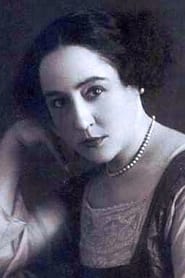
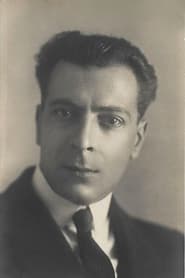
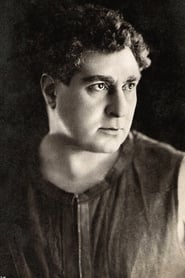
Director Enrico Guazzoni was known for his spectacular historical epics, and the production represented the pinnacle of his early career. The production faced numerous challenges, including transporting heavy camera equipment to Egypt in 1913, coordinating thousands of extras without modern communication systems, and creating historically accurate costumes and props. The relationship between the lead actors, Gianna Terribili-Gonzales and Amleto Novelli, was reportedly tense off-screen, which some critics believe enhanced their on-screen chemistry. The film's production took nearly six months, an extraordinary length for the time, and required the construction of massive sets that remained standing for years as tourist attractions in Rome.
What critics said
Trade coverage around 1913 discussed Marc Antony and Cleopatra for pacing, clarity, and program fit rather than blockbuster grosses. Later writers value it as evidence of period style and as a reference point beside other films from the same era.
Did you know?
- This was one of the first films to shoot on location in Egypt, making it a pioneering production in terms of international filming
- The film featured over 5,000 extras in the battle sequences, an unprecedented number for 1913
- Gianna Terribili-Gonzales, who played Cleopatra, was one of Italy's most popular divas of the silent era
- The film's success helped establish the Italian epic as a major film genre in the 1910s
- Original prints were tinted in various colors to enhance mood and atmosphere
- The production used actual Roman ruins and Egyptian monuments as backdrops
- The film was distributed in the United States under the title 'The Tragedy of Antony and Cleopatra'
- It was one of the first films to be screened at the White House for President Woodrow Wilson
- The battle scenes were choreographed by actual military advisors to ensure authenticity
- The film's success led to a wave of historical epics from Italian studios
Awards & recognition
- Grand Prize at the 1913 Milan International Exhibition
Visual style
The cinematography by Alfredo Lattanzi was revolutionary for its time, featuring innovative use of location shooting in harsh Egyptian lighting conditions. The film employed early forms of the traveling shot to follow armies and processions, creating a sense of movement and scale previously unseen in cinema. The use of natural light in outdoor scenes contrasted with the dramatic lighting of interior sets. The film also experimented with early special effects, including multiple exposures for ghostly apparitions and innovative matte paintings to extend sets. The cinematography helped establish visual language for historical epics that would influence filmmakers like D.W. Griffith and Cecil B. DeMille.
Innovations
The film pioneered several technical innovations that would become standard in epic filmmaking. It was among the first to use extensive location shooting in multiple countries, demonstrating the feasibility of international productions. The battle sequences featured innovative camera placement, including shots from elevated platforms to capture the scale of the action. The production developed new techniques for crowd control and coordination, using signal flags and mounted messengers to direct thousands of extras. The film's special effects included early use of miniatures combined with live action, and innovative matte painting techniques to create the illusion of ancient Alexandria. These technical achievements set new standards for what was possible in cinema.
Music
As a silent film, it was originally accompanied by live musical performances. The score was typically a compilation of classical pieces, including works by Verdi, Puccini, and ancient-sounding compositions by contemporary Italian composers. The musical direction varied by theater, with prestigious cinemas employing full orchestras while smaller venues used piano or organ accompaniment. The music was carefully synchronized with the on-screen action, with romantic themes for the love scenes and martial music for battle sequences. Some theaters used specially composed scores by local musicians to enhance the Egyptian setting with exotic-sounding melodies.
Famous quotes
As a silent film, notable intertitles included: 'Egypt yields to Rome, but my heart yields only to love'
'In death as in life, we shall be united'
'Rome may have my allegiance, but Egypt has my soul'
Memorable scenes
- The grand entrance of Cleopatra into Rome on a golden barge, surrounded by thousands of extras in period costume
- The dramatic confrontation scene between Cleopatra and Octavia in the Alexandrian palace, featuring intense silent acting and elaborate costumes
- The massive Battle of Actium sequence, utilizing thousands of extras, real ships, and innovative camera techniques to create unprecedented spectacle
- Cleopatra's death scene with the asp, considered
- The Roman army's embarkation in Alexandria, featuring authentic military equipment and coordinated crowd movements
What audiences thought
The film was enormously popular with audiences worldwide, breaking box office records in Italy and performing strongly in international markets. Spectators were particularly impressed by the battle sequences and exotic Egyptian settings, which many had never seen on film before. The romantic elements resonated strongly with female audiences, while the military spectacles appealed to male viewers. The film's success led to increased demand for historical epics and established a template for the genre that would influence films for decades. Contemporary audience letters and reviews preserved in film archives indicate that many viewers considered it a transformative cinematic experience.
Film connections
Influenced by
- William Shakespeare's 'Antony and Cleopatra'
- Plutarch's 'Life of Antony'
- Pietro Cossa's 'Cleopatra'
- Giovanni Pastrone's 'The Fall of Troy'
- Earlier Italian historical paintings
This film influenced
- Cleopatra (1917)
- Antony and Cleopatra (1924)
- Cleopatra (1934)
- Julius Caesar (1953)
- Cleopatra (1963)
- Antony and Cleopatra (1972)
Film restoration
The film is partially preserved with approximately 45 minutes of the original 70-minute runtime surviving in various archives. The most complete version exists at the Cineteca Italiana in Milan, with additional fragments held at the Museum of Modern Art in New York and the British Film Institute. Some sequences, including portions of the Battle of Actium, are believed to be lost. The surviving footage has been partially restored, with color tinting recreated based on original production notes. The film remains in the public domain.
Where to watch
- Available on DVD from specialty silent film distributors
- Streaming on some classic film archives and educational platforms
- Occasionally screened at film festivals and museums specializing in silent cinema
- Available for viewing at the Cineteca Italiana in Milan by appointment
- Some segments can be found on YouTube and Internet Archive