Cabiria
"From Moloch's pit to the Roman siege"
Keys: Space play/pause · ←/→ 10s · F fullscreen · M mute · </> speed
About this film
Young Cabiria is kidnapped by pirates, survives sacrifice in Carthage, and crosses paths with Roman spy Fulvius Axilla and the slave Maciste. Giovanni Pastrone's superspectacle spans temples, volcanoes, and the Second Punic War with unprecedented scale.
Cast & crew
More films like this

More Drama films
View all →







More from Giovanni Pastrone
View all →
More about this film
About the production
Release dateApril 18, 1914 (premiere in Turin, Italy)
BudgetApproximately 1 million lire (equivalent to about $50,000 USD at the time, an enormous sum for 1914)
Box officeHighly successful, though exact figures are not preserved; it was among the leading profitable Italian films of its era
ProductionItala Film
Filmed inTurin, Italy, Sicily, Italy, Tunisia (for Carthage scenes)
The film took over two years to complete, with construction of elaborate sets including a full-scale replica of Carthage and the massive statue of Moloch. The production employed thousands of extras and pioneered techniques in camera movement and special effects. Director Giovanni Pastrone used the pseudonym Piero Fosco for his screen credit. The film's production was so massive that it required the construction of new studio facilities.
Themes
Patriotism and national identityThe conflict between civilization and barbarismRedemption and rescueThe power of human virtueReligious conflict and sacrifice
Themes & topics
Historical background
Cabiria (1914) premiered as Italy asserted nationalist pride before World War I, with enormous budgets and location-built sets in Turin.
Why this film matters
Pastrone's tracking shots and set construction influenced Griffith and the epic tradition; Maciste became a long-running character.
Making of
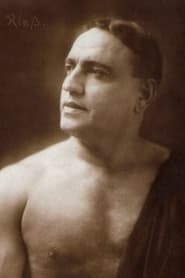
The production of Cabiria was unprecedented in scale and ambition. Director Giovanni Pastrone conceived the project as Italy's answer to the growing dominance of American cinema, aiming to create a spectacle that would showcase Italian artistic and technical prowess. The filming of the Moloch sacrifice scene required elaborate preparations, including the construction of a hydraulic system to operate the statue's mouth and the use of real fire for the sacrificial altar. The battle scenes employed thousands of extras, many of whom were actual soldiers from the Italian army. The character of Maciste was played by Bartolomeo Pagano, a dockworker discovered by chance who became an overnight star and one of the first true action heroes in cinema history. The film's intertitles, written by Gabriele D'Annunzio, elevated the literary quality of the narrative and helped establish the film as high art rather than mere entertainment.
What critics said
Italian critics celebrated the spectacle; international reviewers noted its technical ambition. It remains a cornerstone of silent epic scholarship.
Did you know?
- The character Maciste became so popular that he appeared in over 25 films between 1915-1927, making him one of cinema's first recurring characters
- The film's title comes from the Latin word 'cabiria' meaning 'temple prostitute', though this connection is not explicit in the film
- The famous Moloch statue was 40 feet tall and could mechanically open its mouth to receive child sacrifices, a groundbreaking special effect
- D.W. Griffith was so impressed by Cabiria that he reportedly watched it multiple times and incorporated many of its techniques into 'Intolerance' (1916)
- The film was one of the first to use a moving camera on a dolly system, known as the 'Cabiria movement'
- Original Italian intertitles were written by poet Gabriele D'Annunzio, one of Italy's most prominent literary figures
- The film's success sparked a wave of Italian historical epics in the 1910s, establishing Italy as a leader in international cinema
- The eruption of Mount Etna at the beginning was achieved using miniatures, smoke, and clever editing techniques
- When shown in America, the film was retitled 'Cabiria: A Story of Ancient Carthage' to help audiences understand the setting
- The film's preservation is credited to Martin Scorsese's Film Foundation, which helped restore the film in the 1990s
Awards & recognition
- Special Grand Prize at the Milan International Film Festival (1914)
- Medal of Honor from the Italian government for cultural achievement (1914)
Visual style
The cinematography of Cabiria, overseen by Segundo de Chomón, was revolutionary for its time. The film employed innovative camera movements, including what became known as the 'Cabiria movement' - a smooth tracking shot achieved by mounting the camera on a moving dolly. The lighting techniques were sophisticated, using natural light for outdoor scenes and carefully controlled artificial lighting for interior sequences. The film made extensive use of location shooting in Tunisia and Sicily, giving it an authentic Mediterranean atmosphere that studio-bound films of the era lacked. The battle sequences were filmed with multiple cameras to capture different angles, creating a dynamic visual experience. The cinematography emphasized scale and grandeur, with wide shots showcasing the massive sets and thousands of extras.
Innovations
Cabiria pioneered numerous technical innovations that would become standard in filmmaking. The most significant was the development of the moving camera system, allowing for smooth tracking shots that added dynamism to the visuals. The film's special effects, particularly the volcanic eruption and the mechanical Moloch statue, were groundbreaking for their time. The production used forced perspective and miniature models to create illusions of massive scale. The editing techniques, including cross-cutting between parallel storylines, were sophisticated and helped maintain narrative momentum across the film's lengthy runtime. The set design incorporated advanced architectural techniques to create the illusion of ancient cities. The film also experimented with color tinting, using different tints to suggest different times of day or emotional tones.
Music
As a silent film, Cabiria was originally presented with live musical accompaniment that varied by theater. The original Italian score was composed by Manlio Mazza, though many theaters created their own arrangements. The music was typically grand and orchestral, reflecting the epic nature of the film. In major cities, full orchestras performed the accompaniment, while smaller theaters used piano or organ. The score included leitmotifs for main characters and dramatic musical cues for key scenes like the Moloch sacrifice. Modern restorations have been accompanied by newly composed scores that attempt to capture the spirit of the original music while utilizing contemporary orchestration techniques.
Famous quotes
Moloch hungers! The god demands sacrifice!
Rome shall triumph! Carthage must fall!
Even in chains, the Roman spirit remains unbroken.
Strength without virtue is but a beast's power.
Through fire and blood, we shall find our way home.
Memorable scenes
- The dramatic opening sequence showing the eruption of Mount Etna and Cabiria's kidnapping
- The terrifying Moloch sacrifice scene with the massive bronze statue and fire altar
- Maciste's spectacular display of strength as he breaks his chains
- The massive battle sequences between Roman and Carthaginian forces
- The emotional reunion of Cabiria with her family in the final scenes
- The destruction of Carthage with elaborate miniature effects and pyrotechnics
What audiences thought
Cabiria was a massive commercial success upon its release, breaking box office records across Europe and America. Audiences were thrilled by its spectacular scenes, particularly the eruption of Mount Etna and the Moloch sacrifice sequence. The character of Maciste became incredibly popular, with audiences demanding more adventures featuring the strongman hero. The film's success led to numerous imitations and established the historical epic as a commercially viable genre. In Italy, the film became a cultural phenomenon, with theaters reporting sell-out crowds for months. American audiences, despite the film's Italian origins, embraced it enthusiastically, proving that compelling storytelling and spectacular visuals could transcend language barriers.
Film connections
Influenced by
- Quo Vadis (1913) - Another Italian epic that influenced the historical genre
- The Last Days of Pompeii (1908) - Early Italian spectacle film
- Ancient Roman literature and historical texts
- The works of Gabriele D'Annunzio (who wrote the intertitles)
- Italian opera traditions of grand spectacle
This film influenced
- Intolerance (1916) - D.W. Griffith was directly inspired by Cabiria
- The Ten Commandments (1923 and 1956) - Cecil B. DeMille's epics owed much to Cabiria
- Ben-Hur (1925 and 1959) - The chariot race and scale were influenced by Cabiria
- All the Maciste film series (1915-1927)
- Spartacus (1960) - Historical epic traditions trace back to Cabiria
- Gladiator (2000) - Modern epic that owes a debt to Cabiria's template
Film restoration
Cabiria has been preserved and restored multiple times. The most significant restoration was completed in the 1990s by the Cineteca di Bologna and The Film Foundation, founded by Martin Scorsese. This restoration combined elements from various international versions to create the most complete version possible. The restored version premiered at the Cannes Film Festival in 1997. The film exists in the archives of several institutions, including the Museum of Modern Art in New York and the British Film Institute. While some scenes remain lost, the restored version is considered remarkably complete for a film of its age.
Where to watch
- The Criterion Collection (Blu-ray/DVD with restored version and special features)
- Kino Lorber (DVD release)
- Various streaming platforms specializing in classic cinema (availability varies by region)
- Museum of Modern Art's circulating film collection
- Film archives and cinematheques that occasionally screen the restored version