Films
2 films
About Emilio Vardannes
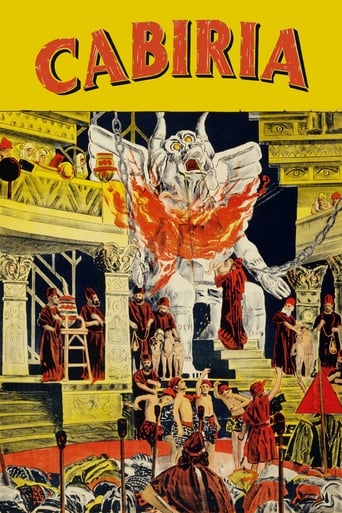
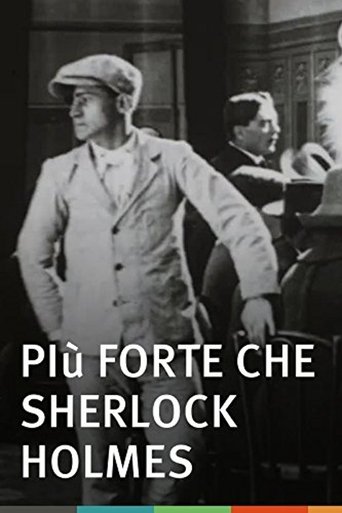
Emilio Vardannes is credited on a single production — Cabiria (1914). His most significant contribution to film history was his appearance in Giovanni Pastrone's epic 'Cabiria' (1914), and influential films of early cinema. Vardannes also appeared in 'Stronger than Sherlock Holmes' (1913), demonstrating his involvement in the burgeoning Italian film industry during its golden age. Like many actors of this period, his career was relatively short-lived, as the film industry was still in its formative years and many performers did not achieve lasting fame. His participation in 'Cabiria' places him among the cast of a film that revolutionized cinematic techniques including camera movement, set design, and narrative structure. Unfortunately, like many supporting actors from the silent era, detailed records of his life and career beyond these two films are scarce, reflecting the challenges of film preservation and historical documentation from this period.
The Craft
Milestones
- Appeared in the revolutionary epic 'Cabiria' (1914)
- Acted in 'Stronger than Sherlock Holmes' (1913)
- Participated in early Italian cinema's golden age
- Contributed to
Best Known For
Must-See Films
Working Relationships
Worked Often With
Studios
Why They Matter
Impact on Culture
Emilio Vardannes' cultural impact is primarily derived from his participation in 'Cabiria,' a film that fundamentally changed the course of cinema history. Although he was not a leading actor, being part of this revolutionary production places him within the context of a major artistic movement in early film. 'Cabiria' influenced countless filmmakers worldwide, including D.W. Griffith, and its techniques in cinematography, set design, and narrative structure became foundational to the language of cinema. Vardannes, as one of the many actors who brought this epic vision to life, contributed to a work that helped establish the epic film genre and demonstrated cinema's potential as an art form capable of grand historical storytelling.
Lasting Legacy
Emilio Vardannes' legacy is inextricably linked to 'Cabiria,'. While his individual contributions may have been modest, his participation in this groundbreaking work ensures his place in film history. The film itself continues to be studied by film scholars and historians, and every cast member, including Vardannes, represents the collaborative nature of early cinema. His brief career exemplifies the transient nature of fame for many early film actors, whose contributions to cinematic art were significant even when their personal stories remain largely unknown.
Who They Inspired
As a supporting actor from the very early days of cinema, Emilio Vardannes' direct influence on subsequent performers is difficult to trace. However, his work in 'Cabiria' contributed to a film that influenced generations of filmmakers and actors. The epic scale and dramatic intensity of 'Cabiria' set new standards for performance in cinema, and even minor roles in such productions helped establish acting conventions for silent film drama that would influence actors for decades to come.
Off Screen
Very little is documented about Emilio Vardanes' personal life, which was typical for many supporting actors in the early silent film era. Records from this period are often incomplete, especially for performers who were not major stars. His brief film career suggests he may have been a character actor or someone who appeared in films for a short period before pursuing other endeavors.
Did You Know?
- Appeared in 'Cabiria' (1914), which ran for over 2 hours and was one of the longest films of its time
- Worked during the peak of Italian cinema's golden age before World War I
- Participated in a film that featured groundbreaking moving camera shots
- His film 'Cabiria' was so successful it spawned a popular character, Maciste, who appeared in numerous sequels
- The film featured massive sets and thousands of extras, representing the height of early film spectacle
- Cabiria' was one of the first films to be screened at the White House
- His active years covered only two known years, typical of many early film actors
- Worked with director Giovanni Pastrone, a pioneer of cinematic techniques
Frequently Asked Questions
Who was Emilio Vardannes?
Italian with credits in this catalog.' His active years covered only 1913-1914, during which he appeared in at least two films including 'Stronger than Sherlock Holmes' (1913).
What films is Emilio Vardannes best known for?
Titles linked here include Cabiria (1914), Stronger than Sherlock Holmes (1913).
When was Emilio Vardannes born and when did he die?
Unfortunately, specific birth and death dates for Emilio Vardannes are not documented in historical records, which is common for many supporting actors from the early silent film era. He is known to have been active in films during 1913-1914.
What awards did Emilio Vardannes win?
No awards or honors for Emilio Vardannes have been documented. During the early 1910s, formal film award systems had not yet been established, and recognition for actors was primarily through critical reception and box office success rather than ceremonial awards.
What was Emilio Vardannes' acting style?
Specific details about Emilio Vardannes' acting style are not well-documented. As an actor in early Italian cinema, he likely employed the dramatic, expressive techniques typical of silent film performance, which emphasized physical expression and gesture to convey emotion without dialogue.