La sposa del Nilo
"Null"
Plot
La sposa del Nilo is a short Italian silent historical spectacle set in an imagined ancient Egypt, built around a ritual sacrifice meant to secure the life-giving flood of the Nile. According to the surviving description of the film, the central conflict concerns a young virgin chosen to be drowned as an offering to Isis so that the river will rise and preserve the land. The narrative unfolds less as intimate character drama than as a processional pageant, with the ritual, temple imagery, and public spectacle given as much importance as the doomed heroine herself. In the manner of early Italian proto-epics, the film emphasizes grandeur, ceremony, and pictorial composition, so that the story often becomes secondary to the visual massing of bodies, architecture, and symbolic action.
Director
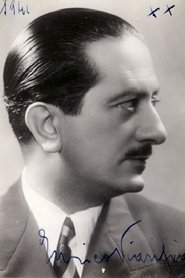
Enrico GuazzoniAbout the Production
La sposa del Nilo was made at a formative moment in Italian historical cinema, when filmmakers were experimenting with large-scale spectacle, elaborate sets, and crowd staging that would soon culminate in the celebrated peplum epics of the 1910s. Enrico Guazzoni, who would later become one of the key architects of the Italian monumental style, used the film to explore ceremonial pageantry, monumental composition, and the visual rhetoric of antiquity. Because the film survives only in limited documentation, many specific production details such as exact shooting locales, budget, and crew arrangements are not securely recorded in accessible sources. The work is nevertheless regarded as an important precursor to the kind of empire-and-antiquity cinema that Italian producers would refine in the years leading to Quo Vadis? and Cabiria.
Historical Background
La sposa del Nilo was made in 1911, during a pivotal phase in Italian film history when production companies were moving rapidly from brief entertainments toward ambitious historical and literary spectacles. Italy was positioning itself as a major exporter of prestige cinema, and filmmakers were discovering that antiquity, mythology, and biblical or quasi-biblical settings could be turned into internationally marketable spectacles. The film also emerges from a broader European fascination with the ancient world, exoticized landscapes, and monumental art, all of which fed audiences' appetite for visual grandeur before the rise of feature-length narrative conventions. Historically, it matters because it belongs to the formative period in which Guazzoni and his contemporaries refined the visual language that would make Italian silent cinema famous around the world.
Why This Film Matters
Although not among the most famous titles of the period, La sposa del Nilo is culturally significant as an early marker of the Italian epic tradition. It demonstrates how silent cinema could turn ritual, antiquity, and myth into spectacle, helping establish a mode of filmmaking in which the set, the crowd, and the composition of the frame carried as much meaning as the plot. The film is also important for understanding the evolution of Enrico Guazzoni's career, since it anticipates the grand historical style he would later bring to larger productions. In film history, works like this are valued less for surviving popularity than for the way they reveal the development of cinematic scale, mise-en-scène, and national prestige filmmaking in pre-World War I Italy.
Making Of
La sposa del Nilo appears to have been conceived as an early exercise in the large-scale historical mode that was transforming Italian film production in the early 1910s. Enrico Guazzoni, who had a talent for handling crowd scenes and ceremonial imagery, was working within a studio system that increasingly favored spectacle, large decorative sets, and exotic antiquity as a selling point. The surviving evidence points to a production that valued visual density: the frame was packed with figures, architecture, and ritual action, creating the kind of stately composition that distinguished Italian cinema from many contemporary productions elsewhere in Europe and America. Specific behind-the-scenes documentation is sparse, but the film is widely understood as one of the stepping stones toward the more famous epic productions that would later define Guazzoni's reputation.
Visual Style
The cinematography of La sposa del Nilo is notable primarily for its tableau-like staging and its emphasis on visual accumulation. Rather than relying on rapid cutting or intimate camerawork, the film appears to favor carefully arranged compositions in which architecture, costuming, and bodies are organized to produce a monumental effect. The frame is often described as crowded, suggesting a cinematographic approach that deliberately fills space with ceremonial motion and decorative detail. This style aligns with early Italian spectacle cinema, where the camera often remained relatively static so that the scene itself could function like a living historical painting.
Innovations
The film's main achievement lies in its large-scale mise-en-scène and its handling of crowd spectacle at a relatively early date in Italian cinema. Its packed compositions and ceremonial staging show an emerging command of spatial organization that would become central to the nation's epic productions. It also represents an important step in the refinement of proto-epic historical filmmaking, where atmosphere, scale, and pictorial grandeur were used as primary attractions. While not technically innovative in the sense of mechanical invention, it is significant for helping establish the stylistic grammar of the Italian historical spectacle.
Music
As a 1911 silent film, La sposa del Nilo had no synchronized recorded soundtrack. It would originally have been accompanied in performance by live music, typically a pianist, organist, or small ensemble depending on the venue and market. No specific original cue sheet or commissioned score is widely documented in accessible sources. Modern presentations of such films, when available, generally use reconstructed or newly composed accompaniment.
Famous Quotes
Null
Memorable Scenes
- The ritual tableau in which the chosen virgin is prepared for sacrifice to secure the flood of the Nile, a scene that concentrates the film's mythic and ceremonial power.
- The crowded temple and public spectacle sequences, where the frame becomes filled with processional bodies and sacred imagery, emphasizing scale over intimate drama.
- The climactic act of sacrifice to Isis, which serves as the narrative and symbolic center of the film's ancient-world spectacle.
Did You Know?
- The film is often discussed as a proto-epic, anticipating the monumental historical spectacles that made Italian silent cinema famous later in the decade.
- Director Enrico Guazzoni would go on to become one of the defining figures in Italian historical spectacle, especially through his later monumental productions.
- The story uses a ritual sacrifice tied to the annual flooding of the Nile, a motif that gives the film a mythic rather than realistic historical atmosphere.
- Contemporary and later commentators have noted that the central action can be visually overwhelmed by the crowded frame, which is itself a sign of the film's ambition toward scale.
- The film belongs to the early wave of Italian antiquity pictures that helped establish the international reputation of Italian cinema before World War I.
- Its surviving description suggests a strong emphasis on temple imagery, ceremonial processions, and collective movement rather than on individual psychology.
- Because early Italian films were frequently issued in multiple markets with varying intertitles and documentation, exact details on cast and running time are difficult to verify today.
- The film is part of the broader stylistic lineage that led to the spectacular production values later associated with Cabiria in 1914.
- Like many films from 1911, it likely played to audiences fascinated by exotic settings, biblical-oriental pageantry, and visually opulent reconstructions of antiquity.
- The title translates to 'The Bride of the Nile,' underscoring the film's blend of romance, sacrifice, and riverine symbolism.
What Critics Said
Contemporary reception details are not well preserved in easily accessible sources, but the film appears to have been admired for the seriousness and scale of its presentation rather than for intimate narrative complexity. Later historians and critics tend to view it as an important but transitional work: impressive for its stately composition and crowd organization, yet still visually dense to the point that key dramatic action can be partially obscured. Modern scholarship often places it in the context of Guazzoni's development and the broader rise of Italian historical spectacle, noting its anticipation of more elaborate epics rather than treating it as a fully mature masterpiece in its own right. Its critical standing today is therefore mainly historical, appreciated for what it reveals about the ambitions of early Italian cinema.
What Audiences Thought
Specific audience-response records from 1911 are scarce, but the film was likely designed to appeal to spectators who enjoyed exoticism, temple pageantry, and emotionally heightened sacrifice narratives. Early audiences, accustomed to slower visual literacy and more attentive viewing habits than many modern viewers, could take in the crowded frame and read multiple layers of action and detail at once. The film probably benefited from the growing prestige of Italian production values, which were already beginning to attract spectators interested in lavish historical reconstructions. Today, audiences encountering the film, if preserved prints are available, are usually struck by its austere grandeur, ritualistic pacing, and the sense of cinema discovering how to make antiquity feel monumental.
Film Connections
Influenced By
- Italian stage and tableau traditions
- Historical paintings and academic art of antiquity
- Earlier biblical and ancient-world cinema
This Film Influenced
- Cabiria (1914)
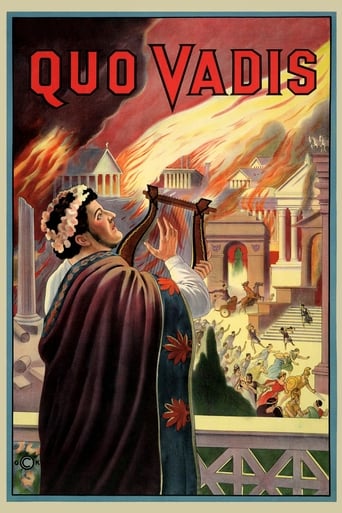
- Quo Vadis? (1913)
- Later Italian peplum and sword-and-sandal epics
You Might Also Like
More from Enrico Guazzoni
View allFilm Restoration
The film appears to be very partially documented and may survive only in fragmentary or limited archival form; detailed preservation information is not widely available in accessible reference sources. It is not commonly cited as a fully restored title, and much of what is known about it comes from secondary historical descriptions rather than from widely circulating restorations. If extant elements exist, they are likely held in archive collections rather than in broad public distribution.