Films
1 film
About Vittoria Lepanto
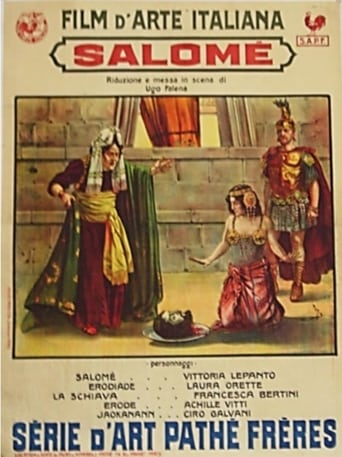
Italian actress who worked during the days of silent cinema, with her entire known film career confined to the year 1910. Vittoria appears in the Italian historical drama 'Salomé,' directed by Ugo Falena, which was one of the earliest cinematic adaptations of Oscar Wilde's controversial play. The film was produced by Cines, one of Italy's most prominent early film studios, during a period when Italian cinema was gaining international recognition for its lavish historical productions. Lepanto's role in this adaptation placed her among the early generation of film actors who helped establish the dramatic conventions of silent cinema. Like many actors of this era, her career was brief, and she appears to have left the film industry after this single known appearance. Her work represents the transitional period when theatrical acting styles were being adapted for the new medium of cinema, and performers were learning to convey emotion through gesture and expression without the benefit of synchronized sound.
The Craft
Milestones
- Appeared in the 1910 Italian silent film 'Salomé' directed by Ugo Falena
- Participated in one of the earliest film adaptations of Oscar Wilde's controversial play
Best Known For
Iconic Roles
Must-See Films
Working Relationships
Worked Often With
Studios
Why They Matter
Impact on Culture
Vittoria Lepanto's contribution to cinema, though limited to a single known film, represents the important transitional period when Italian cinema was establishing itself as a major force in the emerging international film industry. Her participation in the 1910 adaptation of 'Salomé' places her among the actors who helped bring literary and theatrical works to the screen during cinema's formative years. This period saw Italian filmmakers tackling ambitious subjects and developing new visual storytelling techniques that would influence cinema worldwide. The fact that she worked with Cines, one of Italy's most important early studios, connects her to the broader movement of Italian historical epics that would dominate international cinema in the following decade.
Lasting Legacy
Vittoria Lepanto's legacy is primarily historical rather than artistic, serving as a representative example of the many anonymous actors who participated in cinema's earliest days. Her brief career illustrates the transient nature of early film work, when many performers appeared in only one or two films before disappearing from historical records. The 1910 'Salomé' itself represents an important milestone in cinema history as one of the first adaptations of Wilde's controversial work, and Lepanto's participation, however small, connects her to this significant cultural moment. Her story highlights the challenges of film preservation and historical documentation for the silent era, where countless performers' contributions have been lost to time.
Who They Inspired
Given the brevity of her known career and the limited survival of her work, Vittoria Lepanto's direct influence on subsequent generations of actors and filmmakers cannot be definitively traced. However, like all early film performers, she contributed to the development of screen acting techniques during a crucial period when the conventions of cinematic performance were being established. The adaptation of theatrical works like 'Salomé' required actors to modify their stage techniques for the camera, and each performer who made this transition helped pave the way for future generations of film actors.
Off Screen
Very little information survives about Vittoria Lepanto's personal life, which was common for many early silent film actors whose careers were brief and whose work has been largely lost to time. Like many performers of this era, she likely came from a theatrical background before transitioning to the new medium of cinema.
Did You Know?
- Her entire known film active years covered only the year 1910
- She appeared in one of the earliest film adaptations of Oscar Wilde's controversial play 'Salomé'
- The 1910 'Salomé' was produced by Cines, one of Italy's most important early film studios
- Italian cinema of this period was internationally renowned for its lavish historical productions
- Many early silent film actors like Lepanto have been largely lost to historical records
- The director of 'Salomé,' Ugo Falena, was also a prominent theater director and opera librettist
- Early Italian adaptations of literary works like 'Salomé' helped establish cinema as a legitimate art form
- The 1910s marked the golden age of Italian silent cinema before the industry's decline after World War I
Frequently Asked Questions
Who was Vittoria Lepanto?
Screen credits include the 1910 film 'Salomé,' directed by Ugo Falena. Her entire known film career was confined to this single year, making her one of the many brief contributors to early cinema history.
What films is Vittoria Lepanto best known for?
Titles linked here include Salomé (1910).
When was Vittoria Lepanto born and when did she die?
Specific birth and death dates for Vittoria Lepanto are not available in historical records, which is common for many early silent film actors whose careers were brief and whose personal details were not well documented.
What awards did Vittoria Lepanto win?
No awards or nominations for Vittoria Lepanto have been recorded, which is typical for actors working in the very early days of cinema before formal award systems were established in the film industry.
What was Vittoria Lepanto's acting style?
While specific details about Vittoria Lepanto's acting style are not documented, actors of this era typically used exaggerated gestures and facial expressions adapted from theater to convey emotion in silent films, as they could not rely on spoken dialogue.