Keys: Space play/pause · ←/→ 10s · F fullscreen · M mute · </> speed
Plot
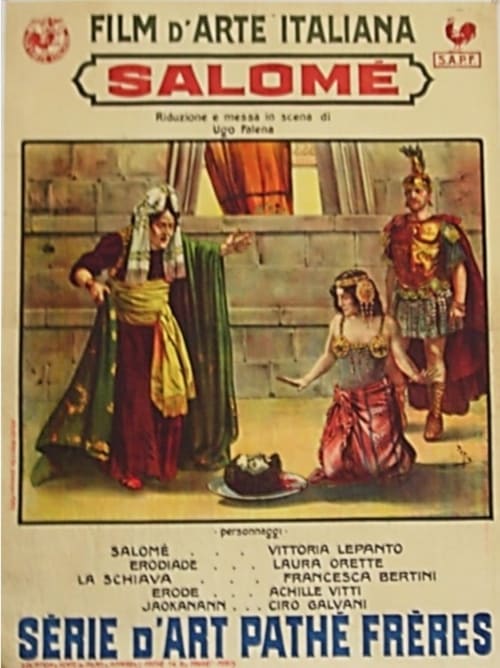
Based on Oscar Wilde's controversial play, this Italian silent adaptation tells the biblical story of Salomé, the stepdaughter of King Herod. When Salomé becomes infatuated with John the Baptist (Jokanaan), who is imprisoned in Herod's dungeon, she attempts to seduce him but is rejected. Enraged by his rejection and encouraged by her mother Herodias, who seeks revenge against John for condemning her marriage to Herod, Salomé performs the infamous Dance of the Seven Veils for Herod. After mesmerizing the king with her sensual dance, she demands the head of John the Baptist as her reward, leading to the tragic climax where she receives the severed head on a silver platter and kisses the dead prophet's lips.
About the Production
Release Date 1910
Box Office Unknown - box office records from this period are rarely preserved
Production Film d'Arte Italiana
Filmed In Rome, Italy
This production was notable for its extraordinary lavishness and attention to detail, with elaborate sets featuring stonework, palm trees, and rich draperies. The film employed dozens of extras for the court scenes, particularly during Salomé's dance sequence. Director Ugo Falena specifically sought to capture the aesthetic of Aubrey Beardsley's controversial illustrations for Wilde's play, creating a visual style that was both decadent and provocative for its time. The production was part of Film d'Arte Italiana's ambitious project to adapt literary classics for the screen.









Themes & Topics
biblical adaptationdance of the seven veilsbeheadingobsessionrevengesensualityroyal courtprophetforbidden desiretragedydecadenceartistic adaptation
Historical Background
The year 1910 represents a pivotal moment in cinema history, when films were transitioning from simple novelty attractions to legitimate artistic medium. Italy was at the forefront of this cinematic revolution, establishing itself as a major filmmaking center alongside France and the United States. This period saw the rise of the 'diva' film genre in Italy, with strong female characters dominating the screen. The adaptation of Oscar Wilde's work was particularly bold given that the playwright had died in disgrace only a decade earlier, and his works were still considered controversial. The film's emphasis on visual decadence and aesthetic beauty reflected the broader Art Nouveau movement sweeping Europe, with its fascination with eroticism, exoticism, and ornamental excess. The production also occurred during the height of colonial ambitions, when European fascination with 'Oriental' subjects was at its peak, making the biblical setting particularly appealing to audiences.
Why This Film Matters
This 1910 adaptation of 'Salomé' holds significant importance in the history of cinema as one of the earliest examples of literary adaptation that prioritized visual aesthetics over narrative clarity. It represents a crucial step in the evolution of film as an art form, demonstrating how early filmmakers sought to elevate cinema beyond mere entertainment to create works of artistic merit. The film's influence can be seen in subsequent adaptations of the story, particularly the 1923 version starring Alla Nazimova, which similarly emphasized the decadent and erotic elements. It also contributed to the development of the Italian diva film genre, which would become a dominant force in European cinema throughout the 1910s. The film's approach to visual storytelling, using elaborate sets and costumes to convey mood and character, helped establish techniques that would become standard in historical epics. Its connection to Oscar Wilde's work also represents an early example of cinema engaging with controversial literary figures, paving the way for future adaptations of challenging material.
Making Of
The production of 'Salomé' represented a significant artistic and technical achievement for Italian cinema in 1910. Director Ugo Falena, drawing from his extensive background in opera and theater, approached the film as a visual spectacle meant to rival theatrical productions. The casting of Vittoria Lepanto as Salomé was strategic - she was known for her dramatic presence and ability to convey complex emotions through gesture and expression, crucial skills in the silent era. The elaborate sets required extensive construction at Film d'Arte Italiana's Rome studios, with craftsmen working for weeks to create the palace interiors and dungeon scenes. The Dance of the Seven Veils sequence was choreographed with particular care to be both sensuous and artistic, walking the fine line between artistic expression and the moral standards of the time. The film's cinematography, while limited by 1910 technology, utilized innovative lighting techniques to create shadows and highlights that emphasized the decadent atmosphere. The production reportedly faced some opposition from religious authorities due to the controversial subject matter, but the artistic merit and literary pedigree of the source material helped overcome these objections.
What Critics Said
Contemporary critical reception of Falena's 'Salomé' was largely positive, with reviewers praising the film's artistic ambitions and visual splendor. Critics of the era particularly noted the film's successful attempt to capture the decadent atmosphere of Wilde's play and the distinctive aesthetic of Beardsley's illustrations. The performance of Vittoria Lepanto was widely acclaimed, with critics highlighting her ability to convey Salomé's complex psychology through gesture and expression alone. Some reviewers expressed concern about the film's controversial subject matter, but most acknowledged that the artistic treatment elevated the material beyond mere sensationalism. Modern film historians and critics view the film as an important milestone in early cinema, particularly noting its influence on the development of visual style in silent films and its role in establishing Italy as a major filmmaking power. The film is often cited in scholarly works about early adaptations of literary classics and the evolution of cinematic art.
Did You Know?
- This was one of the earliest film adaptations of Oscar Wilde's controversial play 'Salomé,' which was written in 1891 but not performed until 1896 due to censorship
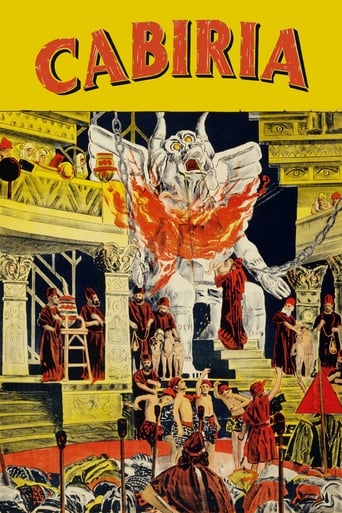
- The film was part of a wave of Italian historical epics that would later culminate in masterpieces like 'Cabiria' (1914)
- Director Ugo Falena was also a respected opera director and theater critic, bringing theatrical sensibility to his films
- The visual style was heavily influenced by Aubrey Beardsley's erotic black-and-white illustrations for the 1894 English edition of Wilde's play
- The Dance of the Seven Veils sequence was considered scandalous for its time, contributing to the film's notoriety
- Film d'Arte Italiana was a subsidiary of the French company Film d'Art, focused on literary adaptations
- The film's sets were reportedly so elaborate that they were reused in other Italian productions of the era
- This adaptation predates the more famous 1923 version starring Alla Nazimova by over a decade
- The film was released during the golden age of Italian cinema, when the country was producing some of the most ambitious films in the world
- Unlike many films of this era, this version focused heavily on the aesthetic and decadent aspects rather than the religious elements
More film details Visual style, music, quotes, restoration, and more
Visual Style
The cinematography of Falena's 'Salomé' reflects the technical limitations and artistic ambitions of 1910. The film was shot in black and white, as was standard for the period, but the cinematographer employed creative lighting techniques to create dramatic shadows and highlights that enhanced the decadent atmosphere. The camera work was largely static, typical of early cinema, but careful composition and framing were used to create visually striking tableaux that echoed the aesthetic of Beardsley's illustrations. The film made effective use of depth in its set design, creating layered compositions that added visual interest to the otherwise flat cinematography of the era. Particular attention was paid to lighting the Dance of the Seven Veils sequence, using what technical means were available to create a sense of mystery and sensuality. The cinematography also emphasized the contrast between the opulent palace scenes and the dark, claustrophobic dungeon where Jokanaan is imprisoned, using light and shadow to reinforce the thematic oppositions in the story.
Innovations
For its time, 'Salomé' demonstrated several notable technical achievements in filmmaking. The production's elaborate set design represented a significant advancement in cinematic art direction, with multiple levels and detailed construction that created convincing environments for the story. The film's use of numerous extras in the court scenes required careful blocking and coordination, demonstrating growing sophistication in managing crowd scenes. The lighting techniques employed, particularly in creating dramatic contrasts between light and shadow, showed an evolving understanding of cinematographic possibilities. The film also demonstrated advances in costume design and makeup artistry, with particular attention to creating the distinctive look inspired by Beardsley's illustrations. While the camera work remained largely static due to technical limitations of the era, the careful composition of each frame showed growing awareness of visual storytelling techniques. The production's ability to create a cohesive visual style that successfully translated the aesthetic of Wilde's play and Beardsley's art to the screen represented a significant achievement in early cinematic adaptation.
Music
As a silent film, 'Salomé' would have been accompanied by live musical performance during its original theatrical run. The specific musical score used for this film is not documented in surviving records, but it was likely typical of the period's accompaniment practices. Theaters of the era often used compiled scores drawing on classical pieces, popular songs, and mood music appropriate to the on-screen action. Given the film's exotic setting and dramatic content, the accompaniment probably included pieces with Middle Eastern or Oriental themes, along with dramatic classical selections for key moments. Some theaters might have employed small orchestras, while others used a single pianist or organist. The Dance of the Seven Veils sequence would have received special musical attention, likely featuring sensual, rhythmic music to enhance the scene's impact. Modern screenings of the film, when they occur, typically feature newly composed scores or carefully selected period-appropriate music.
Famous Quotes
As a silent film, 'Salomé' contained no spoken dialogue. However, intertitles would have conveyed key lines from Wilde's play, including Salomé's famous declaration: 'I will kiss thy mouth, Jokanaan.'
Memorable Scenes
- The Dance of the Seven Veils sequence, where Salomé performs her seductive dance for King Herod, removing seven veils in a display that was both artistic and scandalous for its time. The scene was choreographed to maximize visual impact while maintaining artistic dignity, using elaborate costumes and careful lighting to create an atmosphere of exotic sensuality. This sequence represents the film's centerpiece and most famous moment, demonstrating the production's ability to create spectacle while serving the narrative.
What Audiences Thought
Audience reception to 'Salomé' in 1910 was generally enthusiastic, particularly among the growing middle-class cinema-goers who were hungry for more sophisticated and artistic films. The exotic setting and elaborate spectacle appealed to audiences seeking escape and entertainment, while the literary pedigree attracted more educated viewers. The Dance of the Seven Veils sequence generated considerable buzz and discussion, contributing to the film's notoriety and box office success. Some conservative viewers were reportedly shocked by the film's sensual elements, but this controversy likely increased public interest rather than deterring audiences. The film's success helped establish a market for more ambitious and artistic adaptations in Italian cinema, encouraging producers to invest in similar projects. Contemporary audiences who have been able to view surviving prints or restorations generally appreciate the film's historical significance and visual artistry, even if they find the pacing and acting style typical of the era somewhat dated.
Film Connections
Influenced By
- Oscar Wilde's play 'Salomé' (1891)
- Aubrey Beardsley's illustrations for Wilde's play
- Art Nouveau movement
- Italian diva film genre
- Biblical epics
- Symbolist art movement
- Orientalism in European art
This Film Influenced
- Salomé (1923) starring Alla Nazimova
- Other Italian historical epics of the 1910s
- Later adaptations of Oscar Wilde's works
- Films emphasizing visual aesthetics over narrative
- Art house cinema's approach to literary adaptation
Film Restoration
The preservation status of Ugo Falena's 1910 'Salomé' is uncertain and concerning. Like many films from this early period, it is believed to be partially or completely lost. Some sources suggest that fragments or a shortened version may exist in film archives, possibly in Italy's Cineteca Nazionale or other European archives. The film's survival is complicated by the flammable nature of early film stock and the lack of systematic preservation efforts in the early 20th century. If any elements survive, they would likely be incomplete or in poor condition. Film historians continue to search for missing prints or fragments in archives and private collections worldwide. The uncertain status of this film highlights the broader crisis of film preservation, particularly for works from cinema's first two decades.
Where to Watch
- Due to its lost or partially lost status, Ugo Falena's 1910 'Salomé' is not currently available for viewing through conventional channels. If any elements survive, they may be accessible only to researchers at specialized film archives such as the Cineteca Nazionale in Rome, the British Film Institute, or the Museum of Modern Art's film department. Occasionally, fragments or stills from the film may be shown in specialized film history retrospectives or academic presentations. Film enthusiasts interested in this work might want to seek out the more accessible 1923 adaptation starring Alla Nazimova or other early versions of the Salomé story to understand the cinematic treatment of this material during the silent era.