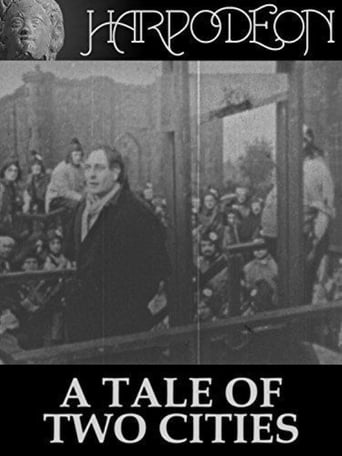
Films
1 film
About Florence Foley
This archive lists one role for Florence Foley: A Tale of Two Cities (1911). ' which was produced by the Thanhouser Company, one of the early independent film studios. Foley's career appears to have been extremely brief, spanning only the year 1911, which was not uncommon for actors in the earliest days of filmmaking when many performers came from stage backgrounds and appeared in only one or two films before returning to theater or pursuing other careers. The Thanhouser Company was known for producing quality literary adaptations, and their 1911 version of 'A Tale of Two Cities' was one of their most ambitious productions of that year. Like many actors from this period, Foley's contribution to early cinema represents the transitional phase when film was establishing itself as a legitimate artistic medium, drawing talent from traditional theater.
The Craft
Milestones
- Appeared in Thanhouser Company's 'A Tale of Two Cities' (1911)
- Participated in early literary adaptation during cinema's formative years
Best Known For
Must-See Films
Working Relationships
Studios
Why They Matter
Impact on Culture
Florence Foley represents the countless anonymous actors who participated in cinema's earliest days when film was still establishing itself as an art form. Her appearance in a literary adaptation during this era reflects the industry's early efforts to legitimize film by adapting respected literary works. While her individual contribution may seem minor, collectively, actors like Foley formed the foundation upon which the film industry would build, representing the transition from stage to screen that characterized early American cinema.
Lasting Legacy
As an actor from the silent era's earliest years, Florence Foley's legacy is primarily historical rather than artistic. She exemplifies the transient nature of early film careers, when many performers treated movies as a temporary venture rather than a lifelong profession. Her participation in one of Thanhouser's literary adaptations places her within the context of early American cinema's efforts to establish cultural legitimacy through classic literature adaptations.
Who They Inspired
Due to her extremely brief film career and the passage of over a century, there is no documented evidence of Florence Foley's influence on other actors or filmmakers. Her influence, like that of many early film actors, exists primarily as part of the collective foundation of silent cinema rather than through individual mentorship or artistic innovation.
Off Screen
Very little is documented about Florence Foley's personal life, which is typical of many early film actors who had brief careers before film stardom became culturally significant. Most biographical details about actors from this era, particularly those with only one or two film credits, have been lost to time.
Did You Know?
- Appeared in cinema during its infancy, when films were still considered a novelty rather than an art form
- Worked with the Thanhouser Company, which was
- Her only known film was a literary adaptation, reflecting early cinema's efforts to gain cultural respectability
- 1911 was an extremely early period in American film history, predating even many of the most famous silent film stars
- The Thanhouser Company was known for its high-quality productions and was unusual for the era in its treatment of actors
- Many actors from this period had stage backgrounds and used films as supplementary income
- Early film actors rarely received screen credit, making identification difficult for modern researchers
- The film industry in 1911 was centered primarily in New York and New Jersey, not yet Hollywood
Frequently Asked Questions
Who was Florence Foley?
Silent film actress active in 1911, known primarily for her appearance in the Thanhouser Company's adaptation of 'A Tale of Two Cities.' Her career appears to have been extremely brief, spanning only that single year during the days of American cinema.
What films is Florence Foley best known for?
Titles linked here include A Tale of Two Cities (1911).
When was Florence Foley born and when did she die?
Unfortunately, specific birth and death dates for Florence Foley are not documented, which is common for many actors who had brief careers in cinema's earliest years before comprehensive record-keeping became standard in the film industry.
What awards did Florence Foley win?
Florence Foley did not receive any documented awards or nominations. The major film award systems, including the Academy Awards, would not be established until many years after her brief career in 1911.
What was Florence Foley's acting style?
Specific details about Florence Foley's acting style are not documented. However, actors during this period typically used exaggerated theatrical techniques adapted from stage performances, as the subtleties of naturalistic film acting had not yet been developed.
Why is so little information available about Florence Foley?
The scarcity of information about Florence Foley is typical of actors from cinema's earliest years. Many early film performers had brief careers, received little or no screen credit, and worked before systematic record-keeping became standard in the film industry.