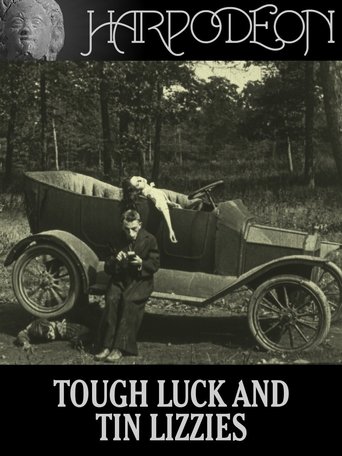
Florence Curtis
Actor
- Active
- 1917-1917
Films 1
About Florence Curtis
Florence Curtis is a very obscure silent-era screen performer whose surviving film credit places her in the 1917 production Tough Luck and Tin Lizzies. Available film reference sources indicate that she worked as an actor during the late silent period, but no reliable biographical record has been located in standard classic-cinema references for her birth, death, family background, or later life. Like many minor performers of the mid-1910s, she appears to have had a brief screen career, and her name survives primarily through filmographies rather than through studio publicity or later memoirs. Because the historical record is sparse, it is not possible to reconstruct a detailed career arc, but her documented credit shows that she was part of the large pool of working actors who supported the rapid expansion of American silent comedy and short-form entertainment in the 1910s. Her presence in a 1917 film suggests involvement in the transitional period when the industry was moving toward more standardized feature production, even though her individual prominence was modest. No verified evidence has been found linking her to a long list of roles, major studios, or later talkie-era work. As a result, Florence Curtis remains a little-documented but authentic figure of early film history, best remembered through surviving credits rather than biographical reportage.
More about Florence Curtis
In film history
Florence Curtis does not appear to have left a large public footprint in film culture, but her documented participation in a 1917 silent film is still valuable to historians studying the workforce of early American cinema. Performers like Curtis helped populate the vast number of one-reel and short-format productions that formed the backbone of the industry in the 1910s, even when they were not public stars. Her surviving credit contributes to the completeness of film history by preserving the names of artists who otherwise might have been lost entirely to time. In that sense, her cultural importance lies less in celebrity than in documentation: she is part of the broader, often invisible community of early screen performers who made silent cinema possible.
Later reputation
Her legacy is primarily archival. Florence Curtis is remembered because her name survives in a film credit, offering evidence of her participation in the silent-film era. For researchers and database compilers, such names matter because they help map the labor and personnel networks of early Hollywood and the wider American film industry. While she does not appear to have been a major star, director, or long-running contract player, her preserved credit ensures she remains part of the historical record of classic cinema.
Influence
There is no evidence of direct influence on later actors or directors, and no documented mentoring relationships. Her influence, if any, is indirect and collective: she belongs to the generation of performers whose work established the practices, rhythms, and ensemble traditions of early screen acting. For historians, her name helps illustrate how many contributors to silent cinema remained unheralded even as they participated in the medium's formative years.
Off screen
No reliable biographical information has been located regarding Florence Curtis's personal life, including marriages, children, family background, residence, or post-film career. Standard silent-era reference sources do not appear to preserve enough documentary evidence to reconstruct these details with confidence. As a result, any claim about her private life would be speculative and is not included here.
Credits
- Appears in the 1917 silent film Tough Luck and Tin Lizzies
- Represents the class of working silent-era screen players whose credits survive in filmographies even when biographies do not
- Worked during the formative years of American screen comedy and short-subject production
- Documented on at least one surviving film credit from the late 1910s
- Serves as a historical example of a minor but genuine contributor to early cinema
Roles
- Role in Tough Luck and Tin Lizzies (1917)
Films
- Tough Luck and Tin Lizzies (1917)
Notes
- Florence Curtis is known from surviving film credit records rather than from extensive biographical documentation.
- Her confirmed filmography currently centers on just one identified title: Tough Luck and Tin Lizzies (1917).
- She is an example of the many silent-era performers whose careers are difficult to reconstruct because studio records and press coverage were often incomplete.
- Her name appears in the historical record of American early cinema, suggesting she was part of the working acting pool of the 1910s.
- Because she is so obscure, she is easily confused with other people of the same or similar name, making careful source verification essential.
- Her limited surviving credit makes her especially relevant to film archivists and database researchers interested in completeness.
- The absence of biographical data is itself common for minor silent-era performers, many of whom were not covered by fan magazines or later reference books.
- Her documented presence in a 1917 release places her at the tail end of the one-reel era and the growth of more polished studio production.
Questions
Who was Florence Curtis?
Florence Curtis was a very obscure silent-era actor known from at least one surviving film credit, Tough Luck and Tin Lizzies (1917). Because the historical record is sparse, little else about her personal or professional life has been securely documented.
What films is Florence Curtis best known for?
She is best known for Tough Luck and Tin Lizzies (1917), which is the principal surviving screen credit associated with her name. No additional reliably verified film titles could be confirmed from the available record.
When was Florence Curtis born and when did she die?
Her birth and death dates are not currently available in reliable classic-cinema reference sources. The available evidence is limited to her screen credit history, so her life dates remain unverified.
What awards did Florence Curtis win?
No awards or nominations are documented for Florence Curtis in the available historical record. She appears to have been a minor silent-era performer whose recognition survives mainly through film credits rather than formal honors.
What was Florence Curtis's acting style?
There is no detailed critical writing describing her acting style. Given the era and the limited surviving evidence, any specific stylistic assessment would be speculative, though she would have worked within the expressive conventions of silent-era screen acting.
What is Florence Curtis's legacy in film history?
Her legacy is archival and historical: she represents the many working actors of the silent era whose names survive even when detailed biographies do not. For researchers, she is part of the indispensable record of early American cinema's supporting talent.
Did Florence Curtis work with major studios or famous collaborators?
No reliable documentation has been found identifying studio affiliations, repeat collaborators, or mentor relationships. Her surviving record is too limited to confirm those kinds of career connections.