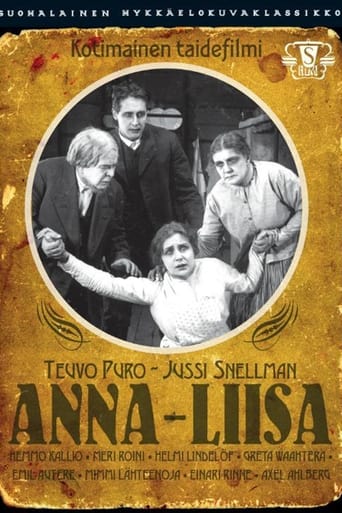
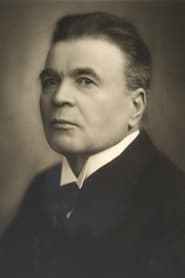
Hemmo Kallio
Actor
- Active
- 1922-1922
Films 1
About Hemmo Kallio
Hemmo Kallio was a Finnish actor best remembered in film history for his appearance in the silent feature Anna-Liisa (1922), one of the early landmark works of Finnish cinema. He belonged first and foremost to the stage tradition, and like many actors of his generation he moved between theatre and the nascent national film industry at a time when Finnish screen production was still small and developing its own identity. His screen career appears to have been very limited, and the surviving film record strongly suggests that his principal significance lies in his contribution to early Finnish dramatic performance rather than a long filmography. Because he worked during the silent era, his acting would have depended heavily on physical presence, gesture, and expressive clarity, qualities that were essential to stage-trained performers transitioning to cinema. Information about his personal life, training, and later career is sparse in widely available film references, which is typical for many early Nordic performers whose reputations were built more firmly in theatre than in film. Even so, his presence in Anna-Liisa places him among the performers who helped establish Finnish feature filmmaking in the 1920s. He is remembered today primarily as a classic-era Finnish actor associated with one of the country’s early literary adaptations.
More about Hemmo Kallio
On screen
No detailed contemporary critical description of Hemmo Kallio's acting style is widely documented in accessible film references. Given his silent-era appearance and the theatrical background typical of performers of his generation, his screen work would likely have emphasized clear gesture, facial expression, and stage-honed presence. Such actors often balanced restraint and emphasis to communicate emotion without spoken dialogue.
In film history
Hemmo Kallio's cultural impact is tied less to celebrity than to historical significance within the early development of Finnish national cinema. By appearing in Anna-Liisa, he participated in the movement to adapt Finnish literary works for the screen, helping cinema draw on national storytelling traditions that resonated with domestic audiences. Performers like Kallio were important in lending theatrical legitimacy to early film production, which in Finland, as elsewhere in Europe, often depended on stage actors to anchor the new medium. His contribution therefore belongs to the broader cultural shift that helped establish Finnish film as a serious artistic form during the silent era. Although he is not a widely famous international figure, his role in an early classic gives him a place in the foundation of Nordic screen heritage.
Later reputation
Hemmo Kallio's legacy rests in his association with one of Finnish cinema's early silent-era titles rather than in a large surviving body of screen work. For film historians, he is part of the generation of performers whose careers bridged theatre and cinema at a formative moment in national film history. His presence in Anna-Liisa links him to the tradition of adapting respected literary material for the screen, a practice that helped define the artistic ambitions of early Finnish filmmaking. Because so little detailed biographical data survives in widely accessible sources, his legacy is somewhat archival: he is remembered through the film itself and through the broader historical context it represents. In that sense, Kallio stands as one of the many early actors whose names preserve the texture and authenticity of silent-era national cinema.
Influence
There is no strong public record of Hemmo Kallio directly influencing later generations in the way major star performers or directors did. His influence is better understood as indirect, through participation in an early Finnish feature that contributed to the development of screen acting standards in the country. Stage-trained actors of his era helped establish the expressive vocabulary of Finnish silent performance, making them part of the foundation upon which later screen actors could build. His work also reflects the early collaboration between theatre and film that shaped Nordic acting traditions.
Off screen
Publicly accessible information about Hemmo Kallio's personal life is very limited. Standard film references do not consistently provide details about his family, marriages, or private life, and no well-documented biographical profile is widely circulated in major English-language film histories. As with many early Finnish actors, records may exist in theatre archives or local historical sources, but they are not readily summarized in common cinema databases.
Credits
- Appeared in Anna-Liisa (1922), a significant early Finnish silent feature and literary adaptation
- Associated with the foundational period of Finnish cinema in the silent era
- Represents the stage-to-screen acting tradition common among early Scandinavian film performers
Roles
- Role in Anna-Liisa (1922)
Films
- Anna-Liisa (1922)
Notes
- He is chiefly documented today for a single film appearance: Anna-Liisa (1922).
- His career illustrates how many silent-era actors were more prominent on stage than on screen.
- Anna-Liisa is an important early Finnish film because it adapted a nationally significant literary work.
- Detailed biographical records for many early Finnish performers are scarce, and Hemmo Kallio is among them.
- His surviving film credit places him within the formative years of Finnish feature production.
- Because the film was silent, his performance would have depended on visual expressiveness rather than dialogue.
- He is a useful example of the many lesser-documented artists who helped build early national cinemas.
Questions
Who was Hemmo Kallio?
Hemmo Kallio was a Finnish actor associated with the silent era of cinema. He is best known in film records for appearing in Anna-Liisa (1922), one of the early Finnish feature films.
What films is Hemmo Kallio best known for?
He is best known for Anna-Liisa (1922). Surviving mainstream film references do not show a broader screen filmography, so his reputation rests primarily on that early Finnish classic.
When was Hemmo Kallio born and when did he die?
His birth and death dates are not readily available in standard accessible film references. More specialized Finnish theatre or archival sources may contain additional biographical details.
What awards did Hemmo Kallio win?
No awards or nominations are readily documented for Hemmo Kallio in accessible film history sources. This is not unusual for early silent-era actors, especially those whose careers were centered in theatre.
What was Hemmo Kallio's acting style?
A detailed critical description of his style is not widely documented, but as a silent-era performer and likely stage-trained actor, he would have relied on expressive gesture, facial acting, and strong physical presence. Those were essential skills for communicating emotion in early cinema.
What is Hemmo Kallio's legacy in film history?
His legacy lies in his participation in the early development of Finnish cinema, especially through Anna-Liisa (1922). He represents the actors who helped bring national literature and stage traditions into the silent film medium.