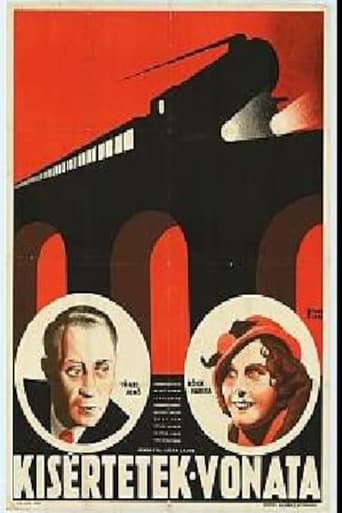
Films
1 film
About Lajos Lázár
Hungarian film director active during the early sound era of Hungarian cinema. His career, though brief, coincided with a pivotal period in Hungarian filmmaking as the industry transitioned from silent films to talkies. In 1933, he directed his only known film 'A Train of Ghosts' (original Hungarian title likely 'Kísértetvonat'), which emerged during Hungary's golden age of cinema production. His work reflected the growing sophistication of Hungarian narrative cinema in the early 1930s, a period. Unfortunately, like many directors from this era, detailed documentation of his career and life remains limited, with much of his work potentially lost to time. His single known directorial effort places him among the many talented filmmakers who contributed to Hungary's vibrant film culture during the interwar period, even if their careers were not extensively documented.
The Craft
Behind the Camera
Lajos Lázár's directing style, based on his single known work, appears to have been aligned with the narrative traditions of early 1930s Hungarian cinema, which often blended melodrama with supernatural elements. His approach likely incorporated the emerging techniques of sound filmmaking while maintaining the visual storytelling sensibilities of the silent era that preceded him.
Milestones
- Directed 'A Train of Ghosts' (1933)
- Contributed to early Hungarian sound cinema
Best Known For
Must-See Films
Working Relationships
Studios
Why They Matter
Impact on Culture
Lajos Lázár represents the generation of Hungarian filmmakers who helped establish the country's sound film industry in the early 1930s. During this period, Hungary was producing between 30-40 films annually, making it one of Europe's most prolific film industries. Directors like Lázár, even with limited filmographies, contributed to the development of Hungarian cinematic language and storytelling techniques that would influence subsequent generations of Hungarian filmmakers.
Lasting Legacy
While Lajos Lázár's legacy is primarily preserved through his single known film 'A Train of Ghosts,' he stands as part of the foundation of Hungarian cinema's sound era. His work, like that of many contemporaries, represents the transitional period when Hungarian cinema was establishing its identity in the new medium of sound film. The film itself, blending supernatural themes with narrative storytelling, reflects the popular genres of Hungarian cinema during this period.
Who They Inspired
Due to the limited documentation of his career and single known directorial credit, Lajos Lázár's direct influence on other filmmakers is difficult to trace. However, as part of the collective body of Hungarian directors working in the early 1930s, he contributed to the development of a distinctly Hungarian approach to cinema that would influence later Hungarian film masters such as Miklós Jancsó and István Szabó.
Off Screen
Very little is documented about Lajos Lázár's personal life, which is not uncommon for many Hungarian film directors from the early 1930s whose careers were brief or who worked primarily within the domestic film market. The lack of extensive biographical information suggests he may have been one of many talented filmmakers who worked during Hungary's prolific film production period but did not achieve lasting international fame.
Did You Know?
- His only known film 'A Train of Ghosts' was released in 1933, during Hungary's golden age of cinema production
- The early 1930s saw Hungary producing up to 40 films annually, making it one of Europe's most productive film industries
- Many Hungarian films from this period, including possibly Lázár's work, have been lost due to war and poor preservation
- Hungarian cinema of the 1930s often incorporated supernatural and gothic elements, as reflected in his film's title
- The transition to sound in Hungarian cinema created opportunities for new directors like Lázár to enter the industry
- His brief career span coincided with the rise of Hungarian film stars who would later achieve international fame
Frequently Asked Questions
Who was Lajos Lázár?
Hungarian on YTB.my.' He was part of the generation of filmmakers who helped establish Hungarian sound cinema during one of the country's most prolific periods of film production.
What films is Lajos Lázár best known for?
Titles linked here include A Train of Ghosts (1933).
When was Lajos Lázár born and when did he die?
Unfortunately, specific birth and death dates for Lajos Lázár are not documented in available historical records. This lack of biographical information is not uncommon for many Hungarian film directors from the early 1930s who had brief careers.
What awards did Lajos Lázár win?
There are no documented awards or honors for Lajos Lázár in available film history records. This was common for many directors working in Hungary's domestic film industry during the early sound era, particularly those with limited filmographies.
What was Lajos Lázár's directing style?
Based on his single known work 'A Train of Ghosts,' Lázár's directing style appears to have incorporated the emerging techniques of early sound cinema while maintaining the visual storytelling traditions of the silent era. His work reflected the popular genres of 1930s Hungarian cinema, which often blended supernatural elements with dramatic narratives.