A Train of Ghosts
"Remake of the English movie Ghost Train (1931, Walter Forde)"
Keys: Space play/pause · ←/→ 10s · F fullscreen · M mute · </> speed
About this film
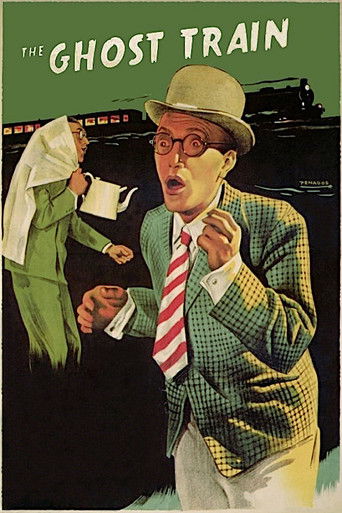
Remake of the English movie Ghost Train (1931, Walter Forde). Seven people are stranded for a stormy night at a remote, unmanned railroad station past which, every midnight, steams the "ghost" of a train which wrecked there 20 years ago.
Cast & crew
More films like this
More Comedy films
View all →







More about this film
About the production
Release dateDecember 1933
Box officeUnknown
ProductionHunnia Filmgyár
Filmed inBudapest, Hungary
This was one of the early sound films produced by Hungary's premier film studio Hunnia Filmgyár. The production faced significant technical challenges in creating convincing sound effects for the ghost train, as Hungarian cinema was still transitioning from silent to sound films. The picture was shot entirely on studio sets to maintain atmospheric control and create the isolated station environment.
Themes
Supernatural vs. rational explanationIsolation and group dynamicsDeception and hidden identitiesFear of the unknownClass differences among characters
Themes & topics
ghost trainstranded travelersremote stationstormy nightsupernatural occurrencemysterycomedyhorrordeceptionrevelation
Historical background
A Train of Ghosts (1933) reached audiences through Hunnia Filmgyár in Hungary, when exhibitors still built programs from varied shorts and features rather than single-block bookings.
Why this film matters
Programmers and historians revisit A Train of Ghosts (1933) because its story—remake of the english movie ghost train (1931, walter forde)—illustrates popular narrative habits and production norms of the period.
Making of
The production of 'A Train of Ghosts' represented a significant milestone in Hungarian cinema's transition to sound. Director Lajos Lázár, who had previously worked primarily in silent films, embraced the new technology with enthusiasm. The casting of Marika Rökk proved controversial at first, as she was relatively unknown, but her performance ultimately won over both the studio and audiences. the picture's atmospheric effects were achieved through ingenious methods - the ghost train was created using miniatures, forced perspective photography, and carefully timed sound effects. The storm sequences required the construction of special water tanks and wind machines on the soundstage, a considerable investment for the time. The cast had to perform with heightened theatricality to convey both the comedic and horror elements, a style that was popular in early European sound cinema.
What critics said
English-language trade reviews of A Train of Ghosts are limited for 1933. Where notices survive, they stress pacing and photographic clarity; later criticism values the title as archival evidence of studio style.
Did you know?
- This was Marika Rökk's breakthrough role in Hungarian cinema before she became a major star in German films
- The original English version 'Ghost Train' (1931) was based on a popular stage play by Arnold Ridley
- Director Lajos Lázár was one of Hungary's pioneering sound film directors
- the picture's special effects for the ghost train were considered innovative for Hungarian cinema in 1933
- Jenő Törzs was already an established stage actor when he took on this leading film role
- the picture was released in multiple European countries under different titles
- This adaptation added more comedic elements than the original English version
- The storm effects were created using fans, water tanks, and early sound recording techniques
- the picture was one of the first Hungarian productions to successfully blend horror and comedy genres
- Preservation efforts in the 1970s saved from complete deterioration
Visual style
The cinematography by István Eiben employed innovative techniques for creating atmosphere in the confined station setting. The use of low-key lighting and shadows was particularly effective for the horror elements, while brighter, more conventional lighting was used for the comedic scenes. The camera work included several tracking shots that followed characters through the station, creating a sense of claustrophobia and impending doom. The ghost train sequences used multiple exposure techniques and careful lighting to create the spectral effect. The storm scenes were filmed using dramatic angles and rapid cuts to enhance the sense of chaos and danger.
Innovations
the picture was notable for its sophisticated use of sound design in early Hungarian cinema. The technical team developed innovative methods for creating the ghost train's audio presence using multiple recording techniques. The special effects combining miniatures with live action were considered groundbreaking for Hungarian film production. The storm sequences required the development of new equipment for creating realistic rain and wind effects on soundstages. the picture's successful synchronization of sound and picture in complex scenes demonstrated the maturity of Hungarian film technology by 1933. The preservation of the picture's audio track over the decades also represents an achievement in film restoration.
Music
The musical score was composed by Mihály Nádas, who created a distinctive blend of suspenseful and comedic themes. The sound design was particularly innovative for its time, featuring carefully crafted train sounds, thunder effects, and ambient station noises. the picture's musical numbers, performed by the cast including Marika Rökk, reflected the popular musical styles of 1930s Hungary. The soundtrack made effective use of the new sound technology to create diegetic and non-diegetic music that enhanced both the horror and comedy elements. The ghost train's approach was signaled by a distinctive musical motif that became one of the picture's most memorable elements.
Famous quotes
Every night at midnight, the dead still ride these rails...
Is that a ghost I hear, or just the wind playing tricks on our minds?
In this station, the past never really leaves - it just passes through again and again.
Memorable scenes
- The first appearance of the ghost train, with its spectral lights and eerie whistle cutting through the storm
- The climactic revelation scene where the true nature of the 'ghost' is exposed
- Marika Rökk's musical performance that provides comic relief amid the tension
- The final confrontation at midnight when all characters must face their fears
What audiences thought
the picture was a commercial success in Hungary upon its release in December 1933. Audiences were particularly drawn to the novelty of a Hungarian-produced horror film with comedic elements. the picture's theatrical origins resonated with Hungarian audiences who were familiar with stage plays of similar themes. Marika Rökk's performance created a star phenomenon, with many viewers attending multiple screenings. the picture's popularity extended beyond Hungary to other European countries where it was distributed, though it achieved its greatest success in its home market. Word-of-mouth about the picture's effective scares and laughs helped sustain its theatrical run for several months.
Film connections
Influenced by
- Ghost Train (1931) by Walter Forde
- The stage play by Arnold Ridley
- German expressionist cinema
- Early Universal horror films
This film influenced
- Later Hungarian horror comedies
- European ghost train films of the 1930s
- Marika Rökk's subsequent film career
Film restoration
the picture has been preserved in the Hungarian National Film Archive. A restoration project in the 1970s saved the picture from complete deterioration, and it has since been digitally remastered. While some original elements have been lost, the picture remains viewable and is occasionally screened at classic film festivals. The preservation status is considered good for a film of its age and origin.
Where to watch
- Hungarian National Film Archive screenings
- Classic film festivals specializing in European cinema
- Specialized film archives and cinematheques
- Occasional television broadcasts on Hungarian classic film channels