Films
2 films
About Vladimir Tsoppi
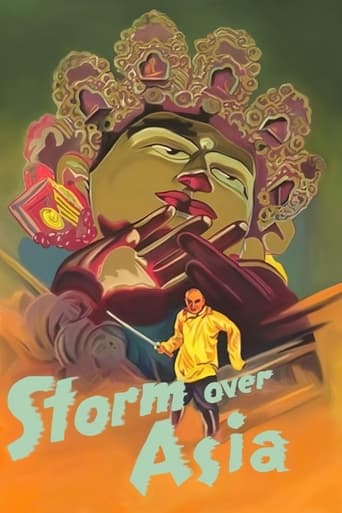
Soviet actor: brief but memorable career in cinema was defined by his powerful performance in the silent film 'Storm Over Asia' (1928). Working during the formative years of Soviet montage cinema, Tsoppi was part of a new generation of actors trained to embody the revolutionary ideals promoted by filmmakers like Vsevolod Pudovkin. His role as the young Mongolian fur trapper who becomes a reincarnation of Genghis Khan showcased his ability to convey complex emotions through physical expression and intense gazes, essential skills for silent film actors. Tsoppi's casting was significant as he represented the non-professional, 'authentic' actors that Soviet directors often sought to achieve greater realism and ideological purity in their films. His performance in 'Storm Over Asia' demonstrated a remarkable screen presence, capable of portraying both vulnerability and fierce revolutionary spirit. Despite his talent and the international acclaim of his only known film, Tsoppi's filmography appears to be limited to this single, albeit monumental, work, making his contribution to cinema a unique case of a 'one-film' actor whose impact far exceeded his output. His legacy is inextricably linked to Pudovkin's masterpiece, where he served as a crucial vessel for the film's powerful anti-imperialist and pro-revolutionary message.
The Craft
On Screen
Tsoppi's acting style was emblematic of the Soviet montage school, relying heavily on physical expressiveness, intense facial expressions, and powerful body language to convey character and emotion without dialogue. His performance was naturalistic yet heightened, designed to fit into Pudovkin's theory of typage, where actors were chosen for their physical resemblance to a social or psychological type. He portrayed the transformation of his character from an innocent trapper to a messianic revolutionary leader with a compelling physical and emotional arc, using his eyes and posture to communicate the character's internal journey. His style eschewed the theatricality common in earlier silent films for a more grounded, intense realism that served the film's political and narrative purposes.
Milestones
- Starred as the lead role of Bair in Vsevolod Pudovkin's 'Storm Over Asia' (1928)
- Delivered a critically acclaimed performance that helped establish the film as a masterpiece of Soviet cinema
Best Known For
Iconic Roles
Must-See Films
Working Relationships
Worked Often With
Studios
Why They Matter
Impact on Culture
Vladimir Tsoppi's cultural impact is almost entirely concentrated within his singular, iconic performance in 'Storm Over Asia.' As the face of. His portrayal of Bair provided a powerful human face to anti-imperialist sentiment, making the film's political message accessible and emotionally resonant for international audiences. The character's journey, as embodied by Tsoppi, became a symbol of national awakening and resistance against foreign oppression, themes that resonated deeply in the 1920s and continue to be studied by film scholars today. His image as the fierce, determined Mongolian leader remains one of the enduring visual icons of silent cinema, representing the power of film to create archetypes of revolutionary heroism.
Lasting Legacy
Vladimir Tsoppi's legacy is that of a cinematic enigma: an actor whose entire known filmography consists of one masterpiece, yet whose performance within that film has secured him a permanent place in film history. He is remembered not for a lengthy career but for a single, perfect contribution to a landmark of world cinema. His work serves as a prime example of 'typage' in Soviet film, where the actor's essence and appearance were as important as their performance. For students and aficionados of silent film, Tsoppi is a case study in how a powerful screen presence in a single role can create an immortal legacy. His name is forever linked with Vsevolod Pudovkin and the golden age of Soviet montage, representing the authentic, non-professional talent that filmmakers of the era prized.
Who They Inspired
Due to the limited scope of his career, Vladimir Tsoppi's direct influence on other actors is difficult to trace. However, his performance in 'Storm Over Asia' has undoubtedly influenced generations of actors and filmmakers studying the craft of silent film performance. His work serves as a masterclass in conveying complex character development through non-verbal means, a technique that remains relevant in cinema today. Actors studying physicality and emotional expression without dialogue often look to performances like Tsoppi's as a benchmark. His role influenced the archetype of the 'reluctant revolutionary' or 'chosen one' in cinema, a character type that has been revisited in countless films since. Indirectly, his success helped validate the Soviet practice of casting non-professionals for authenticity, a technique that has been adopted by filmmakers worldwide, from Italian Neorealism to contemporary independent cinema.
Off Screen
Very little is documented about Vladimir Tsoppi's personal life, which is not uncommon for non-professional actors from the early Soviet era who were not part of the mainstream celebrity system. His casting in a major film suggests he was likely discovered by director Vsevolod Pudovkin or his scouting team, possibly in Mongolia or a Soviet republic in Central Asia, due to his authentic appearance. Information regarding his family, relationships, or life outside of his single film role has not been preserved in widely accessible film archives or historical records, leaving his personal story largely a mystery.
Did You Know?
- Vladimir Tsoppi's entire known filmography consists of just one film, 'Storm Over Asia' (1928).
- He was a non-professional actor, likely chosen by director Vsevolod Pudovkin for his authentic Mongolian appearance.
- His character's name, Bair, becomes a 'living incarnation' of Genghis Khan in the film's plot.
- The film was shot on location in Mongolia, adding to the authenticity of Tsoppi's performance.
- Despite his powerful performance, almost no biographical information about Tsoppi survives in film archives.
- He is often cited as a prime example of the Soviet cinematic technique of 'typage'.
- His performance was instrumental in 'Storm Over Asia' being recognized as a masterpiece of world cinema.
- The film's international success made Tsoppi's face known to cinephiles around the globe in the late 1920s and early 1930s.
In Their Own Words
As a silent film actor, his famous 'quotes' are his powerful visual moments, such as his intense, defiant gaze after discovering his betrayal in 'Storm Over Asia'.
Frequently Asked Questions
Who was Vladimir Tsoppi?
Soviet with credits in this catalog. He was a non-professional actor chosen for his authentic appearance, and his entire known filmography is limited to this single, highly influential film.
What films is Vladimir Tsoppi best known for?
Titles linked here include Storm Over Asia (1928).
When was Vladimir Tsoppi born and when did he die?
Unfortunately, the birth and death dates of Vladimir Tsoppi are not known. Very little biographical information about him exists, which is common for non-professional actors from the early Soviet period who were not part of the established film industry.
What awards did Vladimir Tsoppi win?
There are no records of Vladimir Tsoppi receiving any specific awards or nominations. His recognition comes from the lasting critical acclaim of his performance in 'Storm Over Asia', which is consistently ranked among the greatest films ever made.
What was Vladimir Tsoppi's acting style?
Tsoppi's acting style was defined by intense physical expressiveness and powerful non-verbal communication, essential for silent film. He embodied the Soviet technique of 'typage,' where an actor's physical presence was used to represent a social or psychological type, conveying his character's transformation from an innocent man to a revolutionary leader through raw, authentic emotion.