Dagmar Myhrvold
Actor
- Active
- 1920-1920
Films 1
About Dagmar Myhrvold
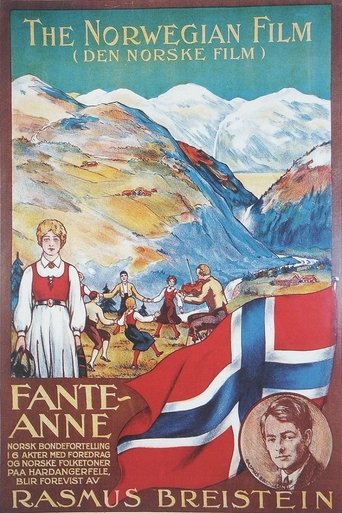
Dagmar Myhrvold was a Norwegian stage and screen actress best remembered today for her work in the silent film era, especially her appearance in the landmark 1920 rural drama Fante-Anne. She was part of the generation of performers who helped establish Norway's early national cinema, a period when film production in the country was still developing its own identity and artistic language. Myhrvold's screen career appears to have been brief and concentrated in the early 1920s, which was common for many stage-trained actors who moved into film during the silent era and then returned primarily to theatre work. Because surviving documentation on her later life is limited, she is chiefly remembered through the film heritage of early Norwegian cinema rather than through a long, heavily documented movie career. Her contribution remains significant as part of the cast of one of the most important early Norwegian feature films, a work often cited in histories of Nordic silent cinema. She represents the many performers whose names are not widely known internationally but who were essential to the artistic and cultural foundation of their national film industries. Her legacy endures through film scholarship and archival references to Fante-Anne and the early development of Norwegian screen acting.
More about Dagmar Myhrvold
On screen
Specific contemporary descriptions of Dagmar Myhrvold's acting style are not readily documented in surviving reference sources. As a silent-era performer, her work would have relied on expressive facial performance, controlled gesture, and theatrical clarity adapted for the camera rather than spoken dialogue. In early Norwegian cinema, actors often balanced stage technique with a more restrained screen naturalism, especially in rural dramas like Fante-Anne. Myhrvold's surviving screen reputation is therefore tied more to her participation in the film than to detailed critical commentary on her individual style.
In film history
Dagmar Myhrvold's cultural importance lies in her place within the formative years of Norwegian cinema, when the industry was defining its artistic identity and creating works that would become part of the nation's film canon. Her appearance in Fante-Anne connects her to a film frequently discussed in histories of Scandinavian silent film as an example of early feature-length drama rooted in local culture and rural life. Even when an actor's individual biography is sparse, participation in such a film gives them lasting historical significance because these productions helped establish cinema as a serious national art form. Myhrvold is therefore part of the foundational generation whose work preserved local stories, performance traditions, and screen aesthetics for later audiences and scholars.
Later reputation
Her legacy is primarily archival and historical rather than celebrity-based: she survives in the record as one of the performers associated with an important early Norwegian silent feature. For film historians, names like Dagmar Myhrvold matter because they help reconstruct the personnel networks behind early national cinemas and the evolution of screen performance in the silent period. Her contribution is preserved through the continued study and preservation of Fante-Anne, which stands as an important artifact of Norway's film heritage. In that sense, her legacy is inseparable from the survival and scholarly appreciation of early Scandinavian cinema itself.
Influence
There is no clear documentation of Dagmar Myhrvold directly mentoring later actors or exerting a traceable personal influence on specific filmmakers. Her influence is best understood indirectly, through her participation in one of the early films that helped define Norwegian screen acting and narrative filmmaking. By being part of the generation that worked during cinema's formative years, she contributed to performance standards and artistic expectations that later Norwegian actors inherited. Her presence in the historical record adds depth to the understanding of how early national cinemas were populated by stage and screen artists who shaped the medium's local evolution.
Off screen
Publicly available biographical information about Dagmar Myhrvold's personal life is extremely limited in standard film reference sources. Her birth and death details, family background, marriages, and later life are not readily documented in commonly accessible English-language film histories. Like many early silent-era Scandinavian performers, she is better represented in film credits and archival records than in extensive biographical profiles. Until more archival evidence is located, her personal history must be considered largely undocumented in the public record.
Education
No reliable public information on her education is readily available in standard film references.
Credits
- Appeared in Fante-Anne (1920), one of the landmark early feature films in Norwegian cinema
- Participated in the silent-era expansion of Norway's national film culture
- Represents the class of early Scandinavian screen actors whose film work helped legitimize feature-length dramatic production in the region
Roles
- Role in Fante-Anne (1920)
Films
- Fante-Anne (1920)
Notes
- Dagmar Myhrvold is chiefly remembered for a single known film credit in surviving mainstream references.
- Her best-known film, Fante-Anne, is an important work in the history of Norwegian silent cinema.
- She is associated with the early period when Norway was building its own feature-film tradition.
- Information about her birth, death, and family life is not widely available in standard public film references.
- She is an example of a silent-era performer whose historical significance comes mainly from participation in a landmark film rather than a long screen career.
- Her filmography in commonly cited sources appears extremely short, suggesting either a brief screen career or incomplete surviving documentation.
- Because silent-era Norwegian records are often fragmentary, some details of her life may still be recoverable only through archival research.
Questions
Who was Dagmar Myhrvold?
Dagmar Myhrvold was a Norwegian actress from the silent film era, best known for appearing in Fante-Anne (1920). She is part of the early generation of performers who helped establish Norway's feature-film tradition.
What films is Dagmar Myhrvold best known for?
She is best known for Fante-Anne (1920), which is her principal surviving film credit in commonly available references. The film is considered an important early work in Norwegian cinema.
When was Dagmar Myhrvold born and when did she die?
Her birth and death dates are not readily documented in standard public film references. As a result, both dates are currently best treated as unknown unless supported by archival sources.
What awards did Dagmar Myhrvold win?
No awards or formal honors are readily documented for Dagmar Myhrvold in the available historical record. Her importance is mainly historical, tied to her role in early Norwegian film rather than to a decorated awards career.
What was Dagmar Myhrvold's acting style?
Specific contemporary descriptions of her style are not widely preserved. As a silent-era actress, her performance would have depended on expressive gesture, facial clarity, and stage-influenced screen presence.
What is Dagmar Myhrvold's legacy in film history?
Her legacy lies in her association with Fante-Anne and the formative period of Norwegian silent cinema. She represents the early actors whose work helped establish national film production and performance traditions.