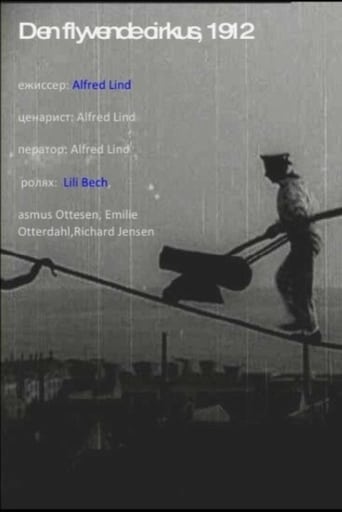
Emilie Otterdahl
Actor
- Active
- 1912-1912
Films 1
About Emilie Otterdahl
Emilie Otterdahl is a largely obscure silent-era film performer whose surviving screen credit places her in the 1912 American short The Pride of the Circus. Beyond that single known film appearance, reliable biographical information about her life and career is extremely limited in readily available historical records, which is not unusual for many early screen actors whose work was documented only sparingly in period trade papers and incomplete studio records. Her known activity falls squarely within the transitional years when film performance was still closely tied to stage traditions, one-reel productions, and the rapidly developing vocabulary of silent acting. Because no verified full filmography, birth record, or death record is readily available from standard reference sources, she must presently be regarded as a minimally documented early cinema personality. The surviving evidence suggests she worked as an actor during the 1912 silent-film era, but the breadth of her involvement in the industry cannot be confirmed from the available record. Her name endures primarily through filmography databases and historical indexing of early motion pictures rather than through a broad surviving public profile. As with many performers from the period, her legacy is tied to the importance of preserving and reconstructing the names of early film workers whose contributions helped build the silent cinema industry.
More about Emilie Otterdahl
On screen
No surviving critical descriptions of Emilie Otterdahl's acting style have been located in standard reference sources. Given her active period in 1912, her performance would have belonged to the early silent-film tradition, which generally favored expressive physical gesture, clear pantomime, and heightened facial expression to communicate narrative and emotion without synchronized sound. Any specific assessment of her technique beyond that broader historical context would be speculative.
In film history
Emilie Otterdahl's cultural impact lies less in celebrity than in documentation: she represents the many early film performers whose names survive even when biographical detail does not. Her credit in a 1912 motion picture places her within the formative years of American cinema, when the industry was experimenting with narrative structure, performance style, and exhibition formats that would soon become standard. For historians, such names are important because they help reconstruct the labor history of silent film and preserve the identities of performers who contributed to the medium's early growth. While she does not appear to have had a widely visible public persona or a body of work that shaped later popular culture directly, her surviving credit is part of the larger mosaic of silent-era film history.
Later reputation
Her legacy is essentially archival: Emilie Otterdahl remains part of the historical record of early silent cinema, even though little else is known about her life. The survival of her name in filmographic listings underscores the value of preservation efforts and historical databases that recover credits from fragile and incomplete sources. She stands as one of many early screen actors whose work helped establish film acting as a recognized profession, even if their individual careers were brief or sparsely recorded. For modern film scholars and database curators, she is a reminder that the silent era contains many overlooked contributors whose identities deserve to be retained and accurately cataloged.
Influence
No documented direct influence on later actors or directors has been established for Emilie Otterdahl. Her broader influence is indirect, through participation in the early silent-film workforce that shaped acting conventions before the sound era. In that sense, she belongs to the generation of performers whose collective work contributed to the development of screen performance norms later refined by more widely known stars.
Off screen
No reliable public information about Emilie Otterdahl's personal life, family background, marriages, or later life has been identified in standard accessible sources. Many performers from the silent era, especially those with only a small number of known credits, left behind little surviving biographical documentation unless they later achieved major fame, worked extensively in studio publicity, or became involved in other historically recorded careers. At present, her personal history remains undocumented in the commonly consulted film reference materials.
Credits
- Screen credit in the silent film The Pride of the Circus (1912)
- Participation in early American cinema during the one-reel silent era
- Presence in surviving filmographic records documenting performers of the 1910s
Roles
- Role in The Pride of the Circus (1912)
Films
- The Pride of the Circus (1912)
Notes
- Emilie Otterdahl is known in available records primarily through a single confirmed screen credit.
- Her known film, The Pride of the Circus, was released in 1912, placing her in the very early years of American feature and short-form cinema.
- Her surviving record highlights how many silent-era actors remain poorly documented despite appearing on screen.
- She is not currently associated with a widely available full biography in standard reference sources.
- No verified awards, nominations, or honors are known for her.
- Her preserved name is valuable to film historians because it helps reconstruct cast lists for early lost or partially lost productions.
Questions
Who was Emilie Otterdahl?
Emilie Otterdahl was an early silent-film actor known from the 1912 film The Pride of the Circus. She is a minimally documented figure in classic cinema history, and surviving records about her life are sparse.
What films is Emilie Otterdahl best known for?
She is best known for The Pride of the Circus (1912), which is the principal surviving credit associated with her name. No broader verified filmography is readily available in standard reference sources.
When was Emilie Otterdahl born and when did she die?
Her birth and death dates are not currently verified in accessible standard sources. Because of the limited historical record, both remain unknown at this time.
What awards did Emilie Otterdahl win?
No awards or nominations are currently documented for Emilie Otterdahl. This is common for many early silent-era performers whose careers were recorded only minimally.
What was Emilie Otterdahl's acting style?
No contemporary reviews or detailed descriptions of her technique have been located. As a 1912 silent-era performer, she would have worked in an acting style based on expressive gesture, pantomime, and clear facial emotion, which were standard methods of the period.
What is Emilie Otterdahl's legacy in film history?
Her legacy is primarily historical and archival. She represents the many early cinema performers whose names survive even though their personal histories and broader careers remain undocumented, making her part of the foundational record of silent film.