Tom Howard
Actor
Born: June 16, 1885 in County Tyrone, Ireland Died: February 27, 1955 Active: 1905-1951 Birth Name: Thomas J. Black
Films
1 film
About Tom Howard
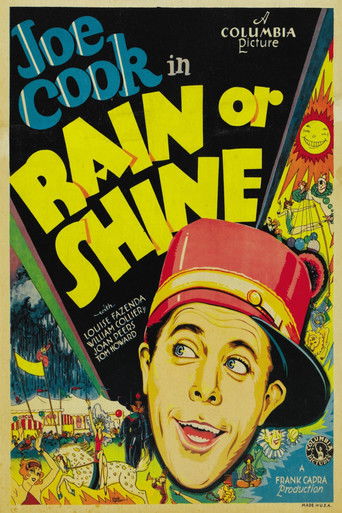
Versatile Irish-born American comedian and actor who achieved significant success across vaudeville, Broadway, film, and radio. Born Thomas J. Black in County Tyrone, Ireland, he immigrated to the United States as an infant and began his professional career in 1905, adopting the stage name Tom Howard. He spent decades honing his craft in medicine shows, burlesque, and the continuous vaudeville circuit before rising to Broadway prominence in the 1920s. His major breakthrough came in the 1928 stage musical 'Rain or Shine' alongside Joe Cook, a role he famously reprised in Frank Capra's 1930 film adaptation. While he appeared in few feature films, Howard became a staple of early sound comedy shorts for Paramount and Educational Pictures, often paired with his longtime partner George Shelton. In the 1940s, he reached the pinnacle of his fame as the creator and host of the hit radio parody 'It Pays to Be Ignorant,' which eventually transitioned to television. Howard remained a beloved figure in American comedy until his death in 1955, leaving behind a legacy of deadpan wit and satirical brilliance.
The Craft
On Screen
Howard was renowned for his deadpan delivery, gravelly voice, and 'slow-burn' comedic timing. He often played the 'straight man' or a befuddled victim of more manic characters, utilizing an upturned nose and an exaggerated grin to convey confusion or mock-seriousness. His style was deeply rooted in the physical comedy and rapid-fire patter of vaudeville and burlesque.
Milestones
- Starred in the hit Broadway musical 'Rain or Shine' (1928)
- Reprised the role of Amos K. Shrewsberry in Frank Capra's 'Rain or Shine' (1930)
- Formed the popular comedy duo Howard & Shelton in the early 1930s
- Created and hosted the long-running radio hit 'It Pays to Be Ignorant' (1942-1951)
- Transitioned 'It Pays to Be Ignorant' to national television in 1949 and 1951
Best Known For
Iconic Roles
Must-See Films
Accolades
Special Recognition
- Inducted into the Radio Hall of Fame (as part of 'It Pays to Be Ignorant' legacy)
- Recognized as a pioneer of early sound comedy shorts
Working Relationships
Worked Often With
Studios
Why They Matter
Impact on Culture
Bridge between the physical comedy of the 19th-century stage and the satirical broadcasting of the mid-20th century. His creation, 'It Pays to Be Ignorant,' was a seminal parody of the 'Information Please' era of intellectual quiz shows, predating modern satirical news and game shows. By mocking the self-importance of experts, Howard tapped into a populist comedic vein that resonated deeply with Depression and WWII-era audiences.
Lasting Legacy
Howard is remembered excelled in the 'short subject' film era, having appeared in over 50 comedy shorts that preserved the vaudeville aesthetic for future generations. His radio work remains a high-water mark for American satire, and his transition to television during its infancy helped define the early variety and game show formats. Film historians often cite his performance in 'Rain or Shine' as a quintessential example of early talkie character acting.
Who They Inspired
His deadpan delivery and the structure of his satirical quiz show influenced later generations of comedians, including the creators of 'Wait Wait. Don't Tell Me!' and other panel-based comedy programs. His ability to maintain a straight face while delivering absurd dialogue became a template for the 'deadpan' archetype in American sitcoms.
Off Screen
Howard was married to Harriet Berg. He was a family-oriented man who involved his children in his professional life; his daughter Ruth Howard — primary writer for his most famous radio show, and his son Tom Howard Jr. Also pursued a career as a radio writer.
Education
Self-educated through the vaudeville and burlesque circuits; began professional work at age 20.
Family
- Harriet Berg
Did You Know?
- At the height of his radio career in 1949, he earned a staggering salary of $219,000 per year.
- He began his career playing a dozen shows a day in 'continuous vaudeville' for just $15 a week.
- His stage name was chosen in 1905, possibly to sound more 'American' than his birth name, Thomas Black.
- He was a favorite of the 'Algonquin Round Table' literati, who praised his unique comedic voice.
- Every episode of his radio show ended with his signature sign-off: 'Good night and good nonsense!'
- He reprised his Broadway role in Frank Capra's first major 'A' production at Columbia Pictures.
- His daughter Ruth wrote many of the scripts that made him a household name in the 1940s.
In Their Own Words
Good night and good nonsense! (Signature sign-off from 'It Pays to Be Ignorant')
What color is a red stoplight? (A classic example of the 'ridiculous questions' he posed to his panel of experts)
Frequently Asked Questions
Who was Tom Howard?
Prominent Irish-American comedian and with credits in this catalog. He is best remembered as the creator and host of the satirical quiz show 'It Pays to Be Ignorant'.
What films is Tom Howard best known for?
Titles linked here include Rain or Shine (1930), Get That Venus (1933).
When was Tom Howard born and when did they die?
Born June 16, 1885; died February 27, 1955.
What was Tom Howard's acting style?
Howard was known for a deadpan, gravel-voiced delivery and a 'slow-burn' comedic timing. He excelled at playing the straight man or the confused foil to more energetic comedians, a style he perfected during his years in burlesque and vaudeville.
What was Tom Howard's most significant contribution to entertainment?
His most significant contribution was the creation of 'It Pays to Be Ignorant', a radio program that pioneered the parody quiz show format. The show was a massive success, running for nearly a decade and successfully transitioning to early television.