
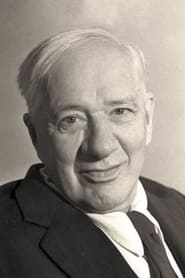
Korney Chukovsky
Actor
Born: March 31, 1882 in St. Petersburg, Russian Empire Died: October 28, 1969 Active: 1905-1969 Birth Name: Nikolay Vasilyevich Korneychukov
Films
1 film
About Korney Chukovsky
Korney Ivanovich Chukovsky was one of Russia's most beloved children's authors and literary critics, active from the early 1900s until his death in 1969. Born Nikolay Vasilyevich Korneychukov, he adopted his pen name early in his writing career and became famous for his whimsical children's poems and stories including 'Doctor Aybolit,' 'The Crocodile,' and 'Moydodyr.' Beyond children's literature, Chukovsky — respected literary critic and translator who introduced English-language writers like Walt Whitman, Rudyard Kipling, and Oscar Wilde to Russian readers. He survived the Stalinist purges despite being criticized for his 'formalism' and continued writing throughout his life, becoming a cultural icon in the Soviet Union. His brief appearance in the 1944 film 'Telephone' represents a minor footnote in his otherwise monumental literary career. Chukovsky's home in Peredelkino became a literary salon where he mentored young writers and preserved Russian literary traditions during difficult political times.
The Craft
On Screen
Limited acting experience, appeared primarily as himself in cameo roles
Milestones
- Published first children's book 'The Crocodile' in 1917
- Became leading literary critic in Soviet Russia
- Translated major English works into Russian
- Survived Stalinist purges despite criticism
- His home in Peredelkino became literary center
- Made cameo appearance in 1944 film 'Telephone'
Best Known For
Iconic Roles
Must-See Films
Accolades
Won
- Lenin Prize (1962)
- Order of Lenin
- Order of the Red Banner of Labour
Special Recognition
- Honored Artist of the RSFSR
- Honored Scientist of the RSFSR
Working Relationships
Worked Often With
Studios
Why They Matter
Impact on Culture
Chukovsky fundamentally shaped Russian children's literature, creating characters and stories that became part of the cultural fabric of the Soviet Union and continue to be beloved today. His translations of English literature opened up Western culture to generations of Russian readers. As a literary critic, he defended artistic integrity against political pressure and helped preserve Russian literary traditions during the most repressive periods of Soviet history. His home in Peredelkino served as an intellectual sanctuary where literature and free thought could flourish despite political constraints.
Lasting Legacy
Chukovsky's legacy endures through his timeless children's stories that remain popular in Russia and former Soviet republics. His literary criticism and translations continue to be studied and respected. The Chukovsky House Museum in Peredelkino preserves his memory and continues to host literary events. His influence on children's literature in particular cannot be overstated - he essentially created the modern Russian children's literary tradition with his rhythmic, playful, and imaginative works.
Who They Inspired
Chukovsky influenced generations of Russian writers, both through his critical work and his personal mentorship. His approach to children's literature, emphasizing rhythm, wordplay, and fantasy, became the standard for Russian children's authors. His translations set high standards for literary translation in Russia. His courage in maintaining literary standards during political repression inspired younger writers to value artistic integrity over political expediency.
Off Screen
Chukovsky led a rich intellectual life centered around literature and family. He married Maria Borisovna Goldfeld in 1903, and they had four children: Nikolai, Lydia, Boris, and Maria. His daughter Lydia Chukovskaya became a prominent writer and dissident. After his first wife's death, he married her sister, Anna Goldfeld. Chukovsky was known for his warm hospitality and his home in Peredelkino became a gathering place for Soviet intellectuals. Despite facing political pressure during the Stalin era, he maintained his integrity and continued writing throughout his life.
Education
Self-educated; did not attend university formally due to poverty and his illegitimate birth status
Family
- Maria Borisovna Goldfeld (1903-1935)
- Anna Goldfeld (1935-1969)
Did You Know?
- Was born illegitimate and raised by his mother in poverty
- Changed his name from Korneychukov to Chukovsky as a pen name
- His children's book 'Doctor Aybolit' was inspired by Hugh Lofting's Doctor Dolittle
- Was friends with Vladimir Nabokov in their youth
- Survived cancer in the 1950s and wrote about his experience
- His diary entries from 1917-1929 are considered valuable historical documents
- Was one of the few intellectuals who could criticize Stalin and survive
- Learned English as a teenager to read original works
- His daughter Lydia was a prominent dissident writer
- Never formally attended university due to his social status
In Their Own Words
A great writer not only creates a world but also creates the language in which that world is expressed
Children's literature is the most important literature because it shapes the soul
Translation is not just about words but about carrying culture across borders
The writer's duty is to tell the truth, even when it's dangerous
Poetry for children must be music first, meaning second
Frequently Asked Questions
Who was Korney Chukovsky?
Renowned Russian children's author, literary critic, and translator who became. He wrote classic children's stories like 'Doctor Aybolit' and 'The Crocodile,' translated major English works into Russian, and was a respected literary critic who survived the Stalinist era.
What films is Korney Chukovsky best known for?
Titles linked here include Telephone (1944).
When was Korney Chukovsky born and when did he die?
Born March 31, 1882; died October 28, 1969.
What awards did Korney Chukovsky win?
Chukovsky received the prestigious Lenin Prize in 1962, the Order of Lenin, the Order of the Red Banner of Labour, and was named an Honored Artist and Honored Scientist of the RSFSR. These honors recognized his contributions to Soviet literature and culture.
What was Korney Chukovsky's writing style?
Chukovsky's children's literature featured playful rhythms, nonsense words, and imaginative characters that appealed to young readers. His literary criticism was known for its intellectual rigor and defense of artistic standards. His translations were praised for capturing both the meaning and spirit of the original works.