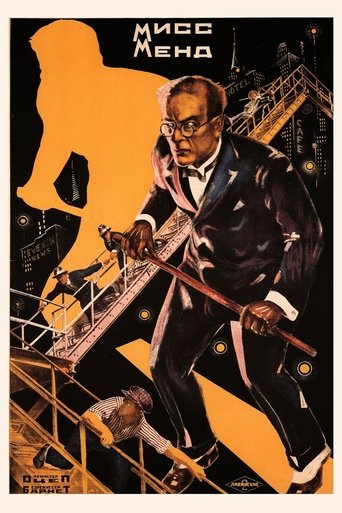
Films
2 films

About Natalya Rozenel
Soviet actress active during the silent film era of the 1920s, best known for her role in the 1926 adventure serial 'Miss Mend.' Her career was brief but significant within the context of early Soviet cinema, appearing during a period when the Soviet film industry was establishing itself as a major force in world cinema. Rozenel was part of the ensemble cast that brought to life this ambitious three-part adventure film, which was one of the Soviet Union's attempts to create popular entertainment modeled after American serials. Her performance in 'Miss Mend' demonstrated the acting style of the period, characterized by exaggerated expressions and gestures typical of silent film performance. Unfortunately, like many actors from this era, detailed documentation of her career and life remains scarce, with 'Miss Mend' being her only credited major film appearance. Her contribution to Soviet cinema represents the work of countless performers who helped shape the early film industry but whose names have faded from mainstream film history.
The Craft
On Screen
Typical of silent era performance with exaggerated gestures and facial expressions to convey emotion without dialogue
Milestones
- Starred in 'Miss Mend' (1926), one of the earliest Soviet adventure serial films
- Participated in the Soviet film industry's formative years
- Contributed to the popularization of adventure genre in Soviet cinema
Best Known For
Iconic Roles
Must-See Films
Working Relationships
Worked Often With
Studios
Why They Matter
Impact on Culture
Natalya Rozenel's contribution to Soviet cinema, though limited to one major film, represents the broader cultural movement of the 1920s when Soviet filmmakers were experimenting with different genres and styles. 'Miss Mend' was significant as one of the first Soviet adventure films, attempting to create popular entertainment that could compete with American imports while still reflecting Soviet values. Her participation in this groundbreaking project helped establish the adventure genre in Soviet cinema, paving the way for future popular films that balanced entertainment with ideological messaging.
Lasting Legacy
While Natalya Rozenel may not be widely remembered today, her work in 'Miss Mend' contributes to our understanding of early Soviet cinema and the actors who helped shape it. The film itself has gained historical significance as an example of Soviet attempts to create mass entertainment, and Rozenel's performance is part of this important cultural artifact. Her legacy exists within the broader context of preserving the memory of early film pioneers, particularly those from the Soviet film industry whose contributions are often overlooked in Western film history.
Who They Inspired
As an actor from the silent era, Natalya Rozenel's direct influence on subsequent generations of performers is difficult to trace due to the limited documentation of her career. However, her participation in establishing the adventure genre in Soviet cinema contributed to the evolution of acting styles in popular Soviet films, influencing how actors approached roles in entertainment-focused productions versus more ideologically driven works.
Off Screen
Very limited information is available about Natalya Rozenel's personal life, which is common for many actors from the early Soviet film period whose records were not extensively documented or preserved.
Did You Know?
- 'Miss Mend' was one of the first Soviet adventure serials, consisting of three parts released in 1926
- The film was inspired by American adventure serials but adapted for Soviet audiences
- Natalya Rozenel's role in 'Miss Mend' represents one of the few documented performances by actresses in early Soviet adventure films
- The film was co-directed by Fyodor Otsep and Boris Barnet, both important figures in Soviet cinema
- 'Miss Mend' was unusual for Soviet cinema of the period as it focused on entertainment rather than propaganda
- The film's international title 'Miss Mend' suggests it may have been intended for export, unlike many Soviet films of the era
- Very little biographical information survives about many of the film's cast members, including Rozenel
- The preservation status of 'Miss Mend' makes it an important historical document of early Soviet popular cinema
Frequently Asked Questions
Who was Natalya Rozenel?
Soviet actress from the silent film era, best known for her appearance in the 1926 adventure film 'Miss Mend.' She was active during the formative years of Soviet cinema, though her career appears to have been brief with only one major credited role.
What films is Natalya Rozenel best known for?
Titles linked here include Miss Mend (1926).
When was Natalya Rozenel born and when did she die?
Unfortunately, specific birth and death dates for Natalya Rozenel are not available in historical records, which is common for many actors from the early Soviet film period whose biographical information was not extensively documented or preserved.
What awards did Natalya Rozenel win?
There are no documented awards or honors for Natalya Rozenel, which is not unusual for actors from the very early Soviet film period when formal award systems for cinema were not yet established.
What was Natalya Rozenel's acting style?
Like most actors from the silent era, Natalya Rozenel's acting style would have been characterized by exaggerated gestures, facial expressions, and body language to effectively convey emotions and story elements without the benefit of synchronized sound.
Why is 'Miss Mend' historically significant?
'Miss Mend' is historically significant as one of the first Soviet adventure serials, representing the Soviet film industry's attempt to create popular entertainment modeled after American films while adapting them for Soviet audiences and values.
What was the Soviet film industry like in 1926?
In 1926, the Soviet film industry was in its experimental phase, with filmmakers exploring various genres and styles. The state-controlled industry was producing both avant-garde art films and more accessible entertainment, with 'Miss Mend' representing the latter category.