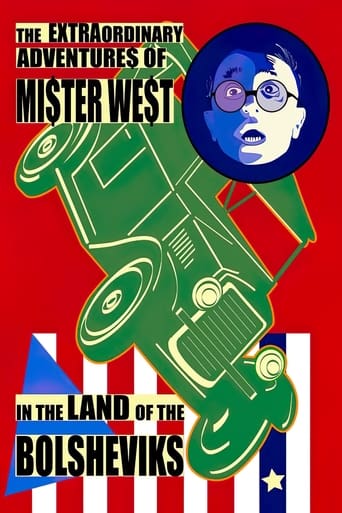
Miss Mend
"Three reporters race to stop germ warfare."
Keys: Space play/pause · ←/→ 10s · F fullscreen · M mute · </> speed
About this film
Reporter Vivian Mend and two male journalists uncover a Western conspiracy to unleash bacteriological warfare on the Soviet Union. Boris Barnet's 1926 serial thriller chases the villainous capitalist Chiche across continents to stop the attack.
Cast & crew
More films like this
More Comedy films
View all →







More about this film
About the production
Release dateOctober 11, 1926
BudgetNot specifically documented, but it was one of the more expensive Soviet productions of 1926
Box officeEnormously successful - especially popular Soviet films of the 1920s, reportedly seen by over 1.5 million viewers in its first year
ProductionMezhrabpom-Rus (Meshrabpomfilm)
Filmed inMoscow studios with elaborate sets simulating Paris, London, and ocean locations
This ambitious production was co-directed by Fyodor Otsep and Boris Barnet (though Barnet was uncredited), featuring elaborate international sets all constructed in Moscow. The film was heavily influenced by American adventure serials and designed to compete with popular foreign films in the Soviet market. Production took several months in 1926, with extensive use of miniatures, special effects, and innovative action choreography. The film was originally released in three parts to maximize audience engagement and revenue.
Themes
Anti-capitalist propaganda and Western intervention threatsInternational conspiracy and espionageHeroism of ordinary Soviet citizens defending their homelandGender roles and female empowerment in societyScientific progress and its dual potential for good and evil
Themes & topics
Bacteriological warfareInternational conspiracyAdventureEspionageReportersSoviet UnionAnti-capitalismActionThrillerPropagandaFemale protagonistSecret weaponGlobal threatHeroesChase
Historical background
Released around 1926, Miss Mend reached audiences while exhibitors were still shaping program length and star promotion.
Why this film matters
Archivists revisit Miss Mend (1926) for performance styles and craft choices that later releases refined or replaced.
Making of
The production of 'Miss Mend' was remarkably ambitious for its time, requiring the construction of elaborate sets to simulate international locations including Parisian streets, London docks, and ocean vessels. The film was shot over several months in 1926, with Boris Barnet bringing his experience as a former boxer to choreograph the fight scenes. The bacteriological weapon effects were created using innovative techniques including colored smoke, specialized filters, and creative editing to suggest an invisible threat. The production faced challenges from Soviet censors concerned about the film's Western-style entertainment value, though it was ultimately approved due to its strong anti-capitalist message. The filmmakers employed extensive miniatures and model work for the ocean sequences, pushing the technical capabilities of Soviet cinema. Despite the film's eventual success, its production was marked by tensions between the desire to create popular entertainment and the need to maintain proper socialist ideological content.
What critics said
Press files from 1926 rarely give Miss Mend extended review space; mentions appear in roundup columns.
Did you know?
- The film was originally released in three parts: 'The Adventures of the Three Reporters,' 'The Yellow Danger,' and 'The Burning Heart'
- It was among the leading commercially successful Soviet films of the 1920s, reportedly seen by over 1.5 million viewers in its first year
- Despite playing a lead role, Boris Barnet also co-directed the film, though this was not officially appeared in the original release
- The film was the Soviet response to American adventure serials like 'The Perils of Pauline,' deliberately mimicking their style while adding socialist themes
- All international locations were meticulously recreated in Moscow studios, as foreign filming was not practical for Soviet productions at the time
- Natalya Glan's character Vivian Mend was one of the first female action heroes in Soviet cinema, challenging traditional gender roles
- The bacteriological weapon plot reflected contemporary fears about biological warfare following World War I
- The film was one of the first Soviet productions to achieve significant international commercial success, particularly in Germany
- Despite its popularity, the film was later criticized by Soviet authorities for being too 'bourgeois' in its entertainment style
- The success of 'Miss Mend' led to plans for a sequel, though it was never completed due to various production difficulties
Visual style
The cinematography of 'Miss Mend' was quite advanced for its time, featuring dynamic camera movement and innovative editing techniques that enhanced the action sequences. The film's cinematographers made extensive use of tracking shots and close-ups to create a sense of movement and excitement, techniques that were still relatively new in cinema at the time. The international settings were visually differentiated through careful set design and lighting, creating distinct atmospheres for Paris, London, and other locations. The action sequences featured complex choreography and multiple camera angles, demonstrating the influence of both German Expressionism and American cinema. The film employed special effects to create the bacteriological weapon sequences, using colored filters, multiple exposures, and innovative editing to suggest the invisible threat. The visual style was a unique hybrid that was both modern and accessible to mass audiences, helping to establish a visual language for Soviet adventure cinema.
Innovations
'Miss Mend' featured several technical innovations for Soviet cinema of the 1920s, particularly in its use of elaborate miniature work for the ocean sequences and international locations. The action sequences featured complex stunts and special effects that required innovative camera techniques and editing, pushing the technical capabilities of Soviet film production. The film's use of multiple locations and rapid editing to create a sense of global scope was ambitious for Soviet cinema at the time. The bacteriological weapon effects involved creative use of colored smoke, filters, and editing techniques to suggest an invisible threat. The film's pacing and editing style was influenced by American cinema but adapted to Soviet storytelling needs, creating a dynamic rhythm that kept audiences engaged throughout its lengthy runtime. The production also demonstrated advanced set design and construction techniques, allowing the filmmakers to create convincing international settings entirely within Moscow studios, setting new standards for production design in Soviet cinema.
Music
As a silent film, 'Miss Mend' would have been accompanied by live musical performances during its original theatrical run, with scores compiled from existing classical pieces and popular songs adapted to fit the film's various moods and action sequences. The international settings suggested the use of different musical styles for different locations - Parisian café music for the France scenes, dramatic orchestral pieces for the action sequences, and heroic themes for the Soviet protagonists. While the original musical accompaniment was not documented, contemporary screenings of restored versions often feature newly composed scores that attempt to capture the film's adventurous spirit and political undertones. The rhythm and pacing of the film's editing suggest it was designed to work with dynamic, rhythmic musical accompaniment that would enhance the excitement of the action sequences and help guide audience emotional responses to the various plot developments.
Famous quotes
As a silent film, 'Miss Mend' featured intertitles rather than spoken dialogue, with key messages warning of capitalist conspiracies and calling for Soviet vigilance
Memorable scenes
- The opening sequence in Paris where the reporters first discover the conspiracy through intercepted documents
- The elaborate chase scenes through recreated European cities, showcasing the film's technical achievements
- The confrontation with the villains aboard the ship, featuring dramatic stunt work and special effects
- The final battle to prevent the release of the bacteriological weapon, combining action and political messaging
- Vivian Mend's daring rescue sequences that showcased her resourcefulness and challenged gender stereotypes
What audiences thought
'Miss Mend' was enormously popular with Soviet audiences, becoming one of the biggest box office hits of the 1920s and reportedly seen by over 1.5 million viewers in its first year. Viewers were particularly drawn to its fast-paced action, international intrigue, and the charismatic performances of the three leads. The film's success at the domestic box office proved that there was a strong appetite for entertainment films in the Soviet Union, not just educational or purely political works. Audiences reportedly cheered during the action sequences and were particularly enthusiastic about Natalya Glan's performance as the resourceful Vivian Mend. The film was also successful internationally, particularly in Germany where it was well-received by critics and audiences alike. Its popularity helped establish the adventure genre in Soviet cinema and proved that Soviet films could compete with foreign imports for audience attention, influencing the types of films that Soviet studios would produce in subsequent years.
Film connections
Influenced by
- American adventure serials like 'The Perils of Pauline'
- German Expressionist cinema
- The films of D.W. Griffith (particularly in editing techniques)
- Soviet montage theory
- Contemporary spy literature
- Post-WWI anxieties about biological warfare
- Western popular culture and entertainment formats
This film influenced
- Later Soviet adventure and spy films
- The Soviet action genre of the 1930s-1950s
- Films featuring female action heroes in Soviet cinema
- International co-productions between Soviet and Western filmmakers
- The development of the spy thriller genre in Soviet cinema
Film restoration
'Miss Mend' has survived relatively intact and has been restored by various film archives. Parts of the original three-part version are held in Russian state archives, and the film has been made available through various DVD releases and streaming services specializing in classic cinema. The restoration quality varies, but significant portions of the film are available in watchable condition. The film's preservation status is relatively good compared to other Soviet films of the era, likely due to its historical importance and enduring popularity. Multiple versions exist, with some restorations combining elements from different source materials to create the most complete version possible.
Where to watch
- Classic film streaming platforms specializing in silent cinema
- DVD releases from specialty distributors like Flicker Alley
- Film archive screenings (particularly at Russian film festivals and cinematheques)
- Some versions are available on YouTube and other video platforms
- Museum of Modern Art (MoMA) film collection screenings
- Various online archives of Soviet cinema