Fyodor Otsep
Director
Born: February 14, 1895 in Moscow, Russian Empire Died: June 20, 1949 Active: 1915-1949 Birth Name: Fyodor Alexandrovich Otsep
Films
1 film
About Fyodor Otsep
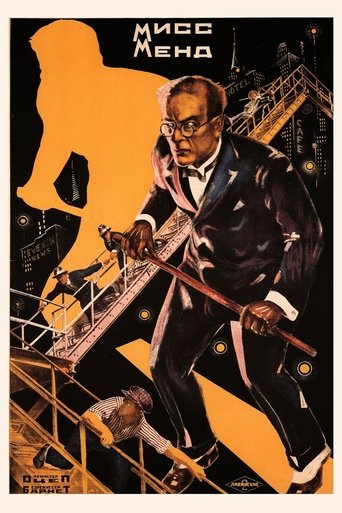
Fyodor Otsep (also known as Fedor Ozep) was a prominent Russian and Soviet film director who emerged during the silent film era and became figures in early Soviet cinema. Born in Moscow in 1895, he began his career in the film industry during the revolutionary period of the 1910s, initially working as a screenwriter before transitioning to directing. His 1926 film 'Miss Mend' was a Soviet adventure serial that became popular films of its era, showcasing his ability to blend entertainment with subtle political commentary. Otsep was known for his sophisticated visual style and his ability to work across multiple genres, from melodramas to thrillers. In the late 1920s, he emigrated from the Soviet Union and continued his directing career in Germany, where he made several notable films including 'The Living Corpse' (1929). He later moved to France and eventually to the United States, where he continued working in the film industry under various names. His multiple countries and film industries, making him a truly international director of the early cinema period. Otsep's work demonstrated remarkable adaptability to different cultural contexts while maintaining his distinctive directorial vision.
The Craft
Behind the Camera
Otsep was known for his dynamic visual storytelling, sophisticated camera techniques, and ability to blend entertainment with deeper social commentary. His directing style emphasized psychological depth, atmospheric tension, and innovative use of montage. He was particularly skilled at creating suspense and drama through visual means rather than relying solely on intertitles in his silent films.
Milestones
- Directed 'Miss Mend' (1926), one of Soviet cinema's earliest adventure serials
- Pioneered sophisticated thriller techniques in Soviet cinema
- Successfully transitioned to international filmmaking after leaving USSR
- Directed 'The Living Corpse' (1929) in Germany
- Made notable French films in the 1930s including 'Les Bas-fonds' (1936)
Best Known For
Must-See Films
Accolades
Won
- Honored Artist of the RSFSR (1925)
Nominated
- Venice Film Festival - Mussolini Cup nomination for 'Les Bas-fonds' (1936)
Special Recognition
- Recognized as a pioneer of Soviet adventure cinema
- Cited as an important influence on international thriller filmmaking
Working Relationships
Worked Often With
Studios
Why They Matter
Impact on Culture
Fyodor Otsep played a crucial role in bridging Soviet cinema with international film traditions during a pivotal period in film history. His work on 'Miss Mend' helped establish the adventure serial genre in Soviet cinema while demonstrating that popular entertainment could coexist with artistic merit. As an émigré director, he served as a cultural ambassador, bringing Soviet cinematic techniques to European and American audiences while adapting local styles and themes. His films contributed to the development of the thriller genre internationally, particularly in his sophisticated use of suspense and psychological tension. Otsep's career trajectory from Soviet director to international filmmaker exemplified the global nature of cinema even in its early decades.
Lasting Legacy
Fyodor Otsep's legacy lies in his contributions to early Soviet cinema and his successful transition to international filmmaking. He is remembered as one of the few directors from the early Soviet period who achieved lasting recognition outside his home country. His techniques for building suspense and his sophisticated visual storytelling influenced generations of thriller directors. Otsep's ability to work across different languages and cultural contexts while maintaining his artistic vision made him a model for international filmmakers. His films, particularly 'Miss Mend,' remain important examples of early Soviet popular cinema and are studied for their technical innovation and cultural significance.
Who They Inspired
Otsep influenced the development of the thriller and suspense genres in both Soviet and international cinema. His innovative use of camera movement and editing techniques to create tension was adopted by subsequent directors. His success as an émigré filmmaker paved the way for other directors working across national boundaries. His adaptation of literary works to film demonstrated how classic texts could be successfully modernized for cinema audiences. Otsep's work in multiple film industries showed how directors could maintain their artistic voice while adapting to different cultural and commercial demands.
Off Screen
Fyodor Otsep led a complex life that reflected the tumultuous political changes of his era. He was married to actress Nathalie Kovanko, with whom he frequently collaborated. The couple emigrated together from the Soviet Union in the late 1920s, first settling in Germany before moving to France. Otsep's decision to leave the USSR was influenced by the increasingly restrictive artistic environment under Stalin's regime. He continued working in European cinema throughout the 1930s, adapting to different languages and cultural contexts. His later years were marked by the challenges of working as an émigré filmmaker during the rise of fascism in Europe and eventually during World War II.
Education
Studied at Moscow State University; attended film studies at the State Institute of Cinematography (VGIK) in its early years
Family
- Nathalie Kovanko (1925-1949)
Did You Know?
- 'Miss Mend' was one of the first Soviet adventure films and was inspired by American serials
- The film was originally released as a three-part serial, each part running approximately 70 minutes
- Otsep co-directed 'Miss Mend' with Boris Barnet, though he was the primary creative force
- He worked under several different names in different countries: Fyodor Otsep in USSR, Fedor Ozep in Germany, and Theodore Oze in the US
- His 1936 French film 'Les Bas-fonds' was an adaptation of Maxim Gorky's play
- Otsep was one of the few Soviet directors of his generation to achieve significant success in Western cinema
- He was a contemporary of other great Soviet directors like Eisenstein and Pudovkin but took a different career path
- His films often featured strong female protagonists, which was somewhat unusual for the period
- Otsep's move to international cinema was partly motivated by his marriage to Ukrainian actress Nathalie Kovanko
- Despite his international success, he maintained connections to Russian culture throughout his career
In Their Own Words
In cinema, we must learn to speak the universal language of images, not words
The greatest adventure is not in exotic locations, but in the human heart
Suspense is not about what happens, but about what might happen
Every film is a journey, and the director must be both the map and the compass
Frequently Asked Questions
Who was Fyodor Otsep?
Russian and Soviet on YTB.my. He is best known for directing 'Miss Mend' (1926), one of Soviet cinema's earliest adventure films, and later became an international filmmaker working in Germany, France, and the United States.
What films is Fyodor Otsep best known for?
Titles linked here include Miss Mend (1926), The Living Corpse (1929).
When was Fyodor Otsep born and when did he die?
Born February 14, 1895; died June 20, 1949.
What awards did Fyodor Otsep win?
Otsep was named an Honored Artist of the RSFSR in 1925 and received a Mussolini Cup nomination at the Venice Film Festival in 1936 for his film 'Les Bas-fonds'. He is also recognized as a pioneer of Soviet adventure cinema and an important influence on international thriller filmmaking.
What was Fyodor Otsep's directing style?
Otsep was known for his dynamic visual storytelling, sophisticated camera techniques, and ability to blend entertainment with social commentary. His style emphasized psychological depth, atmospheric tension, and innovative use of montage, particularly in creating suspense and drama through visual means rather than relying on intertitles.