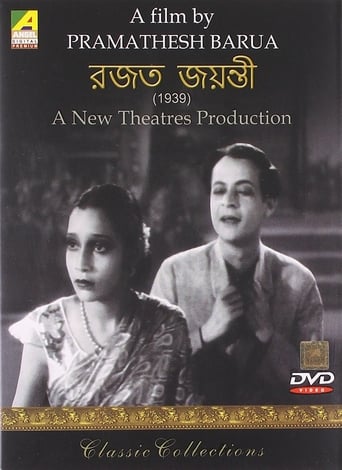
Films
1 film
About A.H. Shore
A.H. Shore worked on one surviving credit: Rajat Jayanti (1939). Which places him among the actors of Indian cinema's transition from silent films to sound. The film was produced during a significant period when Indian cinema was establishing its identity and developing its unique storytelling traditions. Unfortunately, detailed records about Shore's life, career trajectory, and other potential film appearances have been lost to time, which was common for many supporting actors of this era. His contribution to 'Rajat Jayanti' represents his known legacy in the annals of early Indian cinema history.
The Craft
Milestones
- Appeared in the 1939 Hindi film 'Rajat Jayanti'
Best Known For
Must-See Films
Why They Matter
Impact on Culture
A.H. Shore represents the countless supporting actors who contributed to the foundation of Indian cinema during its formative years. While his individual impact may be difficult to trace, his participation in 'Rajat Jayanti' places him among the pioneers who helped establish the Hindi film industry during its transition to sound. Actors like Shore were essential to the development of early Indian cinema, often working in multiple capacities and helping to create the templates for future generations of filmmakers.
Lasting Legacy
The legacy of A.H. Shore is primarily preserved through his appearance in 'Rajat Jayanti' (1939), a film that represents an important period in Indian cinema history. While not a widely recognized name today, his contribution exemplifies the collaborative nature of early Indian filmmaking, where numerous actors, many now forgotten, worked together to create the foundations of what would become one of the world's largest film industries.
Who They Inspired
Due to the limited documentation of his career and the obscurity surrounding his work beyond 'Rajat Jayanti', it's difficult to trace A.H. Shore's direct influence on subsequent generations of actors. However, like many actors of his era, he was part of the collective effort that established acting conventions and techniques in early Indian talkies.
Off Screen
Very limited information is available about A.H. Shore's personal life, which was typical for many supporting actors in early Indian cinema whose records were not comprehensively documented.
Did You Know?
- A.H. Shore's only known film appearance was in 'Rajat Jayanti' (1939)
- The film title 'Rajat Jayanti' translates to 'Silver Jubilee' in English
- 1939 was during the early sound era of Indian cinema, which began in 1931
- Many actors from this period had incomplete filmography records
- Early Indian cinema often featured actors with anglicized names like 'A.H. Shore'
- The preservation of early Indian films and their cast records was limited
- Supporting actors from this era rarely received detailed media coverage
Frequently Asked Questions
Who was A.H. Shore?
Indian film with credits in this catalog. He was part of the early generation of actors during Indian cinema's transition to sound films.
What films is A.H. Shore best known for?
Titles linked here include Rajat Jayanti (1939).
When was A.H. Shore born and when did they die?
Unfortunately, specific birth and death dates for A.H. Shore are not available in historical records, which was common for many supporting actors of early Indian cinema.
What awards did A.H. Shore win?
There are no documented awards or nominations for A.H. Shore, as formal award systems for Indian cinema were not well-established during his brief known career period.
What was A.H. Shore's acting style?
Specific details about A.H. Shore's acting style are not documented, but actors of this era in Indian cinema typically worked with theatrical influences adapted for the new medium of sound film.