
Adelaide Chiozzo
Actor
- Active
- 1949-1949
Films 1
About Adelaide Chiozzo
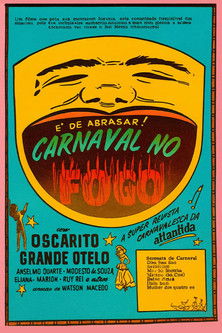
Adelaide Chiozzo was a Brazilian actress, singer, and accordionist whose screen appearance in the 1949 musical comedy Carnaval no Fogo reflects her early connection to the popular entertainment world of mid-century Brazil. Best known in Brazilian cultural history as a performer associated with radio, music, and comic entertainment rather than as a major film star, she belonged to the generation of artists who moved fluidly between stage, radio, recordings, and cinema. Her work in Carnaval no Fogo places her within the vibrant postwar era of Brazilian musical films, a period when carnival-themed productions brought singers and comedians to the screen in performances designed to showcase contemporary popular music. Although her filmography appears limited in available records, her broader artistic identity was shaped by her musicianship and her presence in popular culture, which made her a familiar name to audiences who followed Brazilian variety entertainment. She is remembered as part of the colorful ecosystem of performers who helped define Brazil's mid-20th-century mass entertainment industry. Because detailed biographical documentation in widely accessible classic-film references is limited, many specific personal details about her life and screen career remain difficult to verify from standard English-language film sources. Even so, her documented appearance in Carnaval no Fogo secures her place in the history of Brazilian musical cinema.
More about Adelaide Chiozzo
On screen
Specific details of her screen acting style are not well documented in accessible classic-cinema sources. Based on her background as a singer and accordionist, her on-screen presence would likely have emphasized performance charisma, musical timing, and light comic or variety-style delivery rather than dramatic naturalism. Performers of her type in Brazilian musical cinema were often valued for warmth, rhythmic energy, and the ability to connect directly with popular audiences through song and persona.
In film history
Adelaide Chiozzo's cultural importance lies less in a large filmography than in what her career represents: the close relationship between Brazilian radio, popular music, and musical cinema in the postwar era. Performers like her helped create the lively, audience-friendly atmosphere of carnival films, where music, comedy, and celebrity appeal were central to the viewing experience. Her presence in Carnaval no Fogo connects her to a tradition of Brazilian entertainment that valorized multitalented performers who could sing, play instruments, and appear on screen with ease. In this sense, she contributes to a broader understanding of how Brazilian popular culture moved across media during the 1940s and 1950s, especially in works tied to carnival and popular song.
Later reputation
Her lasting legacy is as part of the generation of Brazilian entertainers whose careers bridged live music and cinema during an important formative period for national screen culture. Even when documentation is sparse, artists like Adelaide Chiozzo remain significant because they embody the popular performance traditions that fueled musical filmmaking in Brazil. For historians of classic cinema, she is a representative figure in the ecosystem of carnival films and variety entertainment rather than a star defined by an extensive solo film career. Her inclusion in film records preserves the memory of performers whose contributions were often cross-disciplinary and whose significance extends beyond the limited surviving filmography associated with them.
Influence
There is no well-documented direct line of influence from Adelaide Chiozzo to later individual actors or directors in the accessible classic-film record. Her influence is best understood collectively, through the tradition of Brazilian musical entertainers who helped shape expectations for screen performance in carnival comedies and music films. By participating in that world, she contributed to the model of the singing, instrument-playing performer who could move between radio, stage, and cinema. This multimedia performance style became an enduring feature of popular entertainment cultures in Brazil.
Off screen
Reliable biographical details about Adelaide Chiozzo's personal life, family background, marriages, and relationships are not widely available in standard film-reference sources. As a result, it is not possible to provide a verified account of spouses, children, or private life without risking inaccuracy. Her public identity is more strongly associated with performance and musical entertainment than with a heavily documented personal biography. For a movie database, she should be presented primarily through her artistic work and her place in Brazilian popular culture.
Credits
- Appeared in the Brazilian musical comedy Carnaval no Fogo (1949)
- Built recognition as a popular entertainment performer associated with singing and accordion performance
- Participated in the carnival-and-music-driven screen culture that characterized Brazilian popular cinema of the late 1940s
Roles
- Performer in Carnaval no Fogo (1949)
Films
- Carnaval no Fogo (1949)
Notes
- She is associated with both acting and music, reflecting the multi-talented nature of many Brazilian entertainers of the period.
- Her known film credit, Carnaval no Fogo, is a 1949 Brazilian musical comedy tied to carnival entertainment.
- Available classic-film sources provide far more information about her entertainment identity than about private-life details.
- She appears to have had a broader reputation as a singer and accordionist than as a prolific film actress.
- Her screen work belongs to the postwar wave of Brazilian musical films that capitalized on popular songs and seasonal festivities.
- In English-language classic-cinema databases, her filmography is relatively sparse, making her a more specialized historical figure than a mainstream star.
- She is an example of a performer whose archival presence survives mainly through a single credited film appearance and her music career.
Questions
Who was Adelaide Chiozzo?
Adelaide Chiozzo was a Brazilian actress, singer, and accordionist associated with popular entertainment in the mid-20th century. In film history, she is chiefly noted for her appearance in the 1949 musical comedy Carnaval no Fogo.
What films is Adelaide Chiozzo best known for?
She is best known for Carnaval no Fogo (1949), which is the principal film credit readily associated with her in classic-cinema records. Her broader reputation comes more from Brazilian music and radio entertainment than from an extensive film career.
When was Adelaide Chiozzo born and when did she die?
Verified birth and death dates are not readily available in the accessible classic-cinema sources used for this record. Because of that, the safest database entry is to leave those details as unavailable rather than risk an incorrect identification.
What awards did Adelaide Chiozzo win?
No major awards or nominations are clearly documented for her in the available classic-cinema reference material. Her historical significance rests more on her role in Brazilian popular performance than on formal awards recognition.
What was Adelaide Chiozzo's acting style?
Her acting style is not extensively documented, but as a performer who was also a singer and accordionist, her screen presence was likely shaped by musical performance, charm, and light comic timing. Performers in her category were typically valued for personality and variety-style expressiveness rather than intense dramatic technique.
What is Adelaide Chiozzo's legacy in film history?
Her legacy is tied to the tradition of Brazilian musical cinema, especially carnival-themed films that blended songs, comedy, and popular performance. She represents the kind of multitalented entertainer whose contributions helped define the sound and feel of mid-century popular film culture in Brazil.