Films
1 film
About Cora Drew
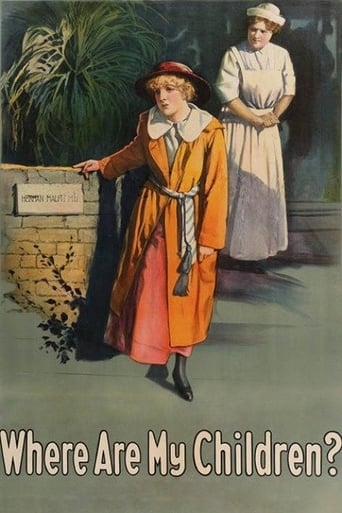
Made her mark in cinema history with her appearance in the controversial 1916 film 'Where Are My Children?' Her career appears to have been extremely brief, confined to the year 1916, which was common for many character actors and supporting performers during the early days of Hollywood. The film she appeared in was directed by female director Lois Weber and dealt with controversial themes of birth control and abortion that were considered highly provocative for the era. While her role in the film was likely minor, her participation in this historically significant production places her within the important context of early American cinema's exploration of social issues. Like many actors from the silent era whose careers were brief, detailed biographical information about Cora Drew remains scarce, reflecting the challenges of documenting the lives of lesser-known performers from this period. Her legacy, however, is tied to her contribution to daring and socially conscious films of the 1910s.
The Craft
Milestones
- Appeared in 'Where Are My Children?' (1916), a controversial and historically significant silent film
Best Known For
Iconic Roles
Must-See Films
Working Relationships
Worked Often With
Studios
Why They Matter
Impact on Culture
Cora Drew's cultural impact is primarily through her participation in 'Where Are My Children?' (1916), a film that was groundbreaking for its time in addressing controversial social issues like birth control and abortion. The film, directed by female filmmaker Lois Weber, was considered so controversial that it was banned in several areas but also sparked important conversations about reproductive rights and social morality. While Drew's individual contribution may have been small, she was part of a cinematic work that pushed boundaries and demonstrated film's potential as a medium for social commentary during the silent era.
Lasting Legacy
Cora Drew's legacy is preserved through her association with. Though she may not have achieved lasting fame as an individual performer, her name remains in the historical record as part of the cast of 'Where Are My Children?', ensuring her place in the annals of early American cinema. The film itself has been preserved and studied by film historians as an example of early socially conscious filmmaking and the work of female director Lois Weber.
Who They Inspired
As a supporting actor with a brief career, Cora Drew's direct influence on other performers or filmmakers is difficult to trace. However, her participation in 'Where Are My Children?' contributed to the film's overall impact and success, which in turn helped demonstrate that controversial social topics could be addressed through cinema, potentially influencing future filmmakers to tackle challenging subject matter.
Off Screen
Very little is known about Cora Drew's personal life, which is typical for many supporting actors from the silent era who had brief careers. Like many performers of her time, she may have been drawn to the burgeoning film industry during its early years but did not achieve lasting fame or extensive documentation of her life story.
Did You Know?
- 'Where Are My Children?' (1916) was considered highly controversial for its time due to its discussion of birth control and abortion
- The film was directed by Lois Weber,
- The film was initially banned in several U.S. Cities but later gained recognition for its social significance
- Cora Drew's career appears to have lasted only one year, making her a representative of many transient actors in early Hollywood
- The film's themes were so progressive that it took decades for similar topics to be openly discussed in mainstream American cinema
- Despite its controversial nature, the film was a commercial success upon release
- The film has been preserved by the Library of Congress and recognized for its historical importance
Frequently Asked Questions
Who was Cora Drew?
Silent film actress active in 1916, known primarily for her appearance in the controversial film 'Where Are My Children?' She had a brief career that appears to have been confined to that single year, which was not uncommon for supporting with credits in this catalog.
What films is Cora Drew best known for?
Titles linked here include Where Are My Children? (1916).
When was Cora Drew born and when did she die?
Specific birth and death dates for Cora Drew are not documented in available historical records, which is typical for many supporting actors from the silent era who had brief careers and limited public recognition.
What awards did Cora Drew win?
There are no documented awards or nominations for Cora Drew, which is consistent with her status as a supporting actor with a very brief career during the early years of American cinema.
What was Cora Drew's acting style?
Specific details about Cora Drew's acting style are not documented in historical records. As a performer in 1916, she would have used the exaggerated gestures and facial expressions typical of silent film acting to convey emotion and story without dialogue.