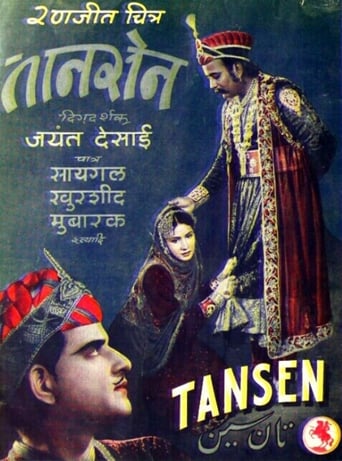
Mubarak
Actor
- Active
- 1943-1943
Films 1
About Mubarak
Mubarak was an Indian character actor associated with the early decades of Hindi cinema, remembered today largely through his supporting appearances in classic films such as Tansen (1943). He belonged to the generation of performers who helped establish the expressive, theatrical acting style of the talkie era, when dialogue delivery, gesture, and screen presence were central to an actor’s appeal. Like many actors of the period, he worked in an industry that often left incomplete public records, so detailed biographical documentation about his early life, training, and later career is scarce. His surviving screen credit in Tansen places him within one of the major musical-historical productions of wartime Bombay cinema, a film closely associated with the golden-age development of popular Hindi film music and melodrama. Although he does not appear in mainstream reference works as a leading star, his participation in such productions suggests steady employment as a reliable supporting player in studio-era filmmaking. Because available sources do not securely document his birth, death, family background, or broader filmography, it is safest to identify him as a lesser-documented but authentic classic-cinema actor whose work survives mainly through film credits rather than extensive press coverage. His contribution remains part of the broader foundation of early Indian cinema, in which character actors helped give texture, realism, and narrative continuity to major productions.
More about Mubarak
On screen
No detailed critical description of Mubarak’s individual acting technique survives in widely available reference sources. Based on the era and the type of role he appears to have played, his work would have fit the studio-period style common in 1940s Indian cinema: clear diction, pronounced facial expression, and a stage-influenced approach suited to musical and dramatic storytelling. In ensemble productions such as Tansen, actors in supporting parts were typically expected to project authority and emotional clarity rather than subtle naturalism. His screen persona is therefore best understood as that of a dependable character actor of the early sound era.
In film history
Mubarak’s cultural impact lies less in star status than in his place within the supporting cast infrastructure of early Hindi cinema. Actors like him were essential to the functioning of studio-era films, where historical epics, social dramas, and musical romances depended on a broad ensemble of credible performers. His credit in Tansen links him to a film remembered for its contribution to the prestige of Hindi historical-musical cinema and to the larger ecosystem of wartime Bombay filmmaking. Even when an actor’s individual biography is obscure, the survival of a screen credit confirms participation in the formative period that helped define the grammar of mainstream Indian cinema.
Later reputation
Mubarak’s legacy is that of a documented but sparsely recorded classic-cinema actor whose career survives through film history rather than celebrity history. For researchers and database curators, he represents the many early Indian screen performers whose names appear in credits but whose personal archives, interviews, and press profiles were not widely preserved. His presence in Tansen ensures that he remains part of the historical record of one of the important musical films of the 1940s. In a broader sense, his legacy is tied to the indispensable but often overlooked labor of supporting actors in classical Indian film production.
Influence
There is no verified evidence that Mubarak directly mentored later stars or that he became a major influence on subsequent acting schools. His influence is best understood indirectly, through the example of studio-era supporting performers who helped normalize the vocal, expressive, and ensemble-based acting style of early Hindi cinema. By contributing to films like Tansen, he participated in a performance tradition that shaped audience expectations for character roles in Indian popular film. His work forms part of the lineage from stage-rooted talkie acting to the more polished ensemble styles of later decades.
Off screen
Publicly accessible information about Mubarak’s personal life is extremely limited. No reliable mainstream source readily documents his family background, marriages, children, or private life, which is common for many supporting actors of the 1930s and 1940s whose careers were recorded primarily through film credits and studio publicity. At present, there is no securely verified information available about his domestic life or off-screen activities. Any claims beyond this would risk confusing him with other individuals of the same or similar name.
Credits
- Appeared in the classic Hindi film Tansen (1943), a significant musical-historical production of the early 1940s
- Worked as part of the supporting cast system that sustained studio-era Indian cinema
- Represents the class of lesser-documented character actors whose performances contributed to the texture of Golden Age film production
- Associated with early talkie-era performance traditions emphasizing dialogue and expressive screen presence
Roles
- Supporting role in Tansen (1943)
Films
- Tansen (1943)
Notes
- He is associated with Tansen (1943), one of the notable historical-musical films of the early 1940s.
- He appears to have been a supporting actor rather than a leading star.
- Detailed public biographical records for him are scarce, which is common for many classic-era character actors.
- His documented activity in available filmography sources is limited to 1943.
- He should not be confused with other people named Mubarak in South Asian public life or cinema.
- His surviving record highlights how many early film performers are known primarily through credits rather than extensive biographies.
Questions
Who was Mubarak?
Mubarak was an Indian classic-cinema actor known from the early talkie period, with a documented credit in Tansen (1943). He appears to have been a supporting or character actor rather than a major star. Because surviving biographical information is limited, most of what is known comes from film credits and period film history.
What films is Mubarak best known for?
He is best known for Tansen (1943), the film in which his name appears in surviving filmography records. No broader, securely verified film list is widely available in standard reference sources. He is therefore remembered primarily through this classic historical-musical production.
When was Mubarak born and when did he die?
His birth and death dates are not securely documented in the readily available classic-cinema sources. The surviving record does not provide confirmed details about his birthplace or lifespan. For database purposes, these fields should be treated as unknown unless additional archival evidence emerges.
What awards did Mubarak win?
No awards or formal honors are currently documented for him in the available reliable sources. This does not necessarily mean he received none; rather, it reflects the incomplete preservation of records for many supporting actors from early Indian cinema. At present, his recognition is primarily historical rather than award-based.
What was Mubarak's acting style?
There is no detailed contemporary critical profile of his individual technique, but as an actor of the early 1940s he would likely have worked in the expressive, dialogue-driven style common to studio-era Indian cinema. That style emphasized clear diction, visible emotion, and a strong stage-influenced presence. Such qualities were especially important in historical and musical films like Tansen.
What is Mubarak's legacy in film history?
His legacy is that of a documented but little-recorded performer who contributed to the supporting cast tradition of classic Hindi cinema. Even when an actor’s private life is obscure, the credit record shows participation in important films from the era. In that sense, he remains part of the foundation on which mainstream Indian film history was built.