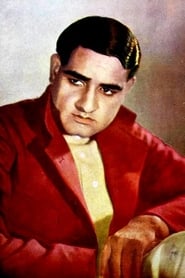
1943 · null

Also available on: Wikimedia
Tansen

Tansen

1943 null India

"null"

The transformative power of musicLove and devotionArtistic genius and public recognitionCourtly culture and historical memoryThe romanticized image of the artist

Plot

Tansen (1943) is a musical historical film centered on the legendary court singer Tansen, portrayed as a gifted artist whose voice seems to charm not only people but the natural world around him. In this retelling, he is living in a village and is deeply in love with his beloved Tani, whose presence gives emotional grounding to his otherwise celebrated musical life. His extraordinary talent wins admiration from villagers and from the courtly world associated with the Maharaja, and the story uses his music as both a personal expression of devotion and a force that can move rulers and commoners alike. The film builds its drama around the conflict between private love and public renown, while elevating Tansen’s artistry into a near-mythic gift. As a historical-musical melodrama, it emphasizes the emotional power of classical song and the romanticized aura of India’s great court musician rather than strict biographical realism.

About the Production

Release Date 1943
Budget null
Box Office null
Production Ranjit Movietone
Filmed In null

Tansen was mounted as a prestige historical-musical vehicle for K. L. Saigal, one of the era’s most revered singing stars, and it relied heavily on the appeal of classical-inspired music and romantic pageantry. Like many major Indian studio productions of the early 1940s, it was shaped by the conventions of the studio system: controlled sets, staged musical performances, and a strong emphasis on star image. The film is associated with director Jayant Desai and with the Ranjit Movietone production environment, which was known for elaborate costume dramas and star-led entertainment. Precise budget, box-office, and location records are not readily verifiable in surviving standard references, which is common for films from this period.

Historical Background

Tansen was made in 1943, during the middle of World War II and just a few years before Indian independence. Hindi cinema of this period often served as an important cultural escape, but it also helped shape ideas of Indian identity through historical, devotional, and musical subjects drawn from the subcontinent’s past. The choice to make a film about Tansen, the legendary musician associated with the Mughal court and the tradition of Indian classical music, reflects the era’s fascination with heritage figures who could symbolize cultural continuity and artistic greatness. In the studio era, such films were especially significant because they linked modern moviegoing audiences to older cultural narratives through song, performance, and spectacle. The film also belongs to a broader pattern in which popular cinema mediated classical traditions for mass audiences, helping to popularize and mythologize them in a new audiovisual form.

Why This Film Matters

Tansen is culturally significant because it contributed to the screen mythologizing of one of the most famous names in Indian musical history. By presenting Tansen as both a man of extraordinary song and a figure shaped by love, devotion, and courtly recognition, the film helped reinforce the idea that music in Indian cinema could function as destiny, emotion, and cultural memory all at once. It also stands as part of the legacy of K. L. Saigal, whose performances helped define early Hindi playback and pre-playback singing culture, making the film valuable to scholars and admirers of classic Indian film music. More broadly, the film represents how historical legends were adapted into popular cinema during the studio era, turning elite cultural icons into accessible mass entertainment. Its importance today lies not only in its subject but in what it reveals about early-1940s Hindi filmmaking, musical aesthetics, and star-centered production.

Making Of

Tansen was produced in the context of the classic Bombay studio system, when films were often developed around an established star singer rather than around a tightly naturalistic screenplay. K. L. Saigal’s participation was central to the project’s identity, since audiences expected his unique vocal style and emotional intensity to anchor the film’s appeal. Director Jayant Desai, working within the polished but efficient Ranjit Movietone model, would have relied on sound-stage production, costumed sets, and performance-heavy scenes designed to showcase music and romance. As with many Indian films from the 1940s, surviving behind-the-scenes documentation is limited, so exact anecdotes about casting deliberations or on-set incidents are not widely preserved in standard sources. What remains clear is that the film was crafted to turn the figure of Tansen into a cinematic icon of musical genius, blending classical prestige with commercial melodrama.

Visual Style

The visual style of Tansen likely reflects the studio-bound aesthetics of early-1940s Indian historical cinema, with painted backdrops, formal compositions, costume-heavy staging, and performance-centered framing. Such films typically emphasized clarity, theatricality, and an atmosphere of courtly grandeur rather than location realism or complex camera movement. The cinematography would have been designed to support song sequences and dramatic encounters, allowing the performer to remain the expressive focal point. In a historical-musical like this, lighting and framing would also help create an aura of reverence around the title character, reinforcing his near-legendary status. While specific camerawork credits and technical details are not consistently documented in easily accessible sources, the film belongs stylistically to the polished studio visual language of its era.

Innovations

Tansen is not generally cited for groundbreaking technical innovation in the way some later films are, but it is notable for its accomplished integration of music, performance, and historical melodrama within the constraints of the early-1940s studio system. Its achievement lies in dramatizing a legendary musical figure through a format that allowed the audience to experience song as both spectacle and story. The film demonstrates the mature use of the era’s sound-film conventions, especially the star-centered musical performance style that defined much of Indian cinema before the full dominance of playback-singing conventions. It also shows how period setting, costumes, and courtly staging were used to give a sense of prestige and cultural depth to popular entertainment. For its time, this synthesis of historical romance and musical performance was itself a major industrial and artistic accomplishment.

Music

Music is one of the defining features of Tansen, as the entire film is built around the aura of India’s most celebrated classical singer. The soundtrack would have been central to the film’s appeal, with songs likely blending romantic, devotional, and courtly moods in a style suited to K. L. Saigal’s voice. In films of this kind, music was not merely accompaniment but the narrative engine, carrying emotional meaning and demonstrating the protagonist’s genius. Because Tansen is a historical-musical, the score would have been expected to evoke classical associations while remaining accessible to mainstream audiences. Detailed song lists and complete recording information are not fully standardized across surviving references, but the film is remembered primarily for its musical presentation and for Saigal’s vocal authority.

Famous Quotes

null

Memorable Scenes

  • Tansen’s song performances are presented as moments of extraordinary influence, with the narrative emphasizing that his music can enchant listeners across social and even natural boundaries.
  • The romantic scenes between Tansen and Tani provide the emotional core of the film, contrasting intimate devotion with the public grandeur of his musical reputation.
  • Courtly sequences involving the Maharaja underline the legendary status of Tansen’s artistry and frame him as a figure whose talent commands admiration from power itself.

Did You Know?

  • The film stars K. L. Saigal, whose association with soulful, emotionally charged singing made him an ideal choice for a story about the legendary musician Tansen.
  • It belongs to the wave of Indian historical and musical films that dramatized iconic cultural figures for popular audiences in the 1930s and 1940s.
  • Jayant Desai was a prolific director of the studio era and often worked on crowd-pleasing melodramas and costume films.
  • The subject of Tansen has been adapted repeatedly in Indian cinema, and this 1943 version is one of the best-known early screen treatments tied to the singer’s legend.
  • The film’s appeal rests as much on its songs and performance style as on its narrative, reflecting how central music was to Hindi cinema of the period.
  • The cast includes Khursheed, a prominent singer-actress of the era who was frequently featured in films built around musical performance.
  • Because many 1940s Indian films were not preserved in pristine archival condition, exact production details such as shooting dates and original print materials are often difficult to confirm.
  • The story blends folklore, courtly splendor, and devotional notions of music’s power, rather than aiming for a strictly historical biography of Tansen.
  • Mubarak’s presence adds to the film’s studio-era character-actor ensemble, a common feature of classic Bombay productions.
  • The film is often remembered in discussions of K. L. Saigal’s late-career work and the broader canon of pre-Independence Hindi musical cinema.

What Critics Said

Contemporary critical documentation for Tansen is limited in widely available modern databases, but films of this type were generally evaluated on the strength of their music, the charisma of the lead performers, and the dignity of their historical presentation. K. L. Saigal’s involvement would have been a major critical asset, since his voice and screen persona were often praised even when plots were conventional. In later retrospectives, the film is usually discussed less as a formally innovative work and more as an example of early historical-musical cinema and as part of Saigal’s important filmography. Modern appreciation tends to focus on its place in the lineage of Tansen adaptations, the historical flavor of its production, and its value as a surviving artifact of pre-independence studio filmmaking. Because surviving reviews and archival commentary are sparse, any fine-grained consensus about original critical response is difficult to state with certainty.

What Audiences Thought

Audience reception was likely positive among fans of K. L. Saigal and musical historicals, since such films were designed to attract viewers through familiar legends, lyrical romance, and memorable songs. In the 1940s, audiences commonly responded strongly to singer-led films, and Saigal’s name alone was enough to make a production eventful at the box office. The film’s combination of courtly spectacle and emotionally charged music would have appealed to urban moviegoers who valued both prestige and entertainment. Over time, its audience has become more specialized, with interest coming primarily from classic-film enthusiasts, historians of Hindi cinema, and admirers of Saigal’s work. Today it is less a mainstream popular title than a historically important one, remembered by cinephiles and researchers rather than by mass audiences.

Film Connections

Influenced By

  • The legend and folklore surrounding Mian Tansen, the celebrated court musician of Akbar's era
  • Earlier stage and literary retellings of Tansen’s life and musical miracles
  • The historical-musical conventions of Indian studio cinema in the 1930s and 1940s

This Film Influenced

  • Later Indian films and television adaptations inspired by the legend of Tansen
  • Subsequent historical-musical films that dramatized classical musicians and courtly legends

Film Restoration

The film appears to be a rare classic with limited modern availability; no widely publicized restoration status is readily confirmed in standard references, and surviving print access is uncertain. It is not commonly encountered in commercial circulation, suggesting that it is either not broadly available or survives only in limited archival holdings. For a definitive preservation assessment, consultation with Indian film archives would be necessary.

Themes & Topics

Tansenclassical musiccourt singerlove storyhistorical dramaMughal-era legendvillage settingromantic melodramamusical performance