Jayant Desai
Director
- Active
- 1930s-1950s
Films directed 1
About Jayant Desai
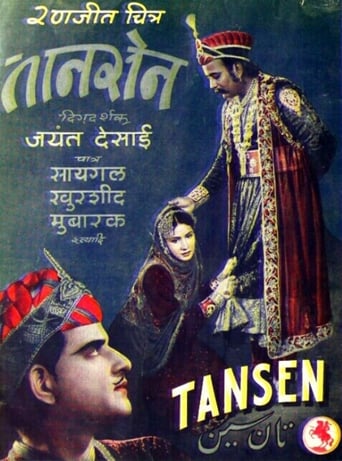
Jayant Desai was a prominent Indian film director and producer whose career spanned the early sound era through the mid-20th century, making him an important figure in the development of popular Hindi cinema. He is especially remembered for directing historical and mythological films, costume dramas, and socially engaging entertainment at a time when the Indian film industry was finding its narrative and technical voice. Desai worked in an era when directors often had to balance stage-derived performance styles with the demands of the new sound medium, and he became known for crafting audience-friendly films with strong melodramatic appeal. Among his better-known works is Tansen (1943), a celebrated musical biography of the legendary singer, which reflects his interest in culturally resonant subject matter and lavish period storytelling. Over the course of his career, he became associated with commercially successful filmmaking rather than auteurist self-display, and he contributed to the shaping of studio-era Hindi cinema's popular sensibility. He is also remembered as part of the generation of filmmakers who helped establish the template for musical, costume, and mythological films that remained central to Indian cinema for decades. Although much of his life is less documented than later film personalities, his body of work secured him a place in classic Indian film history.
More about Jayant Desai
Behind the camera
Jayant Desai's directing style is generally associated with classic studio-era Hindi popular cinema: clear storytelling, broad emotional appeal, musical integration, and a strong emphasis on spectacle, costume, and melodramatic structure. He appears to have favored films that were legible to mass audiences, often drawing from historical, devotional, or folkloric material that could be transformed into entertainment with strong song sequences and heightened dramatic conflict. In a period when Indian cinema was still formalizing its commercial grammar, his work reflected an emphasis on narrative momentum and audience accessibility rather than experimental technique. His films fit comfortably within the traditions of mythological and period cinema that relied on vivid production design, moral clarity, and memorable performance styles.
In film history
Jayant Desai's cultural impact lies in his contribution to the maturation of popular Hindi cinema during a crucial transitional period. By directing films such as Tansen, he helped reinforce the importance of the musical-biographical and historical genres, which connected classical Indian cultural themes with modern mass entertainment. His work belongs to the generation that normalized the fusion of narrative song, theatrical performance, and studio craftsmanship that became a defining feature of Hindi films. For audiences, such films helped translate prestigious cultural figures and historical legends into cinematic form, making them widely accessible and emotionally immediate. In that sense, Desai participated in the broader project of creating a uniquely Indian commercial film language rooted in music, myth, and spectacle.
Later reputation
Jayant Desai's legacy is best understood through his place in the foundation of mainstream Hindi cinema rather than through a single globally iconic title. He is remembered as a dependable craftsman of commercial films who contributed to the popularity and durability of historical and musical storytelling in the 1940s and beyond. Tansen remains a representative example of the kind of culturally significant, song-rich period film that helped define the era's audience expectations. His career illustrates how studio-era directors helped build the infrastructure of Indian popular cinema through genre filmmaking, disciplined production values, and a close relationship with audience taste. While not always as internationally discussed as some contemporaries, Desai occupies an important position in classic film history as part of the generation that established enduring cinematic conventions. His work is part of the lineage that made the Indian musical and historical epic a lasting and beloved form.
Influence
Jayant Desai influenced subsequent filmmakers by demonstrating how historical and mythological material could be adapted into commercially successful entertainment with strong musical appeal. His films contributed to the model of the Hindi film as a song-driven, emotionally direct, and visually elaborate experience. Later directors working in costume drama, devotional cinema, and musical biography inherited conventions that filmmakers of Desai's generation helped establish. Even where direct lineages are hard to document, his work is part of the broader stylistic foundation that shaped generations of Indian popular filmmakers.
Off screen
Publicly documented information about Jayant Desai's personal life is limited in readily available classic-cinema references. Unlike some later film personalities, he does not appear to have left behind a widely cited personal history detailing marriage, family background, or private life. Most surviving references emphasize his professional identity as a filmmaker within the Indian studio system. As a result, many details about his domestic life remain difficult to verify from standard film-history sources.
Credits
- Established himself as a director in the early Hindi sound-film era, when mythological, historical, and costume pictures were major audience draws
- Directed Tansen (1943), a notable musical biopic centered on the legendary court musician Tansen
- Built a reputation for accessible, commercially oriented storytelling that combined song, spectacle, and melodrama
- Worked within the studio-era Hindi film system and contributed to the growth of mainstream popular cinema in India
- Helped sustain the popularity of historical and musical films during a formative period in Indian movie history
Films
- Tansen (1943)
Collaborators
- Indian actors and musicians working in historical, musical, and mythological films of the studio era
- Writers, lyricists, and music directors associated with Hindi film musicals
Studios
- Indian studio-era production houses associated with Hindi cinema
- Independent film production within the Bombay film industry
Notes
- He is associated with Tansen (1943), one of the notable musical-biographical films of the classic Hindi cinema era.
- His career reflects the importance of historical and mythological storytelling in early Indian sound cinema.
- He worked during a period when film directors were often expected to balance theatrical performance traditions with cinematic storytelling.
- His reputation is tied more to popular, audience-oriented filmmaking than to formal experimentation.
- Detailed personal biographical information about him is relatively scarce compared with many later film figures.
- He is part of the foundational generation of Hindi filmmakers who helped define studio-era commercial conventions.
- His work belongs to an era when music was not just an accessory but a central narrative engine of Indian films.
Questions
Who was Jayant Desai?
Jayant Desai was an Indian film director and producer active in the classic era of Hindi cinema. He is best known for making popular historical, mythological, and musical films, including Tansen (1943).
What films is Jayant Desai best known for?
His best-known film in the available record is Tansen (1943). He is generally associated with studio-era Hindi films that emphasized music, spectacle, and historical or devotional themes.
When was Jayant Desai born and when did he die?
Reliable standard references available here do not provide verified birth and death dates for Jayant Desai. His exact birth and death details are therefore listed as unavailable.
What awards did Jayant Desai win?
No specific major awards or verified honors are readily documented in the available classic-cinema reference material for Jayant Desai. He is primarily recognized for his filmmaking contributions rather than for a list of formal awards.
What was Jayant Desai's directing style?
His directing style is associated with classic Hindi studio-era filmmaking: clear narrative structure, strong melodrama, musical emphasis, and a preference for historical or mythological subjects. His work was designed to appeal to broad audiences and to showcase the song-and-story format that became central to Indian popular cinema.
What was Jayant Desai's legacy in film history?
Jayant Desai's legacy lies in helping shape the conventions of popular Hindi cinema during its formative decades. He contributed to the enduring tradition of musical historicals and mythologicals that became a hallmark of Indian film culture.