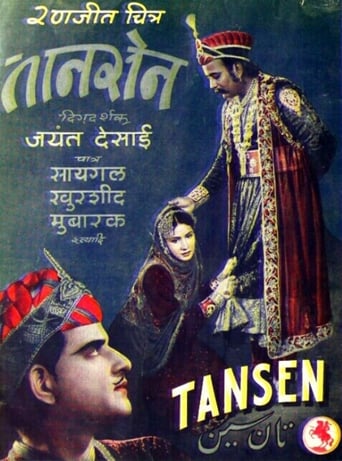
Kamala Chatterjee
Actor
- Active
- 1943-1943
Films 1
About Kamala Chatterjee
Kamala Chatterjee is a little-documented Indian film actor associated with the early 1940s Hindi cinema, best known for appearing in the historical musical Tansen (1943). Available filmographies suggest that her screen career was brief, or at least very sparsely recorded, and she appears in surviving reference sources primarily through her credit in this one notable production. Tansen was a major period film of the era, drawing on the cultural prestige of the legendary singer-composer Tansen and bringing together a large cast of singers and actors, which places Chatterjee within the highly theatrical and music-driven style of studio-era Indian filmmaking. Because contemporary publicity, interviews, and biographical records for her have not survived in easily accessible form, very little is firmly documented about her personal life, training, or later career. She should therefore be understood as one of many performers from early Indian sound cinema whose contributions are preserved more through film credits than through extensive biography. Her known screen presence remains important as part of the ensemble fabric of a landmark 1940s Hindi film, and her name continues to appear in classic-cinema databases and film histories that document the cast of Tansen.
More about Kamala Chatterjee
In film history
Kamala Chatterjee's cultural impact is tied less to a widely documented star persona and more to her participation in a landmark period film from the golden-age transition years of Hindi cinema. Tansen (1943) occupied an important place in the development of the historical musical genre, which relied on trained performers, strong ensemble casts, and studio craftsmanship to recreate legendary cultural figures for mass audiences. Even when an actor's name survives only in cast lists, that credit contributes to the collective memory of early Indian film production and helps scholars reconstruct the labor of studio-era cinema. Her presence in the film's cast underscores how many women and supporting performers helped populate the richly layered narrative world of early Hindi films, even if the archival record did not preserve their individual biographies. In that sense, Kamala Chatterjee belongs to the larger, often under-recognized history of artists whose work supported the era's most enduring screen achievements.
Later reputation
Kamala Chatterjee's legacy is primarily archival and historiographic: she remains part of the documented cast of Tansen (1943), a film that continues to attract attention from historians of Indian popular cinema. Because so little personal information has survived, her significance lies in reminding researchers and audiences how incomplete the record can be for early sound-era performers, especially women whose careers may have been brief, supporting, or poorly publicized. Her name helps preserve the fuller cast history of an important classic film and allows modern databases to reflect the collaborative nature of studio-era filmmaking. For researchers, such names are valuable evidence of the breadth of talent involved in foundational productions of Hindi cinema. Her lasting legacy, therefore, is as part of the broader historical fabric of classic Indian film rather than as a widely celebrated star with an extensive surviving biography.
Influence
There is no verified evidence that Kamala Chatterjee directly mentored other performers or had a documented influence as a star, teacher, or public figure. Her influence is best understood indirectly, through her participation in the ensemble system of early Hindi cinema, where many actors contributed to the development of performance conventions in historical and musical films. By being part of Tansen, she is connected to a tradition that shaped how mythological and historical figures were presented on the Indian screen in the 1940s. Her preserved credit contributes to later scholarship that recognizes the many lesser-known artists whose work supported the evolution of Indian film acting. In that archival sense, she remains part of the lineage of performers whose presence widened the possibilities of studio-era ensemble storytelling.
Off screen
No reliable publicly available biographical record has been found detailing Kamala Chatterjee's family background, marriages, children, or later life. As with many performers from early Indian sound cinema, especially those with very limited surviving credits, personal details were often not widely published or have been lost in archival gaps. No verified information is currently available about her household, relationships, or activities outside film. Any assertions beyond her screen credit in Tansen would be speculative.
Credits
- Appeared in the classic Hindi historical musical Tansen (1943), one of the notable period productions of early 1940s Indian cinema
- Is recorded in surviving filmography references from the studio-era sound-film period
- Represents the many under-documented supporting performers whose work helped shape ensemble filmmaking in vintage Hindi cinema
Roles
- Role in Tansen (1943) - specific character credit not clearly preserved in accessible sources
Films
- Tansen (1943)
Notes
- Kamala Chatterjee is most securely identified today through her credit in Tansen (1943).
- Her recorded filmography is extremely small in accessible sources, suggesting either a very brief screen career or incomplete archival documentation.
- Tansen (1943) was a historical musical, a popular genre in early Indian cinema that blended biography, drama, and song.
- Because many early Indian film records were not comprehensively preserved, supporting performers like Chatterjee are often known only from cast lists and film databases.
- Her name appears in classic-cinema references, which helps preserve the ensemble history of the period even when personal biographies are missing.
- She should not be confused with other individuals who share the Chatterjee surname in Indian cinema history.
- Her surviving credit illustrates how many women performers of the 1940s remain under-documented compared with leading stars.
Questions
Who was Kamala Chatterjee?
Kamala Chatterjee was an Indian film actor from the early sound era, best known for appearing in Tansen (1943). Very little biographical information about her has survived in accessible public records, so she is primarily known through her film credit.
What films is Kamala Chatterjee best known for?
She is best known for Tansen (1943), a historical musical and an important classic of early Hindi cinema. At present, that is the most reliably documented film associated with her.
When was Kamala Chatterjee born and when did she die?
Her birth and death dates are not currently documented in reliable accessible sources. The surviving record identifies her mainly through her screen work rather than through a detailed personal biography.
What awards did Kamala Chatterjee win?
No verified awards or nominations are currently documented for Kamala Chatterjee. Her historical significance comes from her participation in early Indian cinema rather than from a recorded awards history.
What was Kamala Chatterjee's acting style?
There is not enough surviving information to describe a distinctive personal acting style with confidence. Since she appeared in a historical musical, her performance would have fit the expressive, theatrical style typical of studio-era Hindi cinema.
What is Kamala Chatterjee's legacy in film history?
Her legacy is mainly archival: she is part of the cast record of Tansen (1943), helping preserve the collaborative history of an important classic film. She represents the many lesser-documented performers whose work supported the development of early Hindi cinema.