



Intolerance: Love's Struggle Throughout the Ages
"A modern woman's injustice echoes across four historical ages of persecution."
Keys: Space play/pause · ←/→ 10s · F fullscreen · M mute · </> speed
About this film
A poor young woman is torn from her husband and baby by prejudice while D.W. Griffith intercuts her modern ordeal with parallel stories of intolerance in ancient Babylon, Judea, and France on St. Bartholomew's Day. Each era's tragedy is linked through Griffith's cross-cutting as Love's Struggle Throughout the Ages.
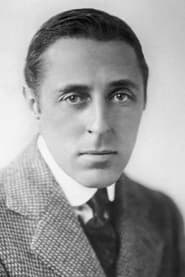
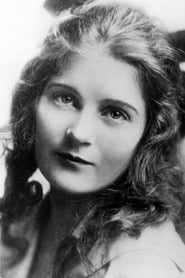
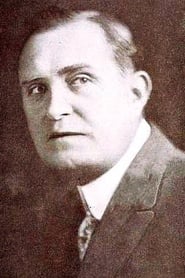
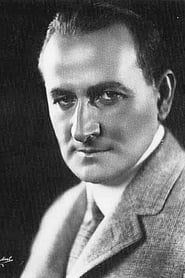
Cast & crew
More Drama films
View all →






More from D.W. Griffith
View all →

More about this film
About the production
Release dateSeptember 5, 1916 (premiere)
Budget$2,500,000 (equivalent to approximately $65 million in 2023, making it the most expensive film of its time)
Box officeInitial gross of approximately $1.5 million, considered a commercial failure at the time of release
ProductionTriangle Film Corporation, Wark Producing Corporation, D.W. Griffith Productions
Filmed inHollywood, California, Los Angeles, California, Various studio locations
The production spanned over two years (1914-1916) with massive sets including the 300-foot-high Babylonian wall. Griffith employed thousands of extras and pioneered techniques like parallel editing, crane shots, and deep focus. The film's unprecedented scale required multiple camera crews working simultaneously on different storylines. Griffith mortgaged his home to finance portions of the production after studio support waned.
Themes
Intolerance and prejudiceLove versus hateSocial injusticeThe cyclical nature of historyReligious persecution
Themes & topics
parallel storieshistorical dramasocial commentaryepicsilent filmreligious persecutionbabyloncrucifixionfrench renaissancemodern americaintoleranceprejudicesocial reformfalse accusationseparationtragedywarbattlesacrificeredemption
Historical background
Made in 1916, in United States, under D. W. Griffith, Intolerance: Love's Struggle Throughout the Ages belongs to drama film filmmaking amid the silent era's rapid stylistic experiments. Intolerance is a 1916 American anthology silent film directed by D.
Why this film matters
Within drama film history, D. W. Griffith's name attaches to the work; surviving prints help researchers study silent-era craft; 1916 epic silent film directed by D. W. Griffith.
Making of
The making of 'Intolerance' was ambitious and challenging productions of early cinema. Griffith worked with multiple cinematographers including G.W. Bitzer and Billy Bitzer, developing new techniques for large-scale scenes. The Babylonian set, designed by Walter L. Hall, was the largest film set ever constructed at that time, featuring massive walls and intricate details. Production was chaotic with Griffith often directing multiple scenes simultaneously across different sets. The famous battle sequence required careful choreography of thousands of extras, horses, and chariots. Many cast and crew members suffered injuries during the demanding production. Griffith's perfectionism led to constant reshoots and improvisation, often changing scenes based on his daily inspirations. The film's complex editing required months of work to properly interweave the four storylines.
What critics said
Contemporary reviews of Intolerance: Love's Struggle Throughout the Ages are sparse in open sources; later catalog entries chiefly summarize plot and credits.
Did you know?
- The Babylonian set was so massive and impressive that it became a Hollywood landmark for years after filming, used in numerous other films before being demolished in 1924
- Griffith created the film partly as a response to criticism he received for 'The Birth of a Nation' (1915), which was accused of promoting racism
- The film's original title was 'The Mother and the Law,' with the modern story being the primary focus before Griffith expanded it into the epic format
- Over 60,000 people were employed during the production, including thousands of extras for the battle scenes
- The famous crane shot that descends from the Babylonian set to street level was one of the first uses of a camera crane in cinema history
- Griffith reportedly screened rushes for audiences during production to gauge reactions and adjust the film accordingly
- The film's failure financially nearly bankrupted Triangle Film Corporation and Griffith personally
- The intercutting technique between four different time periods was revolutionary and influenced countless future filmmakers
- The character 'The Dear One' was played by Mae Marsh, who had to perform difficult scenes including having her baby taken away and facing execution
- Griffith spent $50,000 (equivalent to over $1.3 million today) just on costumes for the Babylonian sequences
Awards & recognition
- Preserved in the National Film Registry by the Library of Congress (1989)
- Ranked #49 in the American Film Institute's 100 Greatest American Films (1998)
- Voted one of the Top 100 Films by the Village Voice (1999)
Visual style
The cinematography, primarily by G.W. Bitzer and Billy Bitzer, was for its time. The film featured innovative camera movements including the famous crane shot descending from the Babylonian walls, one of the first uses of a camera crane in cinema. The cinematographers employed deep focus techniques to capture massive sets with thousands of extras in sharp detail. They developed new lighting techniques to create dramatic shadows and highlights, particularly in the modern story sequences. The battle scenes featured dynamic tracking shots and multiple camera angles to capture the scale of the action. The visual style varied between the four stories, with each period receiving distinct photographic treatment - Babylon was grand and spectacular, Judea was stark and spiritual, Renaissance France was rich and textured, and modern America was gritty and realistic. The film's visual language established conventions that would influence cinematography for decades.
Innovations
Intolerance' pioneered numerous technical innovations that would become standard in filmmaking. The film's parallel editing between four different time periods was revolutionary, establishing cross-cutting as a fundamental cinematic technique. The production featured the first use of a camera crane for the dramatic descending shot in Babylon. Griffith developed techniques for managing thousands of extras in complex battle sequences, including detailed storyboards and rehearsal systems. The film's massive sets required new construction techniques and engineering innovations. The editing process, which took months, involved synchronizing four different storylines with different pacing and visual styles. The production also experimented with color tinting, using different color schemes for each time period. The film's length required new projection technology and theater accommodations. These technical achievements pushed the boundaries of what was possible in cinema and established many conventions still used in filmmaking today.
Music
The original score was composed by Joseph Carl Breil, who had also scored 'The Birth of a Nation.' The music was designed to enhance the emotional impact of each storyline while providing continuity between the different time periods. Breil incorporated classical themes and original compositions, using leitmotifs to connect characters and themes across the four stories. The score was performed live in theaters by orchestras during initial screenings, with cue sheets provided to synchronize the music with the action. Modern restorations have featured newly composed scores by contemporary composers including Carl Davis and the Mont Alto Motion Picture Orchestra. The music plays a crucial role in unifying the film's complex structure, with recurring themes helping audiences follow the parallel narratives. The soundtrack's emotional power compensates for the lack of dialogue, with the music conveying the film's themes of love, suffering, and redemption.
Famous quotes
The story of a dear one... and a boy... and the love that would not die.
Out of the cradle, endlessly rocking.
When women cease to attract men, they will turn to spiritualism and spiritualism will become a fad.
The little girl who was dear to us all, whose heart was as pure as the morning dew.
In each age, the same story repeats itself: love struggling against intolerance.
The boy was a good boy. He had his faults, but he was good at heart.
Memorable scenes
- The massive Babylonian battle sequence with thousands of extras, chariots, and elephants storming the city walls
- The crane shot descending from the top of the Babylonian set to the street level below
- The heartbreaking scene where The Dear One has her baby taken away by social reformers
- The crucifixion sequence in Judea, filmed with spiritual reverence and visual poetry
- The final montage rapidly cutting between all four stories as the modern couple faces execution
- The St. Bartholomew's Day Massacre scene showing the brutal persecution of Huguenots
- The recurring motif of the mother rocking the cradle, connecting all four storylines
- The Babylonian feast scene with its opulent sets and thousands of extras
What audiences thought
Initial audience reception was disappointing, with many viewers finding the film's complex narrative structure confusing and its length excessive. The film's commercial failure shocked the industry, given Griffith's previous success with 'The Birth of a Nation.' Contemporary audiences were divided, with some praising its spectacle while others criticized its perceived moralizing. Over time, audience appreciation has grown significantly, particularly among film enthusiasts and scholars. Modern audiences often find the film surprisingly accessible despite its age, thanks to its visual storytelling and emotional power. The film has developed a cult following among cinema lovers and is frequently screened at film festivals and repertory theaters. Its restoration and availability on home video have introduced it to new generations, who often express amazement at its technical achievements and emotional impact.
Film connections
Influenced by
- 'The Birth of a Nation' (1915) - as a response to criticism
- Thomas Dixon Jr.'s novels - for themes of social conflict
- Classical literature and epic poetry - for narrative structure
- Biblical stories - particularly for the Judea sequence
- Historical texts about Babylon and French religious wars
- Contemporary social reform movements - as critique
- Griffith's own short films - for technical experimentation
This film influenced
- 'Battleship Potemkin' (1925) - Eisenstein's editing techniques
- 'Metropolis' (1927) - for epic scale and social themes
- 'The Ten Commandments' (1956) - for biblical epic style
- 'Ben-Hur' (1959) - for historical spectacle
- 'Once Upon a Time in America' (1984) - for parallel narrative structure
- 'The Godfather Part II' (1974) - for cross-cutting between time periods
- 'Pulp Fiction' (1994) - for non-linear storytelling
- 'Cloud Atlas' (2012) - for multiple interconnected stories across time
Film restoration
Been preserved by the Museum of Modern Art and the Library of Congress. Multiple versions exist due to Griffith's re-editing over the years. The most complete restoration was undertaken by Kevin Brownlow and David Gill in the 1980s, combining footage from various archives worldwide. The film was selected for preservation in the National Film Registry in 1989 for its cultural, historical, and aesthetic significance. Digital restorations have been completed, with the most recent being a 4K restoration by Cohen Film Collection. Some footage remains lost, particularly from the modern story sequences, but the film survives in a remarkably complete state considering its age.
Where to watch
- The Criterion Collection (Blu-ray/DVD)
- Cohen Media Group (4K restoration)
- Kino Lorber (home video releases)
- The Criterion Channel (streaming)
- Kanopy (streaming for library card holders)
- MUBI (occasionally featured)
- Various public domain versions on YouTube and Internet Archive
- Film archives and museum screenings
- Turner Classic Movies (occasionally broadcast)
- Educational film distribution services