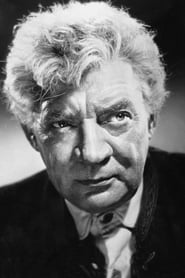
Carl Wery
Actor
- Born
- August 7, 1897, Trostberg, Bavaria, Germany
- Died
- March 14, 1975
- Active
- 1929-1965
- Birth name
- Carl Sebastian Martin Wery de Lemans
Films 1
About Carl Wery
Carl Wery was a prominent German stage and film actor whose career spanned several decades of the 20th century, becoming a staple of German cinema during and after the Golden Age. Born Carl Sebastian Martin Wery de Lemans in Trostberg, he initially pursued a career in commerce and served in World War I before turning to the arts. He made his professional stage debut in 1929 as Faust at the Theater Bielefeld, quickly establishing himself as a formidable theatrical presence in Münster and Berlin. Though he began appearing in films in the early 1930s, his cinematic career truly flourished in the 1940s and 1950s, where he became known for his distinctive, weathered features and ability to portray complex, often stubborn or authoritative characters. During the Third Reich, he was included in the 'Gottbegnadeten-Liste' (God-gifted list), which exempted crucial artists from military service, though his most celebrated roles came in the post-war era. Wery frequently collaborated with his wife, screenwriter Erna Fentsch, and remained a beloved figure in Bavarian culture until his death in 1975.
More about Carl Wery
On screen
Wery was celebrated for his 'zerfurchtes Gesicht' (deeply lined, weathered face) which gave him an immediate air of gravitas and experience. He specialized in playing 'difficult' characters—men who were often stern, unyielding, or morally ambiguous, yet possessed a hidden depth of humanity. His technique was rooted in classical theater, characterized by precise diction and a commanding physical presence that allowed him to dominate both the stage and the screen.
Impact on culture
Carl Wery became a symbol of post-war German resilience and traditional Bavarian identity. His portrayal of the Brandner Kaspar—a character who outwits Death in a game of cards—became a definitive cultural touchstone in German-speaking countries, blending folk legend with cinematic artistry. He helped bridge the gap between the pre-war theatrical tradition and the burgeoning West German film industry, providing a sense of continuity and gravitas to the 'Heimatfilm' genre.
Lasting legacy
Wery is remembered as one of the most distinctive character actors of the mid-20th century German screen. His grave is located in the Bogenhausen Cemetery in Munich, a resting place for many of Germany's most prominent artists and intellectuals. He remains a respected figure for his ability to navigate the complex political landscape of 1940s cinema while maintaining a career that flourished well into the 1960s, leaving behind a filmography that defined the 'grumpy but gold-hearted' archetype in German film.
Who they inspired
His rugged, naturalistic appearance influenced a generation of German character actors who moved away from the polished 'matinee idol' look toward more authentic, weathered portrayals of everyday men. His work in radio plays (Hörspiele) also set a standard for vocal performance in Germany.
Off screen
Wery was born into a family of Huguenot descent; his father was a civil servant. Before his acting career, he worked as an industrial clerk and eventually rose to the position of director at a timber company. He was a veteran of World War I, having served in the Bavarian Army and being wounded in action at Chemin des Dames in 1917. He was married to the actress and screenwriter Erna Fentsch, who wrote several of the screenplays for his most successful films.
Education
Completed high school (Abitur) followed by commercial training; received private acting lessons from Fritz Ulmer.
Career milestones
- Stage debut as Faust at Theater Bielefeld in 1929
- Became a member of the Munich Kammerspiele in 1934, remaining until 1948
- Appeared in the controversial propaganda film 'Venus on Trial' (Venus vor Gericht) in 1941
- Starred as the iconic Brandner Kaspar in 'Die seltsame Geschichte des Brandner Kaspar' (1949)
- Portrayed Generaloberst Friedrich Fromm in the 1955 film 'Jackboot Mutiny' (Es geschah am 20. Juli)
- Received the Federal Cross of Merit for his contributions to German culture
Iconic roles
- Brandner Kaspar in 'Die seltsame Geschichte des Brandner Kaspar'
- The Senior Prosecutor in 'Venus on Trial'
- Generaloberst Friedrich Fromm in 'Jackboot Mutiny'
- The Perjured Farmer in 'Der Meineidbauer'
- Dr. Classen in 'Heidi' (1952)
Must-see films
- Venus on Trial (1941)
- Via Mala (1945)
- Die seltsame Geschichte des Brandner Kaspar (1949)
- Heidi (1952)
- Jackboot Mutiny (1955)
- The Green Devils of Monte Cassino (1958)
Awards
- Federal Cross of Merit (Bundesverdienstkreuz) 1st Class (1963)
- Bavarian Order of Merit (1961)
Special recognition
- Included in the Gottbegnadeten-Liste (1944)
- Honorary member of the Munich Kammerspiele
Worked often with
- Erna Fentsch (Screenwriter/Wife)
- Hans H. Zerlett (Director)
- Paul Dahlke (Actor)
- Hansi Knoteck (Actress)
Studios
- Bavaria Film
- UFA
Family
- Erna Fentsch (married until his death in 1975)
Did you know?
- Before becoming an actor, he was the director of a timber company.
- He was wounded by shrapnel during World War I in 1917.
- His face was so distinctive that he was often described by critics as having a 'face like a landscape'.
- He played the role of Faust in his very first professional stage appearance in 1929.
- Wery was a prolific radio play speaker, appearing in German adaptations of works by Brecht and Dostoevsky.
- Despite his association with Bavarian roles, he was of Huguenot (French Protestant) ancestry.
- He appeared in the first German science fiction film 'Weltraumschiff I startet' (1937/1940).
In their own words
Acting is not about being someone else, but about finding the truth of the character within yourself. (Context: Discussing his approach to character roles in a post-war interview)
The camera sees through the skin; it sees the history written on a man's face. (Context: Regarding his distinctive weathered appearance)
Questions and answers
Who was Carl Wery?
Carl Wery was a highly respected German stage and film actor, best known for his authoritative character roles and his distinctive, weathered facial features. He was a staple of both the Munich Kammerspiele theater and the German film industry from the 1930s through the 1960s.
What films is Carl Wery best known for?
He is most famous for his role as the title character in 'Die seltsame Geschichte des Brandner Kaspar' (1949) and for appearing in 'Heidi' (1952), 'Via Mala' (1945), and the historical drama 'Jackboot Mutiny' (1955).
When was Carl Wery born and when did he die?
Carl Wery was born on August 7, 1897, in Trostberg, Bavaria, and passed away on March 14, 1975, in Munich, Germany.
What awards did Carl Wery win?
He was honored with the Federal Cross of Merit (Bundesverdienstkreuz) 1st Class in 1963 and the Bavarian Order of Merit in 1961 for his significant contributions to German arts and culture.
What was Carl Wery's acting style?
Wery was known for a grounded, intense acting style that utilized his rugged appearance to portray stern, complex, and deeply human characters, often specializing in authoritative figures or stubborn patriarchs.