
Carla Rust
Actor
- Born
- September 15, 1908, Burgdamm, Bremen, Germany
- Died
- December 27, 1977
- Active
- 1935-1956
Films 1
About Carla Rust
Carla Rust was a prominent German film actress who rose to fame as a leading lady during the 1930s and 1940s. Born in Burgdamm, near Bremen, she began her artistic journey on the stage, making her professional debut in 1928 at the Stadttheater Mainz. She spent several years honing her craft in regional theaters in Nuremberg and Dresden before moving to Berlin in 1935 to perform at the prestigious Theater am Schiffbauerdamm. Her transition to cinema occurred that same year, where her blonde hair and versatile acting style quickly made her a favorite for both romantic leads and character roles. Throughout the Nazi era, she appeared in over 30 films, often portraying the 'fresh young girl' or the dependable leading lady in comedies and dramas. After a significant hiatus following World War II, she returned to the screen in the mid-1950s, primarily in supporting roles within the 'Heimatfilm' genre, before retiring to the Bavarian Alps with her husband.
More about Carla Rust
On screen
In her early career, Rust was frequently cast in the 'frisches junges Mädel' (fresh young girl) archetype, characterized by a natural, lively, and charming screen presence. As her career progressed, she demonstrated a capacity for more mature and dramatic roles, often playing resilient women or romantic interests in alpine-themed 'Heimatfilms'. Her stage background provided her with a disciplined technique that allowed her to transition seamlessly between light musical comedies and more serious dramas.
Impact on culture
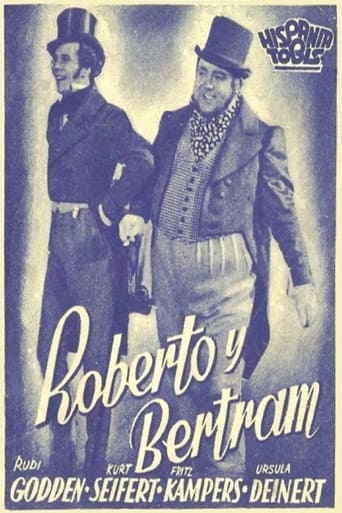
Carla Rust was a staple of German cinema during a complex political era, serving as a face of popular entertainment that provided escapism for audiences. Her work in 'Robert and Bertram' (1939) is particularly noted by film historians for its place within the musical comedy genre of the time. While her career was interrupted by the aftermath of World War II, her return in the 1950s helped bridge the gap between the Golden Age of German cinema and the post-war 'Heimatfilm' era, which celebrated traditional values and rural landscapes.
Lasting legacy
Rust is remembered as a versatile performer who successfully navigated the transition from theater to the early sound era of film. Though many of her films are now viewed through a historical lens due to the era of their production, she remains a significant figure for scholars of 1930s European cinema. Her enduring partnership with Sepp Rist made them one of the recognizable 'acting couples' of the German screen. Today, she is commemorated alongside her husband with a plaque in Bad Hindelang.
Who they inspired
Her naturalistic portrayal of young women in the 1930s influenced the 'girl next door' archetype in German-language cinema, moving away from the highly stylized vamps of the silent era toward a more relatable, modern persona.
Off screen
Carla Rust was married to the well-known German actor Sepp Rist (1900–1980). The couple met during the filming of 'Der lachende Dritte' in 1936 and frequently appeared together in films, particularly those set in alpine or rural environments. They remained married until her death in 1977. In her later years, she lived a quiet life in Bad Hindelang, a municipality in the Bavarian Alps, which was also her husband's birthplace.
Education
Trained in classical acting; early career development at Stadttheater Mainz (1928) and Schauspielhaus Nürnberg (1930–1933).
Career milestones
- Professional stage debut at the Stadttheater Mainz in 1928
- Transitioned to film in 1935 with 'Nur nicht weich werden, Susanne!'
- Starred as Lenchen in the high-profile musical comedy 'Robert and Bertram' (1939)
- Included in the 'Gottbegnadeten-Liste' (God-gifted list) of important artists in 1944
- Successful career comeback in the 1950s with films like 'Die schöne Müllerin' (1954)
Iconic roles
- Lenchen in 'Robert and Bertram' (1939)
- Lisbeth Boeckel in 'Weiße Wäsche' (1942)
- Partner to Luis Trenker in 'Liebesbriefe aus dem Engadin' (1938)
- Leading lady in 'Der rettende Engel' (1940)
Must-see films
- Robert und Bertram (1939)
- Madame Bovary (1937)
- Liebesbriefe aus dem Engadin (1938)
- Weiße Wäsche (1942)
- Die schöne Müllerin (1954)
Special recognition
- Included in the 'Gottbegnadeten-Liste' of the Reich Ministry for Public Enlightenment and Propaganda (1944)
Worked often with
- Sepp Rist (Actor/Husband)
- Hans H. Zerlett (Director)
- Luis Trenker (Director/Actor)
- Rudi Godden (Actor)
Studios
- Tobis Film
- UFA
- Terra Film
Family
- Sepp Rist (m. 1930s-1977)
Did you know?
- She met her husband, Sepp Rist, on the set of 'Der lachende Dritte' in 1936.
- She was a trained stage actress before ever appearing on camera.
- Her film 'Robert and Bertram' (1939) was a musical comedy based on a popular 19th-century play.
- She took a nearly ten-year break from acting between 1944 and 1954.
- She is buried in Bad Hindelang, though her original grave site has since been cleared; a memorial plaque remains.
- She appeared in over 35 films throughout her career.
Questions and answers
Who was Carla Rust?
Carla Rust was a popular German film and stage actress active primarily between 1935 and 1956. She was best known for her roles as a leading lady in comedies and dramas during the 1930s and 1940s.
What films is Carla Rust best known for?
She is most recognized for her roles in 'Robert and Bertram' (1939), 'Madame Bovary' (1937), and 'Liebesbriefe aus dem Engadin' (1938). In the 1950s, she appeared in the popular film 'Die schöne Müllerin' (1954).
When was Carla Rust born and when did she die?
Carla Rust was born on September 15, 1908, in Burgdamm, Germany, and passed away on December 27, 1977, in Bad Hindelang, Bavaria.
Who was Carla Rust's husband?
She was married to the actor Sepp Rist, a famous star of German 'mountain films'. The two often appeared together in films set in the Alps.
What was Carla Rust's acting style?
Rust was known for a fresh, naturalistic style, often playing charming and spirited young women. Her background in theater gave her a strong technical foundation for both comedy and drama.
Did Carla Rust win any awards?
While she did not receive major international film awards, she was highly honored within Germany during her peak, notably being included on the 'Gottbegnadeten-Liste' in 1944.