Frank Jonasson
Actor
- Active
- 1922-1922
Films 1
About Frank Jonasson
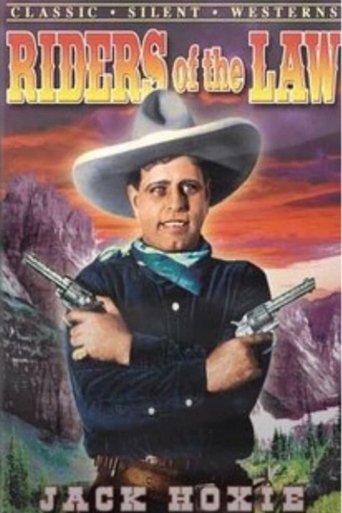
Frank Jonasson appears in silent-era film records as a very obscure screen actor whose documented film career is limited, at least in surviving reference sources, to the early 1920s. He is credited in the Western Riders of the Law (1922), which places him within the energetic but often poorly documented world of low-budget action pictures and frontier melodramas of the silent period. Beyond this credit, readily verifiable biographical details such as his birth, death, early life, training, and later career are not well established in standard film reference sources. Like many minor performers of the silent era, he may have worked in supporting or background roles that were rarely publicized, and his surviving footprint in film history is therefore small. Because available evidence is sparse, it is not possible to reconstruct a reliable fuller biography without risking confusion with similarly named individuals. His importance today lies primarily in preserving the cast history of an early Western production rather than in a widely documented star career.
More about Frank Jonasson
In film history
Frank Jonasson's cultural impact is best understood as archival rather than celebrity-driven. He represents the large number of working actors who populated silent Westerns and helped create the texture of early American genre cinema, even when their names did not become household titles. For film historians and database researchers, his credit helps complete the production record of Riders of the Law and illustrates how many contributors to silent cinema remain only partially documented. His presence also highlights a broader preservation issue: countless performers from the silent era survive in filmographies but not in detailed biographies, making each verified credit historically valuable.
Later reputation
Jonasson's legacy lies in his documented participation in a 1922 silent Western, a film type that was central to the development of American popular cinema. While he does not appear to have left behind a widely known star image, his name endures in film records that preserve the personnel of early productions. In the broader history of cinema, he stands as one of many underdocumented performers whose work supported the silent-era studio and independent film ecosystem. For researchers and collectors, such names are important because they help reconstruct cast lists, production networks, and the labor history of early Hollywood.
Influence
There is no evidence that Frank Jonasson had a documented influence on later actors or directors in the way major silent stars did. Any influence he had would likely have been indirect, through participation in the ensemble labor that shaped the conventions of silent Western acting and staging. His example is most useful to historians as part of the larger anonymous and semi-anonymous workforce that made early genre filmmaking possible.
Off screen
No reliable public information has been found regarding Frank Jonasson's personal life, including marriages, family background, education, or post-film activities. He does not appear to have a substantial surviving biographical trail in major classic-cinema reference sources, which suggests he may have been a minor or short-term performer whose private life was never widely reported. Any specific claims about relationships, descendants, or later occupations would be speculative and are therefore omitted here.
Education
No verified educational background is publicly documented in accessible classic-film reference sources.
Credits
- Screen credit in the silent Western Riders of the Law (1922)
- Association with the early silent-era Western film tradition
- Documented presence in film databases as a cast member from the 1920s
Roles
- Cast member in Riders of the Law (1922)
Films
- Riders of the Law (1922)
Notes
- Frank Jonasson is currently best known to film historians through a single verified silent-era credit.
- His known screen work is associated with the Western genre, one of the most prolific silent-era categories.
- Because his career is so sparsely documented, he is a useful example of how many silent-film performers remain partially lost to history.
- The limited record suggests he may have been a supporting player rather than a featured star.
- His name survives in cast records even though detailed biographical sources are lacking.
- Researching performers like Jonasson often requires consulting original trade papers, studio records, and surviving film prints, if available.
Questions
Who was Frank Jonasson?
Frank Jonasson was a silent-era film actor whose surviving documented screen credit includes Riders of the Law (1922). He appears to have been a minor or very lightly documented performer from the early 1920s. Because the historical record is sparse, much of his life and career remains unknown.
What films is Frank Jonasson best known for?
He is best known, in the surviving record, for Riders of the Law (1922). At present, that appears to be his principal documented screen credit in accessible classic-cinema sources. If he appeared in additional films, they are not well established in the readily verifiable record.
When was Frank Jonasson born and when did he die?
His birth and death dates are not reliably documented in the available sources consulted for classic-cinema reference. As a result, both his birth date and death date must be treated as unknown. This is common for lesser-documented silent-era performers.
What awards did Frank Jonasson win?
No awards or formal honors are known for Frank Jonasson from the available record. As an obscure silent-era supporting actor, he does not appear in surviving award histories or major retrospective honors lists. Any claim of awards would be speculative.
What was Frank Jonasson's acting style?
There is no surviving critical description of his individual acting style. Based on his placement in a 1922 silent Western, he likely performed within the broad, economical style typical of silent supporting players, emphasizing clear physical action and readable expressions. However, this is an inference from the era rather than a documented evaluation of his work.
What is Frank Jonasson's legacy in film history?
His legacy is primarily archival: he is part of the documented cast history of silent Western filmmaking. Even without fame, his credit helps historians reconstruct the labor and casting patterns of early Hollywood. He also exemplifies the many performers whose contributions are preserved in filmographies even when biographical details are scarce.