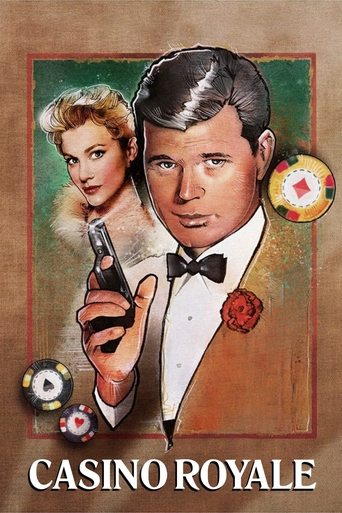
Films
1 film
About William H. Brown Jr.
American television director primarily active during the early days of television in the 1950s. He is best known for directing the 1954 television adaptation of Ian Fleming's James Bond novel 'Casino Royale' for the CBS anthology series 'Climax!' This production marked the first screen appearance of James Bond, though the character was Americanized as 'Jimmy Bond' and played by Barry Nelson. Brown's directorial work on this television production demonstrated his ability to adapt literary works for the emerging medium of television. His career appears to have been concentrated in television rather than feature films, which was common for many directors during television's golden age. While detailed biographical information about Brown is limited in historical records, his contribution to bringing James Bond to screen for the first time represents a significant moment in both television and spy fiction history. The Casino Royale episode was well-received and helped establish the template for future Bond adaptations.
The Craft
Behind the Camera
Television director with experience in live anthology productions, adapting literary works for the small screen
Milestones
- Directed the first screen adaptation of James Bond in 'Casino Royale' (1954)
- Worked on the CBS anthology series 'Climax!'
- Pioneered television adaptations of literary works
Best Known For
Must-See Films
Working Relationships
Studios
Why They Matter
Impact on Culture
William H. Brown Jr.'s most significant cultural contribution was directing the first-ever screen adaptation of James Bond in 1954, seven years before the official film series began with Dr. No (1962). This television production introduced American audiences to Ian Fleming's character, though significantly altered with Bond as an American agent. The production demonstrated the potential of television as a medium for adapting popular literature and helped pave the way for future spy fiction adaptations. Brown's work represents an important milestone in the James Bond franchise history and early television's role in popular culture. The Casino Royale episode also showcased the technical capabilities of live television drama during its formative years.
Lasting Legacy
William H. Brown Jr.'s legacy is primarily tied to his role in bringing James Bond to screen for the first time. While the 1954 Casino Royale television episode differed significantly from later Bond films, it established that the character had screen appeal. Brown's direction helped demonstrate that complex spy stories could be successfully adapted for television, influencing subsequent productions in the genre. His work represents an important historical footnote in both James Bond history and early television drama. The production he directed has become a subject of interest for Bond historians and television scholars studying the evolution of spy fiction on screen.
Who They Inspired
As an early television director, Brown's work on Casino Royale influenced how literary adaptations could be approached for television audiences. His direction helped establish that spy fiction could work in the live television format, potentially influencing later television spy series. The success of his Casino Royale adaptation may have contributed to the eventual decision to produce the James Bond film series, proving there was audience interest in the character.
Off Screen
Very limited personal information is available about William H. Brown Jr. In historical records, which was common for many early television directors whose work was often uncredited or poorly documented.
Did You Know?
- The 1954 Casino Royale was the first-ever screen appearance of James Bond
- Barry Nelson played Bond as an American agent named 'Jimmy Bond'
- Peter Lorre played the villain Le Chiffre in this adaptation
- The production was broadcast live on October 21, 1954
- This was part of the CBS anthology series 'Climax!'
- The episode ran for approximately 50 minutes
- Fleming reportedly received only $1,000 for the television rights
- Linda Christian played Valerie Mathis, a character combining elements of Vesper Lynd and Rene Mathis
- The production was set in Monte Carlo rather than the novel's French setting
- This adaptation predates all the EON Productions James Bond films
Frequently Asked Questions
Who was William H. Brown Jr.?
American television He worked primarily in television during the early 1950s.
What is William H. Brown Jr. Best known for?
He is best known for directing the first-ever James Bond screen adaptation in 1954 for CBS's 'Climax!' anthology series, starring Barry Nelson as an Americanized version of Bond.
When was William H. Brown Jr. Active as a director?
Based on available records, Brown was active as a director in 1954, though his career may have extended beyond this period. The Casino Royale episode is his most documented work.
What was unique about the 1954 Casino Royale adaptation?
It was the first screen adaptation of James Bond, featured an American Bond named 'Jimmy Bond,' was broadcast live on television, and predated the official film series by eight years.
Did William H. Brown Jr. Direct any films?
There are no documented feature films directed by William H. Brown Jr. His known work appears to be primarily in television, particularly the 1954 Casino Royale episode.
What impact did Brown's Casino Royale have on the Bond franchise?
It proved there was audience interest in James Bond on screen, though it took another eight years before the official film series began with Dr. No in 1962.