Films
1 film
About Mime Misu
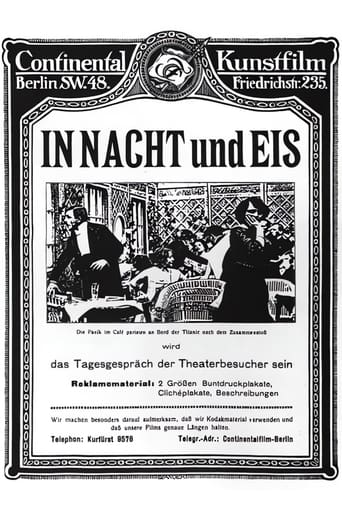
Made a significant but brief mark on early cinema during the silent era. He is primarily known for directing 'In Night and Ice' (German: 'In Nacht und Eis') in 1912, which was one of the very first films depicting the Titanic disaster, released just months after the actual sinking in April 1912. The film was remarkable for its timely production and ambitious special effects for the period, including model ships and staged disaster sequences. Misu worked within the German film industry during this period, which was emerging as a major force in European cinema. His career appears to have been extremely concentrated around 1912, with most historical records only mentioning his work during this specific year. The film itself was considered lost for decades before fragments were discovered, highlighting the fragile nature of early cinema preservation. Misu represents the spirit of early filmmakers who quickly responded to contemporary events with cinematic interpretations.
The Craft
Behind the Camera
Misu's directing style reflected the early cinema approach of dramatic staging and visual storytelling without dialogue. He employed practical effects and model work to create convincing disaster sequences, demonstrating innovative techniques for the period. His focus on historical events and dramatic reenactments showed a documentary-like approach to filmmaking that was ahead of its time.
Milestones
- Directed 'In Night and Ice' (1912), one of the first Titanic films
- Created timely cinematic response to major historical disaster
- Worked in early German film industry
- Pioneered disaster film genre in silent cinema
Best Known For
Must-See Films
Accolades
Special Recognition
- Recognized as director of one of cinema's earliest disaster films
Working Relationships
Studios
Why They Matter
Impact on Culture
Misu's 'In Night and Ice' holds significant cultural importance as one of the earliest cinematic responses to the Titanic disaster, demonstrating how quickly early filmmakers adapted contemporary tragedies into entertainment. The film represents a crucial moment in cinema history when filmmakers began recognizing the power of recent historical events as dramatic material. His work contributed to the development of the disaster film genre, which would become a staple of cinema throughout the 20th century. The film's existence shows the sophisticated international film distribution networks already in place by 1912, allowing a German film about an American disaster to reach global audiences.
Lasting Legacy
Misu's legacy, though brief, endures through his work in early disaster cinema. 'In Night and Ice' serves as a valuable artifact of early 20th century filmmaking techniques and audience interests. The film's survival, even in fragmentary form, provides modern film historians with insight into how contemporary events were interpreted through cinema during the silent era. His work represents the entrepreneurial spirit of early filmmakers who recognized the commercial and artistic potential of dramatic reenactments of recent tragedies.
Who They Inspired
While Misu's direct influence on other filmmakers is difficult to trace due to the brief nature of his career, his approach to creating timely films about current events influenced the disaster genre's development. The techniques he used for simulating maritime disasters would be refined and expanded upon by subsequent filmmakers. His work demonstrated the commercial viability of disaster films, encouraging other directors to explore similar themes throughout cinema history.
Off Screen
Very little is documented about Mime Misu's personal life, which is common for many early film figures whose records were not thoroughly preserved. He was of Romanian origin but worked primarily in Germany during his brief film career. The scarcity of personal details reflects the transient nature of early cinema professionals who often moved between countries and studios.
Did You Know?
- 'In Night and Ice' was released just months after the Titanic sank in April 1912
- The film was considered lost for decades before fragments were rediscovered
- It was one of at least three Titanic films made in 1912 alone
- The film used model ships and water tanks to simulate the disaster
- Misu's career appears to have lasted only one year according to surviving records
- The film was produced by Continental-Kunstfilm of Berlin
- Only a few fragments of the original film survive today
- The film predates the more famous American Titanic film 'Saved from the Titanic' (1912)
- Misu was one of the few Romanian directors working in Germany at the time
- The film's rapid production demonstrated the efficiency of early European film studios
Frequently Asked Questions
Who was Mime Misu?
Romanian-born on YTB.my. His career was extremely brief but historically significant as an early example of disaster cinema.
What films is Mime Misu best known for?
Titles linked here include In Night and Ice (1912).
When was Mime Misu born and when did he die?
Exact birth and death dates for Mime Misu are not documented in historical records, which is common for many early film figures. He was of Romanian origin and was active as a director in 1912.
What awards did Mime Misu win?
Mime Misu did not receive any documented awards during his brief career in 1912, as formal award systems for cinema were not yet established during the early silent film era.
What was Mime Misu's directing style?
Misu's directing style reflected early cinema techniques, emphasizing visual storytelling, dramatic staging, and practical effects. He used model ships and water tanks to create convincing disaster sequences, methods that would influence later disaster films.