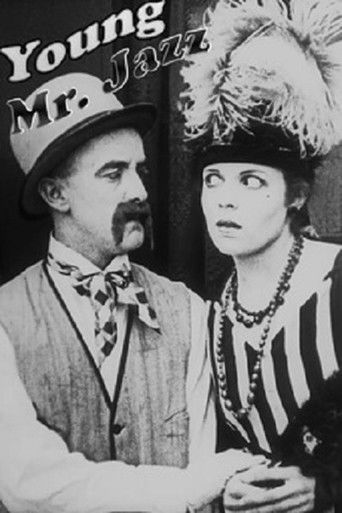
Rose Gold
Actor
- Active
- 1919-1919
Films 1
About Rose Gold
Rose Gold is a very obscure screen performer credited in the silent-era short Young Mr. Jazz (1919), but surviving reference sources provide almost no biographical detail about her life or career. She appears to have been active only in the late 1910s, and current readily accessible filmographic records do not reveal a broader body of work, personal background, or later career in sound cinema. Because the surviving documentation is so sparse, it is difficult to determine whether this was her full professional name or a stage name, and there is no reliable evidence in the accessible record for her birth date, birthplace, or personal life. Her known screen presence belongs to the period when many short comedies and dramatic one-reelers were produced and distributed rapidly, often leaving performers with minimal archival trace. In that sense, Rose Gold represents a category of early film artist whose contributions are real but poorly documented, especially when compared with stars whose careers were heavily promoted by studios and trade papers. The absence of fuller information itself is historically significant, illustrating how many silent-era performers have become nearly anonymous despite having appeared in professionally released films.
More about Rose Gold
In film history
Rose Gold's cultural impact is difficult to measure because the surviving record preserves only a narrow trace of her work. Her known appearance in Young Mr. Jazz places her within the vast ecosystem of silent cinema performers who helped sustain the industry during its formative years, even when they were not publicized as major stars. Figures like Gold are important to film history because they remind researchers that the silent era was built not only by marquee names but also by large numbers of working actors whose careers were brief, local, or poorly archived. Her legacy is therefore less about celebrity than about historical presence: she is part of the evidentiary record of early American film production. For databases and scholars, such names are valuable because they help reconstruct the cast networks, labor patterns, and performance culture of the period. In broader cultural terms, her obscurity underscores how unevenly cinema history has been preserved, especially for women and marginal performers from the silent era.
Later reputation
Rose Gold's lasting legacy is mainly archival. Her name survives as a credit attached to a 1919 silent film, making her a small but meaningful part of early screen history. Even with limited documentation, her inclusion in film records contributes to a more complete understanding of silent-era casting and production practices. Her case also illustrates the fragility of early film celebrity and the ways in which many performers were effectively erased from mainstream memory despite their participation in commercial cinema. For historians and database curators, preserving her credit is itself an act of legacy-building.
Influence
There is no verifiable evidence that Rose Gold directly influenced other actors or directors in a documented way. Her influence is best understood indirectly, as part of the large workforce of silent-era performers whose collective participation shaped acting conventions, ensemble comedy, and early screen storytelling. Because so little is known about her individual technique or reputation, any stronger claim about influence would be unsupported.
Off screen
No reliable, publicly accessible biographical material has been found regarding Rose Gold's personal life. Her marriage history, family background, education, and post-film career are not documented in the surviving records commonly used for classic-cinema reference. As a result, any attempt to describe her personal life in detail would be speculative rather than factual.
Credits
- Screen credit for appearing in the silent-era film Young Mr. Jazz (1919)
- Documented participation in a late-1910s American film production from the silent era
- Representation of the many lesser-known performers whose work survives primarily through film credits rather than detailed biographies
Films
- Young Mr. Jazz (1919)
Notes
- Rose Gold is credited in the silent film Young Mr. Jazz (1919), but very little else is readily documented about her.
- Her career, based on currently available filmography, appears to have been limited to a single active year: 1919.
- She is one of many silent-era performers whose names survive in cast lists even when personal biographies have been lost or remain unverified.
- The name Rose Gold can easily be confused with later or unrelated people, so careful identification is essential when researching her.
- Because her record is so sparse, she is more often encountered in film databases than in narrative film histories.
- Her obscurity highlights the archival challenges of researching short silent films and their supporting casts.
- No dependable public record currently establishes whether Rose Gold was a stage name or her legal name.
Questions
Who was Rose Gold?
Rose Gold was a very obscure silent-era film actor known from a credit in Young Mr. Jazz (1919). Surviving reference material provides almost no additional biographical information, so she remains one of the many early cinema performers whose careers are only faintly documented.
What films is Rose Gold best known for?
She is best known, in the surviving record, for Young Mr. Jazz (1919). No other confirmed film credits are readily available in the accessible documentation.
When was Rose Gold born and when did she die?
At present, no verified birth or death dates are available for Rose Gold. Available records do not reliably identify her birthplace, lifespan, or later biography.
What awards did Rose Gold win?
No awards or nominations are currently documented for Rose Gold. This is not unusual for a lightly documented silent-era performer whose surviving record consists primarily of a film credit.
What was Rose Gold's acting style?
Her acting style cannot be assessed with confidence because so little of her work is documented and no detailed contemporary criticism has been reliably tied to her. As a performer in a 1919 silent film, she would have worked within the expressive, gesture-based conventions of the silent era, but any more specific description would be speculative.
What is Rose Gold's legacy in film history?
Her legacy is mainly archival and historical rather than star-based. She represents the many working actors of the silent era whose names survive in film credits and help scholars reconstruct the personnel of early cinema.