Films
3 films
About Baldassarre Negroni
Italian film director active during the silent era and the early years of sound cinema, with a career that appears to have been concentrated between the mid-1910s and the late 1920s. He is associated with historical, literary, and melodramatic subjects that were common in Italian cinema of the period, including The Masked Amazon (1914), Pierrot the Prodigal (1914), and Judith and Holophernes (1929). His surviving filmography places him among the directors working in Italy during one of the medium's most formative decades, when filmmakers were adapting stage traditions, biblical and classical subjects, and popular dramatic narratives to the screen. Because documentation on Negroni is limited compared with later internationally famous directors, many personal details of his life are not widely preserved in standard reference sources. Even so, his credits suggest he was an active participant in the development of Italian silent filmmaking and likely worked within the production culture that favored visual spectacle, literary prestige, and mythic or historical themes. His 1929 credit indicates that he remained professionally relevant into the transitional era when Italian cinema was moving from silent production toward synchronized sound. Negroni is therefore best understood as a craftsman-director of early Italian cinema whose work survives primarily through filmographic records rather than extensive biographical writing.
The Craft
Behind the Camera
Negroni appears to have worked in the traditions of early Italian silent cinema, where direction emphasized pictorial composition, large-scale dramatic gesture, and clear visual storytelling over dialogue-driven psychology. The titles associated with him suggest a preference for literary, biblical, and melodramatic subjects, which typically required a strong sense of tableau staging, expressive blocking, and attention to costume and period atmosphere. Directors of this period often balanced theatrical performance with cinematic framing, and Negroni's surviving credits imply that he operated within that aesthetic. His work likely reflected the Italian silent style's inclination toward grandeur, moral conflict, and visually legible narrative construction. Because so little descriptive criticism survives on his films, a more exact stylistic profile cannot be stated with certainty.
Milestones
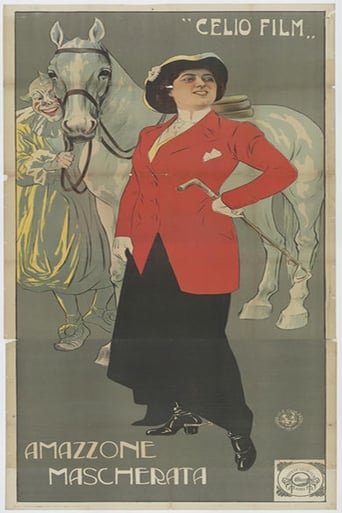
- Directed The Masked Amazon in 1914, placing him among the working Italian directors of the silent era's early expansion.
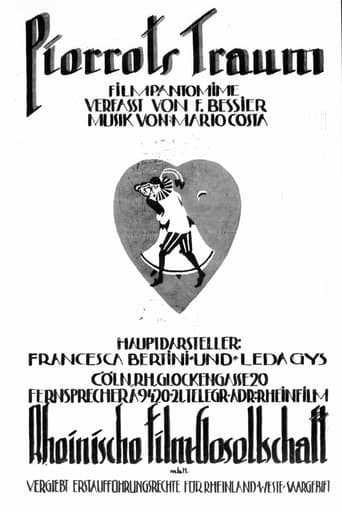
- Directed Pierrot the Prodigal in 1914, showing an early association with melodramatic and theatrical material.
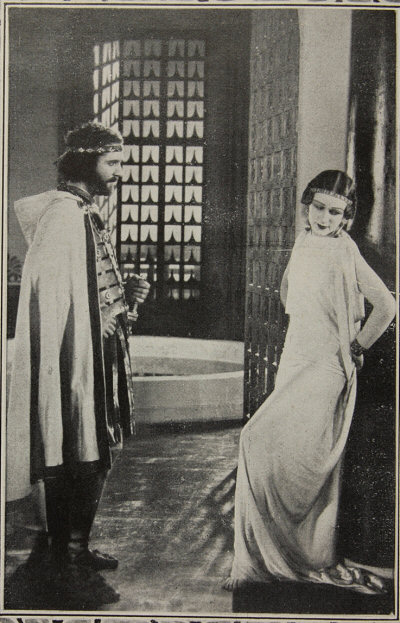
- Remained active more than a decade later with Judith and Holophernes in 1929, demonstrating career longevity across the silent-to-sound transition.
- Worked during a crucial period in Italian cinema when historical epics, literary adaptations, and biblical stories were especially prominent.
- Built a filmography that reflects the visual and narrative ambitions of early twentieth-century Italian production.
Best Known For
Must-See Films
Why They Matter
Impact on Culture
Baldassarre Negroni's cultural impact is best understood within the broader development of Italian silent cinema rather than through a large internationally distributed body of work. His surviving credits show participation in a national cinema that was then building prestige through literary, historical, and biblical narratives, genres that helped establish Italy as an important filmmaking center in the 1910s and 1920s. Directors like Negroni contributed to the visual language and production norms of the era even when their names later became less familiar than those of the industry's major international figures. His work on titles such as Judith and Holophernes also reflects the period's fascination with grand moral and historical spectacle, an approach that shaped audience expectations for prestige filmmaking. In that sense, he belongs to the generation of directors who helped define the silent-era Italian screen as a place for visually rich, high-dramatic storytelling.
Lasting Legacy
Negroni's lasting legacy lies in his place within the historical record of early Italian filmmaking. Although he is not among the most widely cited figures of world cinema, his credits document the existence of a working director whose active years covered a formative and rapidly changing period in film history. For historians, such filmmakers are important because they show the breadth of production beyond the small number of canonical names most often discussed in surveys. His 1929 credit is particularly valuable as evidence of continuity from the silent era into the eve of the sound revolution. In film history terms, Negroni represents the many competent, now-obscure directors whose work supported the growth of national cinema industries and helped establish the artistic conventions later generations would inherit. His legacy is therefore archival as much as artistic: he remains part of the foundation on which Italian screen history is built.
Who They Inspired
Direct influence on later filmmakers is difficult to verify because little critical commentary or personal correspondence survives. However, by working in the silent-era Italian tradition of visual storytelling, historical pageantry, and literary adaptation, he participated in a style of filmmaking that influenced the broader vocabulary of European cinema. The kinds of films associated with him likely reinforced production methods that valued expressive mise-en-scène, costume drama, and strong narrative clarity. Even if his name is not widely cited as a direct mentor or innovator, his work formed part of the industrial and aesthetic environment from which later Italian directors emerged. His influence is thus best described as indirect and historical, contributing to a collective cinematic culture rather than to a clearly documented lineage of disciples.
Off Screen
Publicly available information about Baldassarre Negroni's personal life is extremely limited. Standard film references and commonly consulted databases do not reliably preserve details about his family, marital status, or private activities. As with many directors from the silent era, his professional record survives more clearly than his biographical history. No well-documented personal controversies, major public statements, or family connections are readily established from the surviving record. Because of this, his life outside his film work remains largely obscure to contemporary researchers.
Did You Know?
- He is identified in film records as an Italian director rather than an actor, screenwriter, or producer.
- His known filmography spans at least 15 years, from 1914 to 1929.
- The titles associated with him suggest an interest in theatrical, literary, and biblical subjects.
- He worked during the silent era and reached the late 1920s, a rare survival span for a director from that period.
- Judith and Holophernes links him to.
- He is far less documented than major contemporaries, which makes his surviving credits especially important to historians.
- His career belongs to the era when Italian cinema was internationally admired for spectacle and historical drama.
Frequently Asked Questions
Who was Baldassarre Negroni?
Italian on YTB.my. He is best known from filmographic records for directing early works such as The Masked Amazon, Pierrot the Prodigal, and Judith and Holophernes.
What films is Baldassarre Negroni best known for?
Titles linked here include The Masked Amazon (1914), Pierrot the Prodigal (1914).
When was Baldassarre Negroni born and when did he die?
Reliable public sources commonly accessible for film history do not clearly preserve his birth date, death date, or places of birth and death. As a result, these details remain unconfirmed in the surviving reference record.
What awards did Baldassarre Negroni win?
No major awards or nominations are currently documented in the surviving mainstream reference sources for Baldassarre Negroni. This is not unusual for silent-era directors, many of whom worked before modern awards systems became fully established.
What was Baldassarre Negroni's directing style?
His directing style is best understood as part of early Italian silent cinema, which emphasized visual clarity, expressive staging, and dramatic spectacle. The subject matter of his known films suggests an interest in melodrama, literary adaptation, and biblical or historical themes.
What is Baldassarre Negroni's legacy in film history?
Negroni's legacy lies in his role as part of the broader generation of Italian silent filmmakers who helped shape early national cinema. Even though he is not widely famous today, his surviving credits document the creative diversity and continuity of Italian film production across the silent era.