Judith and Holophernes
"Where giuditta meets oloferne"
Keys: Space play/pause · ←/→ 10s · F fullscreen · M mute · </> speed
About this film
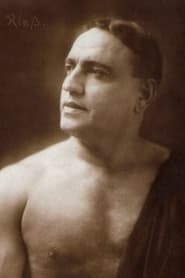
Giuditta e Oloferne is a 1929 Italian silent historical film directed by Baldassarre Negroni and starring Bartolomeo Pagano, Jia Ruskaja and Franz Sala. It was the final film of Pagano, who had been famous during the silent era for his portrayals of Maciste.
Cast & crew
More films like this

More from Baldassarre Negroni
View all →
More about this film
About the production
Release dateOctober 1929
Box officeBox office records not preserved from this period
ProductionFides Film, Itala Film
Filmed inRome, Italy, Cinecittà Studios (early use)
This was one of the last major Italian silent epics before the transition to sound cinema. The production faced significant challenges due to the declining silent film market and the impending transition to sound technology. The elaborate historical costumes and sets were typical of Italian epic productions of the 1920s, though budget constraints were evident compared to earlier Italian epics. The film's timing was unfortunate as it was released just as Italian cinema was transitioning to sound, limiting its commercial potential.
Themes
Female empowerment and agencyPatriotism and sacrifice for one's peopleThe power of cunning over brute forceReligious faith and divine interventionThe morality of deception for a greater good
Themes & topics
Biblical adaptationAncient historyAssassinationSeductionWarSiegeHeroismSacrificeDeceptionFemale protagonistHistorical epicSilent film
Historical background
Judith and Holophernes reached screens around 1929, produced in its country of origin. Silent-era houses paired such titles with live music and newsreel bills.
Why this film matters
Researchers cite Judith and Holophernes when tracing screen culture of its decade.
Making of
The production of 'Judith and Holophernes' took place during a transitional period in Italian cinema history. Director Baldassarre Negroni, an experienced filmmaker from the early days of Italian cinema, brought his expertise to this biblical epic. The casting of Bartolomeo Pagano, who had been Italy's biggest film star through his Maciste films in the 1910s and early 1920s, was intended to attract audiences, though by 1929 his star power had diminished. Jia Ruskaja, a Russian émigré dancer, brought authentic movement and grace to the role of Judith. The production faced the typical challenges of late silent films, including the industry's rapid transition to sound technology. The sets and costumes were designed to evoke the ancient biblical setting, though budget constraints limited the scope compared to earlier Italian epics. The beheading scene, central to the story, was handled with the dramatic flair typical of silent cinema, using shadows and camera angles to suggest violence while respecting censorship standards of the era.
What critics said
Reviewers in 1929 weighed Judith and Holophernes on clarity, pacing, and audience response rather than prestige status. No single canonical review dominates later reference works for the title.
Did you know?
- This was Bartolomeo Pagano's final film appearance, ending a career that made him Italy's first major film star through his Maciste character
- The film was released just as Italian cinema was transitioning to sound, contributing to its limited commercial success
- Jia Ruskaja was a Russian-born dancer who had fled to Italy after the Russian Revolution and became a prominent figure in Italian dance and cinema
- The biblical story of Judith and Holofernes was a popular subject in early cinema, with numerous adaptations made in the silent era
- Director Baldassarre Negroni was a prolific filmmaker who had been active since the early 1910s and directed over 100 films in his career
- The film's production coincided with the rise of Fascism in Italy, though the biblical setting avoided direct political commentary
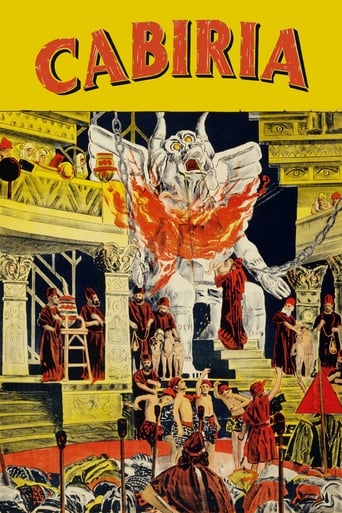
- Despite being a historical epic, the film was made with significantly fewer resources than earlier Italian epics like Cabiria (1914)
- The original Italian title 'Giuditta e Oloferne' follows the Italian tradition of using character names for biblical adaptations
- The film featured elaborate costumes designed to evoke ancient Assyrian and Jewish attire, though historical accuracy was secondary to dramatic effect
Visual style
The cinematography employed the dramatic lighting and compositional techniques characteristic of late silent cinema. The visual style emphasized chiaroscuro effects, particularly in the crucial beheading scene where shadows and camera angles created dramatic tension without explicit gore. The cinematography utilized the full range of silent film visual storytelling, with expressive close-ups to convey emotion and sweeping shots to establish the historical setting. The camera work shows the influence of German expressionist cinema, particularly in the use of dramatic lighting and angular compositions during tense scenes. The visual approach was conservative compared to more experimental silent films of the era, reflecting the traditional nature of the biblical subject matter and the commercial considerations of a major production.
Innovations
The film employed standard silent era techniques but showed some refinements typical of late 1920s productions. The camera work included more mobile shots than earlier silent films, reflecting technological advances in camera equipment. The lighting techniques were more sophisticated than in earlier Italian epics, showing the influence of international cinema trends. The film's makeup and costume design demonstrated the refinement of silent era techniques for creating historical authenticity on screen. The editing pace was slightly faster than earlier silent epics, reflecting audience expectations that had evolved throughout the 1920s. However, the film did not introduce significant technical innovations, as the industry was focusing its innovation efforts on sound technology rather than silent film techniques.
Music
As a silent film, 'Judith and Holophernes' would have been accompanied by live musical performances during its theatrical run. The original score would have been typical of late silent era biblical epics, featuring dramatic orchestral music that emphasized the story's emotional and dramatic moments. The music would have included romantic themes for Judith's scenes, militaristic motifs for the Assyrian sequences, and suspenseful passages during the beheading sequence. Specific composers for the original score are not documented, though theaters would have used compiled music or commissioned scores from local musicians. The transition to sound cinema meant that this film was among the last to use the traditional silent film music accompaniment system.
Famous quotes
As a silent film, dialogue was conveyed through intertitles and performance. Key moments included Judith's declaration: 'I will go forth to save my people, though it may cost me my life.'
Holofernes' boast: 'No army can withstand the might of Assyria, and no woman can resist the power of Holofernes.'
Judith's prayer: 'Give me strength, O Lord, to do what must be done for the salvation of Bethulia.'
Memorable scenes
- The banquet scene where Judith gains Holofernes' trust through charm and wit, building tension through subtle glances and gestures
- The dramatic beheading sequence, filmed with shadows and camera angles to suggest violence while maintaining dramatic impact
- Judith's triumphant return to Bethulia with Holofernes' head, celebrated by her people as a savior
- The opening siege sequences establishing the desperate situation of Bethulia under Assyrian attack
- Judith's preparation scene where she dons her finest clothes and jewelry, preparing for her dangerous mission
What audiences thought
Audience reception in 1929 was modest, as the film competed with the growing excitement around sound cinema. Many viewers attended primarily to see Bartolomeo Pagano's final screen appearance, reflecting the enduring affection for the actor who had created the iconic Maciste character. The biblical subject matter appealed to Italy's predominantly Catholic audience, though the timing during the transition to sound limited its commercial potential. Contemporary reports suggest that audiences appreciated the film's dramatic moments and the spectacle of the historical setting, even if the production values seemed dated compared to new sound films. The film's limited release and subsequent obscurity indicate that it did not achieve significant popular success, though it likely found appreciative audiences among traditionalists who preferred silent cinema.
Film connections
Influenced by
- Earlier Italian silent epics like Cabiria (1914)
- German expressionist cinema of the 1920s
- D.W. Griffith's biblical films
- The tradition of biblical adaptations in early cinema
- Italian historical costume dramas of the silent era
This film influenced
- Later biblical epics of the sound era
- Subsequent Judith adaptations in cinema
- Italian historical films of the 1930s
Film restoration
The preservation status of 'Judith and Holophernes' is uncertain, with many sources suggesting it may be a lost film. Like many Italian silent films, prints may have been lost due to neglect, the nitrate film decomposition common to era, or destruction during World War II. Some archives may hold partial prints or fragments, but a complete version has not been widely available for decades. The film's status as a late silent production during the industry transition may have contributed to its disappearance from archives and collections. Film historians continue to search for copies in European archives and private collections, though the chances of finding a complete print diminish with time.
Where to watch
- Currently unavailable through commercial streaming services due to preservation status
- May be accessible through specialized film archives or cinematheques that hold Italian silent films
- Potential availability in film festival retrospectives of Italian cinema or silent film classics
- Academic institutions with extensive film archives might hold copies for research purposes
- Cineteca Italiana in Milan or other Italian national film archives may have materials