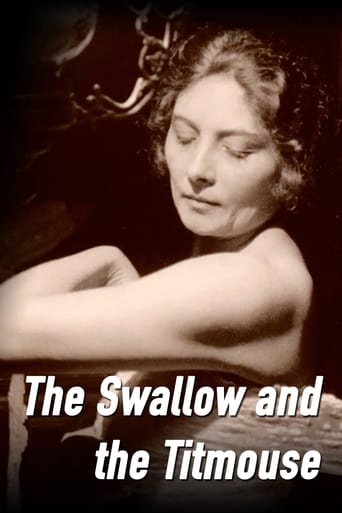
Georges Denola
Actor
- Active
- 1920-1920
Films 1
About Georges Denola
Georges Denola was a French silent-era film figure whose screen and behind-the-camera work placed him among the early practitioners of cinema in France. Available records identify him chiefly as an actor associated with the 1920 film The Swallow and the Titmouse, but his name also appears in silent-era filmographies linked to the broader French film world, suggesting a career rooted in the formative years of the medium. Because surviving documentation on his life is sparse, many biographical specifics such as his birth, death, and family background are not securely established in standard reference sources. What can be said with confidence is that he was active during the silent period, a time when French production still carried strong theatrical and literary influences and performers often moved fluidly among acting, writing, and filmmaking. His surviving screen credit connects him to the post-World War I era, when French cinema was rebuilding and experimenting with more polished narrative forms. Denola is therefore best understood as a minor but historically interesting participant in early French cinema rather than a widely documented star. His name remains of interest primarily to researchers tracking the personnel of silent French productions and the international circulation of fable-based literary adaptations in the 1920s.
More about Georges Denola
On screen
No detailed contemporary critical descriptions of Georges Denola's acting style are readily documented in surviving standard references. Given his silent-era context, his performance would have relied on the expressive conventions common to early French cinema, including clear physical gesture, facial expressiveness, and stage-influenced readability for audiences. His screen work likely reflected the restrained but emphatic style typical of silent character players rather than the naturalistic dialogue-based performance associated with later sound cinema.
In film history
Georges Denola's cultural impact is modest but still meaningful within the context of film preservation and silent-era scholarship. Performers like Denola help illustrate how many early cinema workers are known today only through fragmentary credits, reminding researchers that the history of film is built not only on major stars but also on lesser-documented contributors. His presence in a 1920 French silent production places him within the important transitional moment after World War I, when national cinemas were reasserting themselves and adapting literary material for the screen. For modern audiences and historians, he represents the broad base of working performers who helped sustain the production culture of silent France. Even when individual biographies are incomplete, these names preserve the texture and scale of early film history.
Later reputation
Denola's legacy lies less in celebrity than in documentation: he remains part of the surviving record of silent French cinema. Because many early film performers left few public traces, each verified credit helps reconstruct the collaborative nature of the era and the range of artists involved in production. His association with The Swallow and the Titmouse keeps his name in circulation among researchers interested in early adaptations and the international history of silent film. In that sense, his legacy is archival and historiographic, contributing to the broader understanding of who made early cinema possible. He stands as one of many compact but necessary presences in the history of classical screen acting.
Influence
There is no evidence that Georges Denola exerted a documented influence on major later actors or directors in the way that prominent stars did. His significance is instead indirect: he is part of the workforce of early French cinema whose collective labor shaped performance norms, production routines, and the continuity of film culture. Actors of his generation helped establish the silent screen vocabulary that later performers inherited, even if their individual names did not become widely famous. His contribution is therefore best measured through historical context rather than explicit mentorship or widely cited artistic influence.
Off screen
Little reliable biographical information survives in readily accessible reference sources about Georges Denola's personal life. His birth date, family background, marriages, and private circumstances are not well documented in mainstream film histories or standard online databases. As a result, there is no securely verifiable record here of spouses, children, or domestic life. He appears in the historical record primarily through his film credit rather than through biographical reporting. This lack of documentation is common for many early silent-era performers whose work has outlasted the paper trail of their lives.
Credits
- Appeared in the 1920 silent film The Swallow and the Titmouse
- Associated with early French cinema during the silent era
- Documented in filmographic records as a classic-era screen performer
Roles
- Unspecified role in The Swallow and the Titmouse (1920)
Films
- The Swallow and the Titmouse (1920)
Notes
- Georges Denola is primarily identified today through filmographic records rather than extensive biographical writing.
- His known screen activity falls within the silent era, specifically the year 1920.
- He is connected to The Swallow and the Titmouse, a title that reflects the period's frequent use of literary or fable-like source material.
- His surviving record is a reminder that many early cinema performers were not celebrated stars but working actors whose names appeared in credits and production logs.
- Standard reference sources do not consistently provide his birth or death details, which is common for lesser-documented silent-era figures.
- Because of the limited surviving documentation, he is of particular interest to film historians rather than general audiences.
- His name appears in the context of French cinema, suggesting a career tied to France's early film industry.
Questions
Who was Georges Denola?
Georges Denola was a French silent-era film personality known as an actor, with a documented credit in The Swallow and the Titmouse (1920). He is one of many early cinema figures whose surviving record is limited, but he remains part of the historical fabric of French silent film.
What films is Georges Denola best known for?
He is best known for The Swallow and the Titmouse (1920), which is the principal surviving credit associated with him in accessible film records. Additional credits may exist in archival sources, but this remains the most clearly documented title tied to his name.
When was Georges Denola born and when did he die?
His exact birth and death dates are not readily verifiable in standard reference sources. As a result, both his birth date and death date remain unknown from the information currently available.
What awards did Georges Denola win?
No awards or formal honors are currently documented for Georges Denola in the available reference material. This is not unusual for lesser-known silent-era performers, whose careers were often recorded more through credits than through later award histories.
What was Georges Denola's acting style?
No detailed contemporary critique of his acting style survives in widely accessible sources. As a silent-era performer, he likely worked in the expressive, gesture-driven style typical of early French cinema, emphasizing visual clarity and readable emotion.
What is Georges Denola's legacy in film history?
His legacy is primarily archival and historical rather than star-based. He represents the many working actors of the silent era whose contributions helped build early French cinema, even if their personal biographies are now only fragmentarily known.