1920 · 80 minutes

Also available on: YouTube
The Swallow and the Titmouse

The Swallow and the Titmouse

1920 80 minutes France
Smuggling and secrecyLabor and commerceBetrayal and suspicionBorder crossing and mobilityNaturalistic social observation

Plot

Herr Pierre Van Groot operates two barges on the waterways between Belgium and France, presenting himself as a respectable transport owner while secretly using the vessels to smuggle diamonds. He hides the gems in the rudder of one of the barges and continues his trade while traveling with his wife and his sister-in-law through the northern canal routes. The arrangement appears secure until Pierre hires a new first mate, Michel, whose attentiveness and growing suspicion put the hidden trafficking scheme at risk. As Michel begins to understand what is really being carried aboard, the film builds tension around betrayal, surveillance, and the precarious balance between legal commerce and criminal profit. The story unfolds as both a canal-side drama of working life and a smuggling thriller, with the mobile barge setting creating a confined but constantly shifting arena for intrigue.

About the Production

Release Date 1924 private screening; filmed in 1920
Production Pathé Consortium Cinéma
Filmed In Canals and waterways of northern France and Belgium, Studio and location work in France

The film was shot in 1920 under the direction of André Antoine, who was known for naturalistic staging and strong interest in everyday labor and regional settings. It is notable for its association with a canal-barge milieu, a setting that allowed for realistic outdoor photography on the water and a tightly controlled dramatic space within the barges themselves. Surviving accounts indicate that the completed film ran about 80 minutes and was only shown once in its full form at a private screening in 1924, which has contributed to its obscurity and the difficulty of reconstructing its full production history. No reliable public documentation survives for budget or box office figures, and the film's release history appears incomplete or extremely limited.

Historical Background

The film was made in 1920, in the immediate aftermath of World War I, when European cinema was adapting to changed economies, disrupted production infrastructures, and altered audience expectations. France was rebuilding culturally and materially, and films grounded in labor, transport, and regional life resonated with a society still shaped by wartime scarcity and the importance of trade routes. André Antoine was one of the major figures in French naturalism, and his work stood at the intersection of stage realism and cinematic observation at a time when film language was becoming more sophisticated. A story about smugglers traveling the waterways between Belgium and France also reflects the porous borders and black-market anxieties of the era, when cross-border movement and concealed trade could carry strong contemporary relevance. The film matters historically not only as an Antoine title but also as an example of how silent cinema engaged with everyday economic life and the moral ambiguities of commerce.

Why This Film Matters

Although not widely seen today, the film is significant as part of André Antoine's body of work, which helped establish a serious realist tradition in early French cinema. Its barge-bound setting and smuggling narrative combine social observation with thriller elements, illustrating how silent films could derive suspense from material environments and routine labor. The film is also culturally important as a near-lost or extremely obscure work whose survival status and limited exhibition history exemplify the fragility of silent-era film heritage. For historians, it offers evidence of the diversity of early 20th-century French production beyond the best-known literary adaptations and avant-garde experiments. Its place in cinema history is therefore tied less to mass popularity than to archival value, authorial context, and the preservation of early naturalistic filmmaking.

Making Of

The Swallow and the Titmouse belongs to André Antoine's late silent-period work and reflects his preference for realistic environments, carefully observed social behavior, and location-based authenticity. While detailed production records are scarce, the film's canal setting suggests that Antoine and his collaborators were working in a physically demanding environment that required coordination between performance, camera placement, and the movement of barges on water. The story's dependence on concealed diamonds in a boat rudder would have required practical staging and careful visual storytelling to communicate the smuggling operation without dialogue. Its unusual exhibition history, with only a single known private screening of the full-length version in 1924, means that much of what is known today comes from secondary documentation rather than extensive contemporary publicity or surviving prints. As a result, the making of the film is partly recoverable only through its attributed personnel, plot summaries, and archival references.

Visual Style

The film's visual style is presumably shaped by André Antoine's realist sensibility, with emphasis on observed environments, practical settings, and the believable movement of bodies and vehicles through space. A canal-barge story lends itself to long, lateral compositions and a strong sense of physical geography, since the audience must understand the relationship between the barges, their cargo, and the waterways they traverse. Silent-era staging in such a setting would likely have depended on clear visual storytelling, natural light or carefully controlled outdoor light, and an attention to detail in props and costume that reinforced the lived-in authenticity of the milieu. Even without a widely available surviving print, the film is associated with a visually grounded style rather than decorative spectacle.

Innovations

The most notable technical aspect associated with the film is its use of a waterborne setting that would have required practical handling of camera, performance, and staging on or around barges. The hidden-diamond premise also depends on precise visual communication, making the film an example of silent storytelling built around props and spatial detail. Its rarity and partial survival history are historically notable in themselves, since the film exemplifies the fragility of silent-era holdings and the challenges of documenting works that were seldom circulated. Beyond that, no specific technical innovations are securely documented.

Music

As a silent film, The Swallow and the Titmouse would originally have been accompanied by live music rather than a fixed synchronized soundtrack. No specific original score is reliably documented in the available historical record. Like many silent-era French films, it may have been presented with piano, small ensemble, or theater-specific accompaniment depending on venue and circumstance. Details of any cue sheet or later reconstruction are not known.

Memorable Scenes

  • The opening establishment of the barges traveling the northern canals, which grounds the story in a realistic working environment.
  • The concealment of diamonds in the rudder, a striking visual device that turns the vessel itself into a hiding place.
  • Michel's growing awareness of the smuggling operation, which shifts the film from routine navigation to suspense.
  • The confined life aboard the barges, where family, work, and criminal enterprise all coexist in the same narrow space.

Did You Know?

  • The film was shot in 1920 but is known to have been shown only once in its full 80-minute form at a private screening in 1924.
  • André Antoine, famous for theatrical naturalism, brought his realist sensibility to a story centered on labor, transport, and criminal deception.
  • The plot uses the hidden compartments of a working barge as a smuggling mechanism, giving the film a built-in visual metaphor for secrecy.
  • The waterways between Belgium and France are not just background scenery but an integral part of the film's suspense and atmosphere.
  • Its rarity has made it difficult for scholars and viewers to assess the film in the same way as Antoine's better-known surviving works.
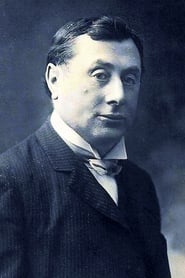
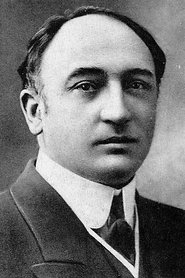
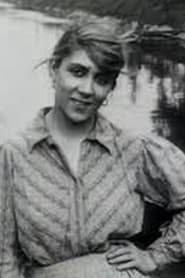
  • The cast includes Maguy Deliac, Pierre Alcover, and Louis Ravet, actors associated with French silent-era performance traditions.
  • Because the film is so obscure and its release so limited, it is often discussed more in archival and film-historical contexts than in general cinema histories.
  • The title refers to a pair of birds, but the film's surviving plot description centers on commerce, concealment, and maritime movement rather than overt animal imagery.
  • The film reflects André Antoine's recurring interest in ordinary social environments and the pressures exerted by material conditions on human behavior.
  • Its existence is a reminder of how many silent-era productions have only fragmentary documentation surviving today.

What Critics Said

Contemporary critical response is difficult to reconstruct because the film appears to have had an extremely limited exhibition history, and full-length public reception is not well documented. Modern assessment tends to focus on André Antoine's reputation as a realist filmmaker and on the film's rarity rather than on detailed scene-by-scene criticism. Where discussed by historians, it is often treated as an intriguing but obscure example of Antoine's later cinema, with interest centered on its naturalistic premise, canal setting, and the unusual survival situation. Because the film is not widely accessible, criticism remains largely archival and descriptive rather than based on broad viewing experience.

What Audiences Thought

Audience reception cannot be measured reliably because the film was reportedly only screened once in full at a private showing in 1924 and does not appear to have had a normal commercial release history. There is no solid evidence of mass audience response, ticket performance, or sustained public circulation. Its main audience over time has effectively been historians, archivists, and reference works that preserve its basic documentation. The limited exposure has likely contributed to its status as an obscure title known more by reputation than by popular familiarity.

Film Connections

Influenced By

  • André Antoine's theater-influenced naturalism
  • French realist literary and dramatic traditions
  • Early silent crime and smuggling melodramas
  • Observational depictions of working-class life in European cinema

This Film Influenced

  • No specific direct influences are securely documented
  • Later canal-and-river dramas drawing on realist location shooting may share affinities with this film

Film Restoration

The film is considered extremely obscure and effectively incomplete in terms of accessible circulation; full-length exhibition was reportedly limited to a single private screening in 1924. No widely available surviving print is documented in common reference sources, and it is generally treated as a rare or lost-or-partially-lost silent film. Because of that, its preservation status should be regarded as uncertain from a public-access standpoint, with no evidence of regular restoration or home-video availability.

Themes & Topics

bargediamond smugglingcanalsBelgium-France borderfirst matehidden cargo