

Keys: Space play/pause · ←/→ 10s · F fullscreen · M mute · </> speed
Plot
Set in post-Revolutionary France, Mademoiselle de La Seiglière follows the Marquis de la Seiglière who returns to find his possessions sold during the Revolution to Stamply, a farmer. The honorable Stamply restores the properties to the Marquis, who grants him a corner of his manor as gratitude. The Marquis's daughter Hélène cares for the elderly Stamply until his death from grief over his son's death at Berezina. Later, the ambitious lawyer Destournelles and the Pauberts arrive at the manor, with M. de Paubert hoping to arrange a marriage between his son Raoul and Hélène. Their plans are disrupted when Bernard Stamply, miraculously having survived, returns and falls in love with Hélène, creating a complex romantic triangle that tests loyalties and social boundaries in the restored aristocratic world.
About the Production
Release Date November 12, 1920
Production Société des Etablissements L. Gaumont
Filmed In Paris, France, Studio de Joinville
This was one of the final films directed by André Antoine, who was primarily known as a pioneering theater director and founder of the Théâtre Libre. The film was adapted from the 1848 novel by Jules Sandeau, which had been previously adapted for the stage. Production took place during the challenging post-World War I period in France, when the film industry was recovering from wartime disruptions.


Themes & Topics
post-revolutionary Francearistocracyromancesocial classmanor houseNapoleonic warsfamily dramahistorical adaptationsilent filmFrench literature
Historical Background
Mademoiselle de La Seiglière was produced in 1920, a pivotal year in French and world history. France was still recovering from the devastating effects of World War I, which had ended just two years earlier. The film industry, like other sectors, was rebuilding after wartime disruptions. This period saw a surge in French cinema that looked to the nation's past for stories of resilience and reconciliation. The film's setting in post-Revolutionary France resonated with contemporary audiences who were themselves navigating a period of social and political reconstruction. The early 1920s also marked the height of the silent film era, just before sound would revolutionize cinema. French cinema at this time was competing with growing American dominance in the international market, leading producers to focus on distinctly French stories and themes.
Why This Film Matters
This film represents an important bridge between 19th-century French literary adaptations and the emerging modern cinema of the 1920s. It exemplifies how French cinema used historical narratives to process contemporary social issues, particularly the healing of class divisions after the trauma of war. The film's emphasis on reconciliation between aristocracy and common people reflected France's attempt to rebuild national unity after WWI. Director André Antoine's naturalistic approach influenced subsequent French filmmakers who sought to move away from theatrical acting styles toward more cinematic realism. The adaptation of classic French literature for the screen helped establish cinema as a legitimate art form worthy of serious cultural consideration in France.
Making Of
André Antoine brought his theatrical background to this film adaptation, employing naturalistic acting techniques that were revolutionary for the time. The production faced significant challenges in the post-war French film industry, including limited resources and the need to rebuild studio facilities. Antoine, known for his meticulous attention to detail, insisted on authentic period costumes and props to accurately represent the post-Revolutionary era. The casting of Huguette Duflos as Hélène was considered a major coup, as she was one of the most sought-after actresses of the period. The film was shot primarily at the Gaumont studios in Joinville, with some location work around Paris to capture the authentic French atmosphere. Antoine's directorial style emphasized psychological realism over melodramatic gestures, which was unusual for silent films of this period.
What Critics Said
Contemporary French critics praised the film for its faithful adaptation of Sandeau's novel and the restrained, naturalistic performances. Antoine's direction was noted for its subtlety and psychological depth, standing in contrast to the more melodramatic tendencies of many silent films. Critics particularly commended Huguette Duflos's performance as Hélène, describing it as embodying the ideal of French feminine grace and resilience. The film's visual composition and attention to period detail were also highlighted as strengths. However, some critics felt that Antoine's theatrical background made the film somewhat stage-bound compared to more innovative works emerging from the French avant-garde movement at the time.
Did You Know?
- Director André Antoine was 69 years old when he made this film, making it one of his final cinematic works before his death in 1922
- The film was based on a popular novel by Jules Sandeau that had been adapted multiple times for both stage and screen
- Huguette Duflos, who played Hélène, was one of the most prominent French actresses of the silent era, known for her work with director Abel Gance
- The Berezina reference in the plot refers to Napoleon's disastrous retreat from Russia in 1812, a historical event that remained deeply embedded in French cultural memory
- This film was part of a wave of post-WWI French cinema that looked back to the Napoleonic and post-Revolutionary eras as a way of processing France's recent wartime experiences
- The film's themes of social reconciliation between aristocracy and common people reflected the social healing France was attempting after the class divisions exacerbated by WWI
- André Antoine was known for his naturalistic approach to both theater and film, bringing realist techniques to this romantic drama
- The original novel had been adapted for the screen at least twice before this 1920 version
- Félix Huguenet, who played the Marquis, was a veteran stage actor who had worked with Antoine in his theater days
- The film was produced during a transitional period in French cinema when the industry was moving from wartime production to peacetime themes
More film details Visual style, music, quotes, restoration, and more
Visual Style
The cinematography, while not revolutionary for its time, employed careful composition and lighting to create the appropriate period atmosphere. The film used the relatively new technology of electric lighting to create subtle mood changes, particularly in interior scenes at the manor. The camera work was generally static, reflecting Antoine's theatrical background, but included some tracking shots to follow characters through the manor's spaces. The visual style emphasized clarity and realism over dramatic effects, with careful attention to period details in costumes and settings. The film's black and white photography used contrast effectively to distinguish between the various social classes depicted in the story.
Innovations
While not technically innovative, the film demonstrated solid craftsmanship in its use of contemporary film technology. The production employed the standard 35mm film format of the era and utilized the latest lighting equipment available in 1920. The film's editing followed conventional continuity practices of the period, with clear narrative progression and logical scene transitions. Antoine's background in theater led to careful attention to blocking and composition within the frame, creating visually coherent scenes that advanced the narrative effectively. The film's preservation of period detail in sets and costumes represented a high standard of production design for its time.
Music
As a silent film, Mademoiselle de La Seiglière would have been accompanied by live musical performance during theatrical screenings. The typical score would have consisted of classical pieces adapted to match the film's romantic and dramatic moments. French theaters of this period often employed small orchestras or at minimum a pianist to provide musical accompaniment. The music would have emphasized the film's emotional arc, with lighter themes for the romantic scenes and more dramatic passages for moments of conflict and revelation. No specific composer or original score is credited to this production.
Famous Quotes
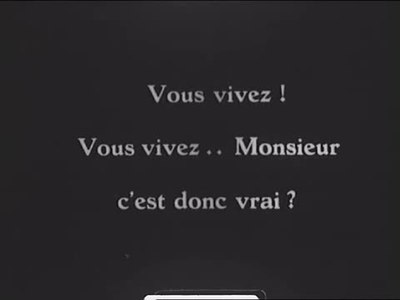
As a silent film, no dialogue quotes survive, but intertitles included: 'Time heals all wounds, but some scars remain forever', 'Love knows no boundaries of birth or station', 'Honor is the crown of the noble heart', 'In France's darkest hour, her people found unity'
Memorable Scenes
- The emotional confrontation when Bernard Stamply returns unexpectedly to the manor, interrupting the arranged marriage plans
- Hélène's tender care of the dying old Stamply, representing the bridging of social classes
- The Marquis's dignified return to his ancestral home after the Revolution
- The climactic scene where Hélène must choose between her duty to her class and her love for Bernard
What Audiences Thought
The film found appreciative audiences in France, particularly among viewers who were familiar with Sandeau's novel or its stage adaptations. The themes of social reconciliation and romantic love across class boundaries resonated with post-war French society. Audiences responded positively to the film's patriotic elements and its celebration of French cultural heritage. The film performed well in major urban centers like Paris but had more limited distribution in rural areas. Its success helped confirm the commercial viability of literary adaptations in the French film market during the early 1920s.
Film Connections
Influenced By
- Jules Sandeau's 1848 novel
- 19th-century French romantic literature
- André Antoine's theatrical naturalism
- Post-WWI French cinema trends
- Historical drama conventions
This Film Influenced
- Later adaptations of Sandeau's work
- French historical dramas of the 1920s
- Films exploring post-war social reconciliation
Film Restoration
The film is believed to be partially preserved, though complete prints may not exist. Some fragments and possibly a shortened version are held in French film archives. Like many films from this period, it has suffered from the deterioration of nitrate film stock and the loss of complete copies over time. The Cinémathèque Française may hold elements of this film in their collection.
Where to Watch
- The film is not currently available on mainstream streaming platforms
- Potential viewing through film archives or special screenings at cinematheques
- May be accessible through specialized silent film collections or academic institutions
- Possible inclusion in French cinema retrospectives or silent film festivals