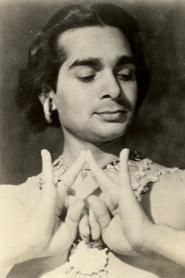
Uday Shankar
Actor & Director
Born: December 8, 1900 in Udaipur, Rajasthan, India Died: September 26, 1977 Active: 1920s-1977 Birth Name: Uday Shankar Chowdhury
Films
1 film
About Uday Shankar
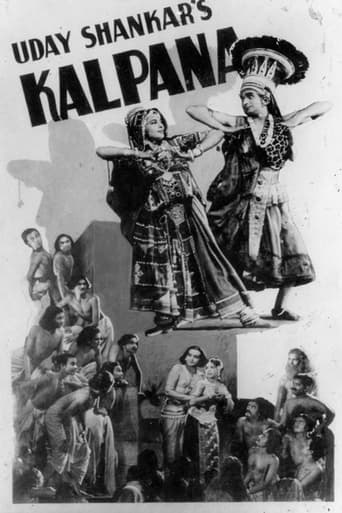
Uday Shankar was born on December 8, 1900, in Udaipur, Rajasthan, India, and emerged as dancers and choreographers of the 20th century. He revolutionized Indian dance by creating a unique fusion of classical Indian forms with Western theatrical techniques, establishing himself as a cultural ambassador who brought Indian dance to global audiences. After studying at the J.J. School of Art in Bombay, he moved to London where he collaborated with the Russian ballerina Anna Pavlova, creating ballets based on Indian themes. In 1938, he founded the Uday Shankar India Culture Centre in Almora, which became a institution for dance education and cultural preservation. His most significant contribution to cinema was 'Kalpana' (1948), India's first dance film, which he wrote, directed, and starred in, showcasing his innovative choreographic vision on screen. Throughout his career, he toured extensively across Europe, America, and Asia, performing for audiences that included royalty and heads of state. He continued his artistic work until his death on September 26, 1977, in Kolkata, leaving behind a legacy that transformed Indian performing arts and inspired generations of dancers and choreographers.
The Craft
On Screen
Uday Shankar's acting style was deeply rooted in dance and movement, using his body as a primary instrument of expression. He approached performance as a choreographic art form, where every gesture and movement carried symbolic meaning drawn from Indian classical traditions. His screen presence in 'Kalpana' demonstrated his ability to convey complex emotions through dance rather than dialogue, creating a visual narrative that transcended conventional acting methods. He incorporated elements of various Indian classical dance forms, folk traditions, and Western theatrical techniques into his performances, resulting in a distinctive style that was both authentically Indian and universally appealing.
Behind the Camera
As a director, Uday Shankar approached filmmaking as an extension of his choreographic vision, treating the camera as another dancer in the ensemble. His directing style in 'Kalpana' emphasized visual spectacle and rhythmic editing, creating a seamless flow between dance sequences and narrative elements. He pioneered techniques for filming dance that captured both the grandeur of large ensemble numbers and the intimacy of solo performances, using innovative camera movements and angles to enhance the choreographic impact. His direction reflected a deep understanding of both Indian aesthetic principles and international cinematic techniques, creating a unique visual language that influenced subsequent Indian dance films.
Milestones
- Collaboration with Anna Pavlova in the 1920s
- Founding of Uday Shankar India Culture Centre in Almora (1938)
- Direction and starring in India's first dance film 'Kalpana' (1948)
- International tours across Europe, America, and Asia
- Creation of a unique fusion dance style blending Indian and Western forms
- Posthumous award of Padma Vibhushan (1971)
Best Known For
Iconic Roles
Must-See Films
Accolades
Won
- Padma Vibhushan (1971, posthumous)
- Sangeet Natak Akademi Award (1962)
- Desikottama from Visva-Bharati University (1971)
Special Recognition
- India's highest civilian award Padma Vibhushan
- Sangeet Natak Akademi Fellowship
- Honorary doctorate from Rabindra Bharati University
- Numerous international honors for cultural diplomacy
Working Relationships
Worked Often With
Why They Matter
Impact on Culture
Uday Shankar fundamentally transformed the perception of Indian dance both domestically and internationally, elevating it from regional folk forms to a globally recognized art form. His creation of a unique fusion style that maintained the essence of Indian traditions while embracing contemporary theatrical techniques opened new possibilities for Indian performing arts on the world stage. Through his international tours and collaborations, he served as a cultural ambassador during India's transition to independence, helping establish a modern Indian cultural identity that respected tradition while embracing innovation. His film 'Kalpana' pioneered the dance film genre in India and demonstrated how traditional arts could be adapted to modern media without losing their cultural authenticity.
Lasting Legacy
Uday Shankar's legacy endures through the thousands of dancers he trained and the institutions he established, particularly the Uday Shankar India Culture Centre which set new standards for dance education in India. His fusion style influenced the development of modern Indian dance and choreography, with elements of his technique visible in contemporary Bollywood dance and Indian classical dance innovations. The concept of using dance as a narrative medium in Indian cinema can be directly traced to his work in 'Kalpana'. His approach to cultural synthesis—respecting tradition while embracing innovation—became a model for subsequent generations of Indian artists seeking to bridge traditional and contemporary forms.
Who They Inspired
Uday Shankar influenced countless dancers, choreographers, and filmmakers across generations, from classical dancers like Mrinalini Sarabhai to contemporary Bollywood choreographers. His work demonstrated how Indian dance could evolve while maintaining its cultural roots, inspiring artists to experiment with fusion forms. His approach to filming dance influenced subsequent Indian dance films and musical sequences, establishing techniques for capturing movement on camera that are still used today. International dancers and choreographers, particularly in the realm of world dance, have drawn inspiration from his synthesis of Eastern and Western traditions. His emphasis on dance as a form of cultural expression and communication influenced how Indian performing arts are presented and understood globally.
Off Screen
Uday Shankar was born into a Bengali family; his father was a high-ranking government official while his brother was the renowned sitar maestro Ravi Shankar. His personal life was deeply intertwined with his artistic journey, with his wife Amala Shankar being his principal dance partner and collaborator for over four decades. He met Amala during his international tours and they married in 1942, with their son Ananda Shankar later becoming a famous musician. Despite his international fame, Shankar maintained strong connections to Indian cultural traditions and was deeply influenced by Rabindranath Tagore's vision of cultural synthesis. His later years were spent in Kolkata where he continued teaching and choreographing until his death in 1977.
Education
Studied at J.J. School of Art in Bombay; later trained in various Indian classical dance forms and Western ballet techniques
Family
- Amala Shankar (1942-1977)
Did You Know?
- His younger brother was the legendary sitar maestro Ravi Shankar
- He initially wanted to be a painter and studied at J.J. School of Art before discovering dance
- His collaboration with Anna Pavlova began when she saw him perform in London and was impressed by his unique style
- The Uday Shankar India Culture Centre in Almora was one of India's first formal dance training institutions
- 'Kalpana' was produced with a budget of Rs. 10 lakh, a massive amount for Indian cinema in 1948
- He performed for royalty including King George V and Queen Mary
- His dance company included performers from various countries, making it truly international
- He was one of the first Indian artists to achieve international fame in the field of dance
- His costume designs for his performances were as innovative as his choreography
- He refused to commercialize his art, maintaining artistic integrity throughout his career
In Their Own Words
Dance is the hidden language of the soul, and through it, I speak the universal truth of human emotion.
Tradition is not about preserving the ashes, but about keeping the fire alive.
When I dance, I am not merely moving my body; I am moving the very essence of Indian culture.
Art has no boundaries; it is the bridge that connects hearts across oceans and continents.
Every gesture in dance is a word, every movement a sentence, and every performance a complete story.
Frequently Asked Questions
Who was Uday Shankar?
Indian dancer, choreographer, actor, and on YTB.my. He is best known for founding India's first formal dance institution and directing 'Kalpana' (1948), India's first dance film.
What films is Uday Shankar best known for?
Titles linked here include Kalpana (1948).
When was Uday Shankar born and when did he die?
Born December 8, 1900; died September 26, 1977.
What awards did Uday Shankar win?
Uday Shankar received several prestigious awards including the Padma Vibhushan (1971, posthumous), India's second-highest civilian honor, the Sangeet Natak Akademi Award (1962), and the Desikottama from Visva-Bharati University (1971).
What was Uday Shankar's acting/directing style?
Uday Shankar's acting and directing style were deeply rooted in dance and movement, treating the body as the primary instrument of expression. As a director, he approached filmmaking as choreography, creating a seamless flow between dance sequences and narrative elements while techniques for filming dance that captured both grandeur and intimacy.
How did Uday Shankar influence Indian dance and cinema?
Uday Shankar fundamentally transformed Indian dance by creating a fusion style that maintained traditional essence while embracing contemporary techniques. He established India's first formal dance training institution and pioneered the dance film genre in India with 'Kalpana', influencing generations of dancers, choreographers, and filmmakers.
What was the Uday Shankar India Culture Centre?
Founded in 1938 in Almora, the Uday Shankar India Culture Centre was one of India's first formal institutions for dance education and cultural preservation. It became a hub for training dancers and promoting Indian performing arts, setting new standards for dance education in the country.