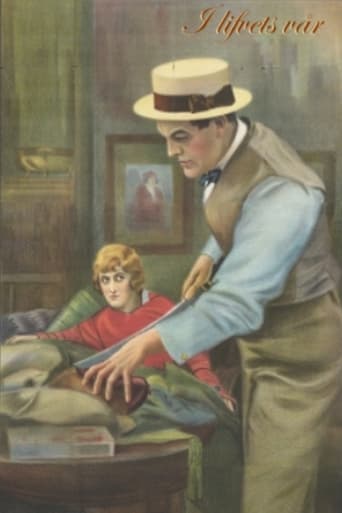
Paul Garbagni
Director
- Active
- 1912-1912
Films directed 1
About Paul Garbagni
Paul Garbagni is a little-documented early film director best known for directing the silent short The Springtime of Life in 1912. Surviving reference sources suggest that his screen activity was confined to the very early years of American cinema, when filmmaking was still a rapidly evolving artisanal craft and many directors left only a thin archival trace. Because of the limited surviving documentation, his personal background, training, and later life remain obscure, and he does not appear to have built a large credited screen career beyond the single known directing credit. His known work belongs to the pre-feature silent era, when short dramas and one-reel productions were the dominant form and many creators worked anonymously or with minimal publicity. No reliable evidence has been found for a broader body of directing, producing, acting, or writing credits under this exact name. As a result, Paul Garbagni is remembered primarily as one of the many early cinema craftsmen whose contributions survive only through fragmentary filmographic records. His place in film history is therefore archival rather than celebrity-driven, but he remains of interest to historians studying the underdocumented personnel of the silent era.
More about Paul Garbagni
Behind the camera
No detailed stylistic analysis can be confirmed from surviving records. Based on the era and the format of The Springtime of Life, his direction would have belonged to the early silent-film tradition, likely emphasizing straightforward visual storytelling, clear staging, and the kind of concise narrative structure common to short dramas of 1912. However, no contemporary reviews or detailed production notes have been located that would allow a reliable description of his personal aesthetic, thematic preferences, or technical innovations.
In film history
Paul Garbagni's cultural impact is best understood as representative of the many early silent-era filmmakers whose names appear in film histories even when biographical detail is scarce. While he does not seem to have achieved widespread fame or left a large surviving oeuvre, his credit on The Springtime of Life places him within the crucial first decades of narrative cinema, when American filmmaking was developing the grammar that would later dominate world film culture. For database and archival purposes, figures like Garbagni matter because they help reconstruct the full workforce of early cinema, including the directors whose careers were short, local, or poorly documented. His presence in the historical record underscores how much of silent film history survives only in fragments.
Later reputation
Garbagni's legacy is archival and historiographic rather than popular. He serves as a reminder that early film history was built not only by the major innovators whose names are still widely known, but also by numerous minor or underdocumented directors whose work contributed to the medium's development. The fact that his filmography is so limited does not diminish his historical relevance; instead, it highlights the uneven survival of records from the silent era. For researchers, he is important as a data point in the mapping of early 1910s filmmaking personnel and production patterns.
Influence
No direct line of influence can be firmly documented for Paul Garbagni because surviving sources do not preserve enough information about his career, collaborators, or later activity. If he did influence others, it was likely through the ordinary practical example of working in the early silent-film industry, where directors helped establish production routines and visual storytelling methods. At present, however, any specific claims about his influence on later filmmakers would be speculative.
Off screen
No reliable biographical information has been located regarding Paul Garbagni's personal life, including marriage, family background, residence, education, or later career. The surviving record appears to preserve only his name in connection with an early film credit. Until further archival documentation emerges, any claims about his private life would be speculative.
Credits
- Directed The Springtime of Life (1912), his only securely identified screen credit
- Worked during the formative silent-film period, when short subjects and one-reel dramas defined much of the industry
- Represents the many early filmmakers whose careers are preserved only in sparse filmographic references
Films
- The Springtime of Life (1912)
Notes
- Paul Garbagni is credited with directing only one film that can be firmly identified in surviving filmographic references: The Springtime of Life (1912).
- His active period, as currently known, spans only a single year, making him one of the more obscure figures from the early silent era.
- No confirmed birth or death information has been established from readily available historical sources.
- He appears to be the kind of early cinema worker whose career is preserved more in reference indexes than in detailed biographies.
- Because he worked in 1912, his film was made during the period when the American film industry was still centered on shorts and one-reel productions.
- There is no verified evidence in accessible records that he continued directing after 1912.
- No confirmed studio affiliation has been reliably established for him from the surviving record.
- His obscurity is a common feature of early silent-film personnel, many of whom were not heavily publicized in their own time.
Questions
Who was Paul Garbagni?
Paul Garbagni was an early silent-era film director best known for directing The Springtime of Life (1912). He is an obscure figure in film history, and surviving records preserve very little about his life beyond this credit.
What films is Paul Garbagni best known for?
He is best known for The Springtime of Life (1912), which appears to be his only securely identified directing credit. No additional confirmed films are readily documented in surviving sources.
When was Paul Garbagni born and when did he die?
His birth and death dates are not currently documented in accessible historical sources. The surviving film record identifies him as active in 1912, but not enough biographical material has been preserved to confirm his lifespan.
What awards did Paul Garbagni win?
No awards or major honors are currently documented for Paul Garbagni. This is not unusual for an obscure early silent-era filmmaker whose career is preserved only in minimal filmographic references.
What was Paul Garbagni's directing style?
No contemporary criticism or detailed production documentation survives that would allow a precise description of his style. Based on the period, his work would likely have followed early silent-film conventions of direct visual storytelling, simple staging, and compact narrative construction.
What is Paul Garbagni's legacy in film history?
His legacy is mainly archival: he represents the many little-known early filmmakers whose names survive even when most of their work and personal history do not. Scholars studying silent cinema value such figures because they help complete the historical record of the industry's formative years.