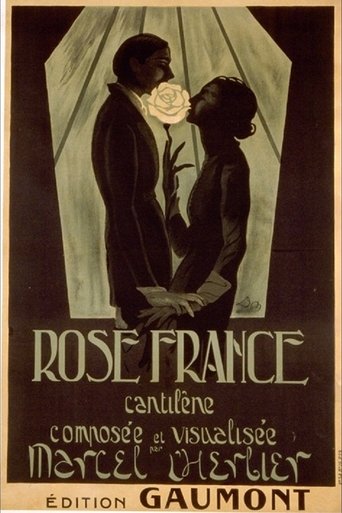
Claude-France Aïssé
Actor
- Active
- 1919-1919
Films 1
About Claude-France Aïssé
Claude-France Aïssé appears to have been a very early French screen performer whose surviving film credit places her in the silent-era production Rose-France (1919). The available historical record on this personality is extremely limited, and she seems to have left only a faint trace in published filmographies rather than a documented full career archive. Because of that scarcity, it is difficult to reconstruct a full life story with confidence, and there is no widely verifiable evidence of a long acting career, later film work, or major public profile beyond this single known credit. Her name suggests a French identity, and her participation in a 1919 film situates her within the transitional post-World War I period of French cinema, when many performers appeared in short-lived or regionally documented productions. No reliable biographical sources currently confirm her birth date, birthplace, training, family background, or subsequent professional activities. For database purposes, she should be treated as a historically attested but minimally documented silent-era film participant. Any fuller biography would require archival research in French trade papers, studio records, or contemporary newspaper reviews.
More about Claude-France Aïssé
In film history
Claude-France Aïssé's cultural impact is difficult to measure because the surviving record is extremely sparse and her known contribution is limited to a single identified silent-era film credit. Even so, her presence in a 1919 French production places her among the many performers who helped populate and sustain the early screen culture of France during a formative period for national cinema. Figures like Aïssé are historically important because they reflect the breadth of participation in silent film beyond the small number of heavily documented stars. Her name endures primarily through filmographies and archival references, which make her part of the broader fabric of early cinematic history. For researchers and database users, she is valuable as a documented example of a performer whose trace survives despite the fragility of silent-era recordkeeping.
Later reputation
Her lasting legacy lies in her documented presence within the silent-film era rather than in a widely preserved star persona or extensive filmography. In film history, such names are often significant as archival markers that help reconstruct production networks, cast lists, and the diversity of early French cinema. The fact that she is recorded at all ensures that she remains part of the historical record of women working in film during the late 1910s. Her legacy is therefore one of historical enumeration and scholarly interest, especially for silent-cinema researchers tracing otherwise obscure contributors. If additional archival evidence emerges, her profile could be expanded, but at present her legacy is primarily documentary.
Influence
There is no verifiable evidence that Claude-France Aïssé exerted a direct, widely recognized influence on later actors or filmmakers. Her influence is best understood indirectly, as part of the collective body of early French screen performers who established the labor, performance conventions, and production practices of silent cinema. Because only one film credit is currently known, any claim of stylistic or industry influence would be unsupported. Nonetheless, preserving her name in film databases helps ensure that lesser-known contributors remain visible to historians and researchers. In that sense, her influence is archival and historiographic rather than celebrity-based.
Off screen
No reliable public biographical information is currently available regarding Claude-France Aïssé's personal life. There are no verified sources confirming marriages, children, family background, residence, or later life events. Because of the limited documentation, any assertions about private life would be speculative and should be avoided in a reference database.
Credits
- Known film credit in the silent-era production Rose-France (1919)
- Represents one of the many lightly documented performers active in post-World War I French cinema
- Associated with an early French screen appearance from the year 1919
Roles
- Role in Rose-France (1919)
Films
- Rose-France (1919)
Notes
- Claude-France Aïssé is currently documented with only one known film credit: Rose-France (1919).
- Her surviving film record places her firmly in the silent-film era.
- There is no widely verified information about her birth, death, or personal life in standard references.
- Her name has a distinctly French form, but no authoritative source has confirmed further biographical details.
- She is an example of a performer whose existence is preserved mainly through filmography records rather than press coverage or memoirs.
- Because of the scarcity of documentation, she is of particular interest to archival film historians and database curators.
Questions
Who was Claude-France Aïssé?
Claude-France Aïssé was a French silent-era actor known from the 1919 film Rose-France. Very little biographical information has survived, so she is primarily remembered through film credits rather than a documented public career.
What films is Claude-France Aïssé best known for?
She is currently known for Rose-France (1919), which is the only confirmed film credit available in the surviving record. No other verifiable film appearances have been identified with confidence.
When was Claude-France Aïssé born and when did she die?
Her birth date and death date are not currently verifiable in standard reference sources. Likewise, her birthplace and later life details remain undocumented in the surviving public record.
What awards did Claude-France Aïssé win?
No awards or nominations are currently known for Claude-France Aïssé. This is not unusual for very early film performers whose careers were only partially documented.
What was Claude-France Aïssé's acting style?
Her acting style cannot be reliably described from the surviving evidence because no detailed reviews, performance accounts, or preserved body of work are currently available. Any assessment would be speculative without additional archival material.
What is Claude-France Aïssé's legacy in film history?
Her legacy is primarily archival: she is part of the documented cast landscape of early French silent cinema. Even minimally recorded performers like Aïssé help historians reconstruct the broader production culture of the era.