Rose-France
Plot
Set in the emotional aftermath of the First World War, Rose-France is a lyrical, patriotic drama that treats love of country and love between people as intertwined forces of renewal. The film follows a young woman, Rose-France, as she becomes the symbolic embodiment of a wounded nation struggling to recover its moral and spiritual strength after years of devastation. Around her, the story unfolds through a series of poetic episodes rather than a strictly naturalistic plot, emphasizing mood, gesture, and visual metaphor over dialogue-heavy exposition. As the characters move through scenes of grief, devotion, sacrifice, and idealized romance, the film gradually transforms private feeling into a broader meditation on national rebirth and collective hope. Its tone is highly subjective and impressionistic, culminating in an affirmation of love, beauty, and patriotic faith as healing forces.
About the Production
Rose-France is notable as Marcel L'Herbier's debut feature and one of the earliest films associated with French impressionist cinema. It was made shortly after the end of World War I, when French cinema was searching for new artistic directions and for ways to process the trauma and patriotism of the wartime years. The film is often described as highly experimental for its time, employing elaborate visual effects, expressive camera work, and a poetic structure that privileged sensation and symbolism over conventional realism. Contemporary viewers and even some critics found it too fanciful or mannered, but its formal daring helped establish L'Herbier as an important innovator in French cinema.
Historical Background
Rose-France was made in 1919, immediately after the end of World War I, during a period of intense national mourning, reconstruction, and artistic self-redefinition in France. The war had profoundly altered European society, and French filmmakers were searching for forms that could express both grief and renewal without simply repeating prewar theatrical conventions. In this context, the film's combination of patriotism, romance, and visual poetry reflects a broader cultural effort to reimagine national identity after immense loss. It also belongs to the earliest phase of French impressionist cinema, a movement that sought to use film form itself—light, movement, framing, and editing—to communicate emotion and subjective experience. Historically, the film matters because it captures a transitional moment when French cinema was asserting itself artistically against both the legacy of theatre and the growing dominance of industrialized commercial filmmaking.
Why This Film Matters
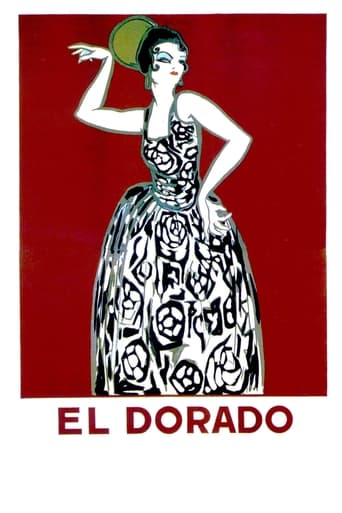
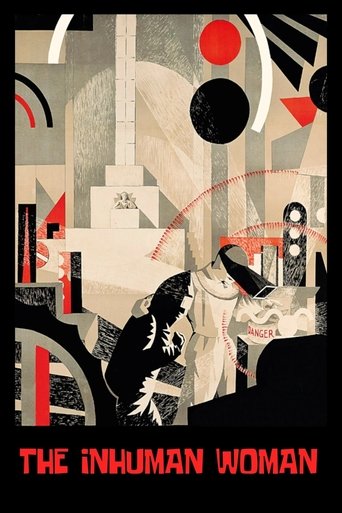
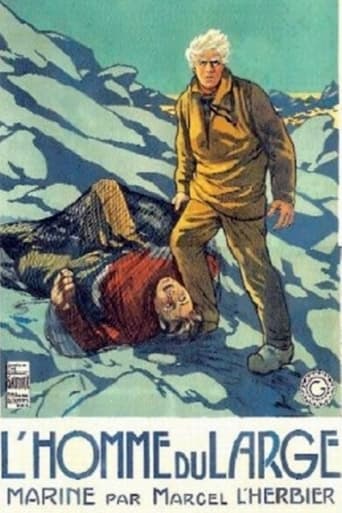
Although not widely known to general audiences today, Rose-France is significant in film history as an early demonstration of Marcel L'Herbier's artistic ambitions and as a landmark in the emergence of French impressionist cinema. Its importance lies in its attempt to elevate film into a poetic and symbolic art form, using the medium to articulate ideas about love, sacrifice, and nationhood in a way that was emotionally resonant for a postwar French public. The film helped establish L'Herbier's reputation as a modernist director willing to challenge narrative convention and visual realism, paving the way for later works such as Eldorado, L'Inhumaine, and L'Argent. In historical terms, it belongs to the lineage of films that helped define cinema as a serious artistic medium, one capable of expressing both private feeling and collective cultural identity.
Making Of
Rose-France emerged at a pivotal moment for French cinema, when the industry was recovering from the disruptions of World War I and looking for new aesthetic identity. Marcel L'Herbier, who would become one of the major figures of the French silent era, used the project to explore a more literary, impressionistic approach to film form. The production is notable for its ambition to translate poetic and patriotic ideas into visual terms, relying on stylized composition, symbolic imagery, and experimental camerawork rather than straightforward theatrical staging. Because the film was so different from mainstream popular fare of the period, it reportedly struck some contemporaries as overly fanciful, yet that very quality helped distinguish L'Herbier from his peers. The film's legacy lies in how it introduced a director whose later works would continue to push French cinema toward greater visual sophistication and modernism.
Visual Style
The cinematography is one of the film's defining features, with emphasis on expressive framing, stylized lighting, and camera movement designed to convey emotion and interiority. Rose-France is associated with early impressionist techniques that favored poetic distortion, symbolic composition, and a subjective visual approach rather than objective realism. The film reportedly employed many experimental camera methods for its time, contributing to its reputation as visually original and formally adventurous. Its imagery is said to function almost as visual verse, with scenes structured to evoke mood, memory, and allegory.
Innovations
Rose-France is notable for its early use of experimental visual techniques in a French feature film context. It is associated with impressionist cinema's emphasis on mood, subjectivity, and expressive form, which distinguished it from more literal narrative styles. The film's technical interest lies not in large-scale special effects but in the artistic use of the camera and editing to create poetic meaning. Its significance is therefore aesthetic and formal: it helped demonstrate how film could function as an impressionistic, emotionally suggestive medium.
Music
As a silent film, Rose-France would originally have been accompanied by live music in theaters, though no specific original score is reliably documented in the available reference material. Like many films of the period, its musical presentation likely varied by venue and exhibition context. Surviving references typically discuss the film in visual and historical terms rather than in relation to a single canonical score. Any modern presentations may use reconstructed or newly commissioned accompaniment, but no universally established soundtrack is known.
Memorable Scenes
- The film's symbolic presentation of Rose-France as an embodiment of the nation, linking her emotional life to the fate of postwar France.
- The lyrical sequence structure, in which visual motifs and expressive compositions carry the emotional weight more than conventional dialogue or action.
- The use of experimental camera techniques to transform ordinary dramatic moments into poetic, impressionistic images.
Did You Know?
- Rose-France is widely regarded as Marcel L'Herbier's first feature film and the work that announced him as a major stylistic innovator in French cinema.
- It is often cited as the second impressionist film in French film history, following Abel Gance's La Dixième symphonie (1918).
- The film is remembered less for conventional narrative than for its poetic, symbolic treatment of love and patriotism in the immediate postwar period.
- Its title character, Rose-France, functions as an allegorical figure as much as a dramatic protagonist, embodying the nation itself.
- The film's experimental visual style helped set the tone for L'Herbier's later, more celebrated silent films of the 1920s.
- Like many early French films of the period, it was made in a climate where filmmakers were trying to rebuild a distinctive national cinema after wartime disruption.
- Claude-France Aïssé, Jaque Catelain, and Baron Byron Khun de Prorok are among the cast credited in surviving databases and reference sources.
- The film's reputation today is largely historical and scholarly, as it is discussed for its place in the development of French avant-garde and impressionist filmmaking.
- It stands as an early example of cinema used explicitly as a poetic and patriotic expression rather than only as narrative entertainment.
What Critics Said
At the time of release, Rose-France appears to have divided opinion: its originality and poetic ambition were recognized, but its stylization and experimental nature were considered by some viewers too elaborate or fanciful. This mixed reception is consistent with many early avant-garde or impressionist works, which often gained admiration from artists and critics before earning broader appreciation. In later film-historical assessment, the film has been valued primarily as a foundational work in Marcel L'Herbier's career and as an important early example of French impressionist aesthetics. Modern critics and historians tend to view it less as a fully polished narrative success than as a crucial experiment in form, ambition, and national expression.
What Audiences Thought
Contemporary audience reception is generally described as uneven, with the film's highly poetic and unconventional style proving challenging for viewers accustomed to more straightforward dramatic storytelling. Its patriotic and romantic themes likely resonated with some postwar audiences, but the film's visual experimentation and symbolic approach were not universally accessible. Over time, the film's audience has shifted from general moviegoers to scholars, archivists, and silent-cinema enthusiasts who value it for its historical significance. Today it is appreciated mainly by viewers interested in early French art cinema and the evolution of impressionist film language.
Film Connections
Influenced By
- French symbolist literature
- Post-World War I patriotic art
- Early theatrical melodrama
- The emerging visual language of impressionist cinema
This Film Influenced
- Marcel L'Herbier's later silent films
- Subsequent French impressionist cinema
- Later poetic and symbolic art films in Europe
You Might Also Like
More Drama Films
View allMore from Marcel L'Herbier
View allFilm Restoration
The film is not widely available in mainstream circulation and is generally treated as a rare silent classic preserved for archival and scholarly viewing rather than as a commonly accessible title. Definitive public information about a complete surviving restoration is limited in standard reference sources, but it is not generally cited as a universally lost film. Its survival status is therefore best described as rare and archival, with availability dependent on film archives, retrospectives, or specialized silent-cinema collections.