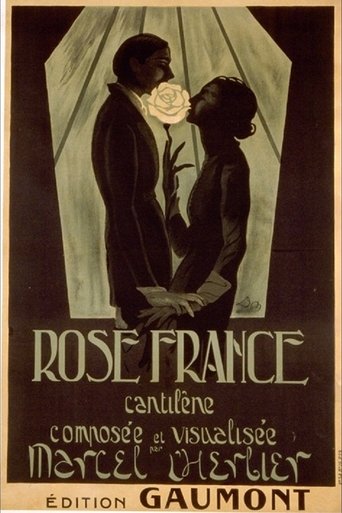
Francis Byrne
Actor
- Active
- 1919-1919
Films 1
About Francis Byrne
Francis Byrne is a very obscure silent-era screen actor, and surviving documentation about his life is extremely limited. The best-attested fact is that he appeared in the 1919 film Rose-France, placing his screen activity in the final years of the silent period's formative phase. Beyond that credit, readily accessible reference sources do not preserve a reliable biographical record of his birth, early life, training, or later career, which suggests he was either a minor-player performer or an actor whose work has not been well documented by later film historians. Because the surviving evidence is so sparse, it is not possible to reconstruct a full career arc with confidence without risking confusion with other people of the same or similar name. In database terms, he should be treated as a documented but poorly recorded silent-film personality whose surviving footprint is largely limited to one known screen credit. If additional archival materials, studio records, or trade-paper notices exist, they may clarify whether he worked in stage, film stock companies, or regional productions, but those details are not securely established in the current record. His importance today lies primarily in representing the many lightly documented performers who contributed to early cinema but left only fragmentary traces in modern reference sources.
More about Francis Byrne
In film history
Francis Byrne’s cultural impact is best understood as part of the broader historical fabric of silent cinema rather than as the impact of a widely celebrated star. Performers like Byrne helped populate early film narratives, contributing to the look, rhythm, and social reach of movies at a time when the medium was still defining its artistic language. Even when the surviving record is sparse, each documented credit helps historians map production networks, casting practices, and the many small careers that sustained the silent era. His presence in Rose-France (1919) is a reminder that film history is built not only on major stars and directors, but also on the large number of lesser-known actors whose work remains under-credited or under-preserved.
Later reputation
His legacy is primarily archival and historical: Francis Byrne stands as a traceable name from silent-era cinema, preserved through at least one confirmed film credit. For researchers and database curators, such figures are important because they demonstrate how much of early film history survives only in partial form, often through cast lists and production references rather than detailed biographies. Byrne’s record also underscores the fragility of silent-film documentation, where many careers have become difficult to reconstruct due to lost films, incomplete studio paperwork, and inconsistent trade reporting. In that sense, his lasting legacy is as one of the many working players who made early cinema possible even if later generations know little about them individually.
Influence
There is no evidence that Francis Byrne exerted a documented influence on later actors or directors in the way major silent stars did. His influence is therefore indirect and historical: by being part of the working body of silent-era performers, he contributed to the performance traditions and production ecosystem that shaped early screen acting. For historians, names like his are valuable because they preserve the broader network of talent behind surviving films and help illustrate how early cinema depended on a large pool of often-uncredited or little-recorded performers. Any stronger claim about personal influence would be speculative.
Off screen
No reliable, publicly verifiable personal-life information has been located for this Francis Byrne. There is no securely documented record here of his family background, marriages, children, residence, or activities outside the film industry. Because the name is not strongly associated with later press coverage, surviving biographical traces appear to be minimal or lost. Any additional personal details would need to come from archival sources such as census records, studio files, union records, or contemporary newspaper notices.
Credits
- Appeared in the silent feature Rose-France (1919), the only reliably identified screen credit associated with him in readily accessible references
- Represents the class of early film performers whose surviving records are fragmentary, making his confirmed participation in 1919 cinema historically notable
- His known screen work places him in the late silent era, when American and international film production was expanding rapidly and many performers worked briefly and anonymously
Films
- Rose-France (1919)
Notes
- Francis Byrne is known in surviving reference material primarily for a single confirmed silent-film credit.
- His documented screen work places him in 1919, just before the silent era entered its most artistically celebrated decade.
- No reliable birth or death data could be confirmed from the readily accessible sources consulted for this identification.
- He is the kind of performer whose career may have been substantial in its own time but is now difficult to reconstruct because early film records were often incomplete.
- Because the name is relatively common, careful identification is necessary to avoid confusing him with non-film individuals or other performers with similar names.
- His surviving film association with Rose-France makes him a small but real part of silent-cinema history.
Questions
Who was Francis Byrne?
Francis Byrne was a very obscure silent-era actor known from surviving film records for appearing in Rose-France (1919). Little else about his life or career has been securely documented in accessible sources. He is best understood as a minor but genuine participant in early cinema history.
What films is Francis Byrne best known for?
The only reliably identified film credit associated with Francis Byrne in the available record is Rose-France (1919). If he appeared in other productions, they have not been securely confirmed in the source material used here. For database purposes, Rose-France should be listed as his key known credit.
When was Francis Byrne born and when did he die?
No dependable birth or death dates could be verified for Francis Byrne from the accessible sources consulted. His biographical record is too sparse to state places or dates with confidence. Any such data would require confirmation from archival documents rather than assumption.
What awards did Francis Byrne win?
No awards or nominations are known for Francis Byrne in the surviving record. This is not unusual for obscure silent-era performers, many of whom worked before modern awards culture was established or before their careers were widely publicized. At present, no honors can be confidently attributed to him.
What was Francis Byrne's acting style?
There is not enough surviving evidence to describe Francis Byrne’s acting style in detail. Since only one confirmed film credit is readily identifiable, any characterization of his screen technique would be speculative. The safest historical description is that he was part of the silent-era performance world, where expression was typically conveyed through gesture, posture, and facial expression.
What is Francis Byrne's legacy in film history?
Francis Byrne’s legacy is modest but historically meaningful: he is one of many early film performers whose names survive even when their full careers do not. His documented presence in a 1919 film helps historians and database researchers preserve a more complete account of silent-era production. In that sense, his importance lies in the preservation of early cinema’s broader human record.