Le Bercail
"null"
Plot
Le Bercail follows Evelyne, a young woman who has been emotionally and socially shaken by a traumatic relationship with a young writer. Seeking refuge, she attempts to return to the stability and warmth of her family home, the "bercail" or sheepfold implied by the title, but she finds that reconciliation is not simply a matter of physically going back. The film traces her struggle to re-establish trust with her family and to recover a sense of belonging after personal upheaval. Marcel L'Herbier frames this domestic reconciliation as both an intimate psychological drama and a moral investigation into whether home can truly heal the wounds caused by betrayal and disillusionment.
About the Production
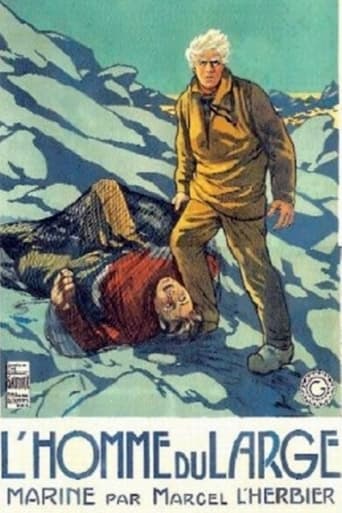
Le Bercail was directed by Marcel L'Herbier in the immediate post-World War I period, when French cinema was undergoing artistic renewal and experimenting with more refined visual and psychological storytelling. Detailed production records for this specific film are scarce in surviving reference sources, which is typical of many French silent-era features from the 1910s. The film is associated with the early screen careers of several performers closely connected to L'Herbier's work, including Marcelle Pradot and Jaque Catelain, both of whom would remain important figures in his later films and in his artistic circle. No reliable evidence has been found in accessible references for a precise budget, box office total, or officially documented shooting locations.
Historical Background
Le Bercail was released in 1919, just after the end of World War I, at a moment when France was rebuilding culturally, economically, and emotionally. French filmmakers of the period were working in a cinema landscape reshaped by wartime disruption, the loss of personnel, and the increasing dominance of foreign imports, especially from the United States. L'Herbier emerged in this environment as one of the major voices seeking to define a distinctively modern French cinema, one that could combine literary seriousness, visual sophistication, and psychological depth. The film's concern with trauma, refuge, and the possibility of return resonates strongly with a society in which ideas of home, family, and stability had been profoundly unsettled by the war.
Why This Film Matters
Although Le Bercail is not among Marcel L'Herbier's most famous titles, it is significant as part of the formative body of work through which he helped shape postwar French silent cinema. The film illustrates the director's recurring interest in emotional modernity, social behavior, and the tension between individual experience and familial or domestic order. Its importance is also archival: it represents the kind of early French silent feature whose survival, documentation, and scholarly visibility are often limited, making each preserved reference valuable for film history. For viewers and researchers, it offers a glimpse into the stylistic and thematic groundwork that would later support L'Herbier's more celebrated achievements.
Making Of
Le Bercail was made during a pivotal stage in Marcel L'Herbier's development as a filmmaker, when he was beginning to refine the elegant staging and psychological emphasis that would characterize his mature silent work. The surviving record suggests a production rooted in the theatrical and literary culture of the time, with performers such as Marcelle Pradot and Jaque Catelain helping establish the collaborative ensemble that L'Herbier often favored. Specific anecdotes about shooting, sets, or on-set difficulties are not well documented in accessible sources, which is common for French productions from 1919. What can be said with confidence is that the film sits within L'Herbier's broader effort to elevate cinema as an art form capable of expressing interior conflict, social refinement, and emotional ambiguity.
Visual Style
The film belongs to the period when L'Herbier was increasingly attentive to composition, gesture, and the visual articulation of interior states. While precise shot-by-shot analysis is limited by the scarcity of accessible prints and documentation, his early films typically favored carefully arranged framing, expressive blocking, and a polished visual style that drew on both theatrical staging and emerging cinematic realism. In a domestic drama like Le Bercail, cinematography would have been central to conveying shifts in emotional distance, family space, and psychological confinement. The visual approach is therefore best understood as subtle and character-centered rather than technically flamboyant.
Innovations
No specific technical innovation is firmly documented for Le Bercail in surviving standard references. Its value lies instead in its contribution to the developing expressive language of French silent drama, especially the use of performance, mise-en-scène, and visual rhythm to convey psychological conflict. As an early L'Herbier film, it forms part of the filmmaker's progression toward more elaborate visual design and narrative sophistication. Any technical interest today is primarily historical and stylistic rather than tied to a single famous invention.
Music
As a 1919 silent film, Le Bercail did not have an original synchronized soundtrack. Any music would have been performed live during exhibition, often by a solo pianist, small ensemble, or theater orchestra depending on the venue. No fixed original score is widely documented in accessible reference materials for this title. Modern screenings, if available, may use newly assembled accompaniment rather than a historically preserved cue sheet.
Famous Quotes
null
Memorable Scenes
- Evelyne's hesitant attempt to re-enter the family sphere after her emotional ordeal, a moment that embodies the film's concern with whether home can still function as sanctuary.
- The central reconciliation arc, in which private suffering is contrasted with the moral expectations of family life and social reintegration.
Did You Know?
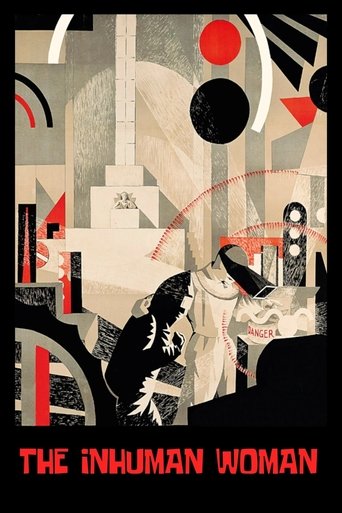
- Le Bercail is an early Marcel L'Herbier film from the period before he made some of his most celebrated silent works such as El Dorado and L'Inhumaine.
- The title means "the sheepfold" or, by extension in French usage, "the home base" or place of return, which fits the film's theme of seeking refuge within family.
- The film stars Marcelle Pradot, who later became associated with Marcel L'Herbier both professionally and personally.
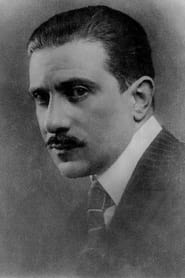
- Jaque Catelain appears in the film; he became one of L'Herbier's most frequent collaborators and a recurring presence in his cinema.
- Because many silent French films were not systematically archived, some production details for Le Bercail remain difficult to verify from surviving documentation.
- The film belongs to L'Herbier's early phase, when he was already moving toward a more psychologically nuanced and visually controlled style that would later define his reputation.
- Available modern databases identify the film by the Wikidata and TMDb entries, but comprehensive surviving publicity material is limited.
- The plot centers on domestic reconciliation rather than melodramatic spectacle, which is characteristic of L'Herbier's interest in modern emotional realism.
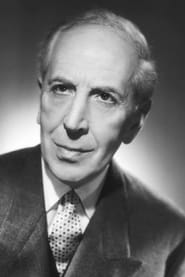
- The cast list includes Paul Capellani, linking the film to one of the notable acting families of early French cinema.
- As with many silent films of its era, the original musical accompaniment would have varied from venue to venue and is not preserved as a fixed score in most references.
What Critics Said
Contemporary critical reception is difficult to reconstruct in full because detailed reviews and trade coverage for this specific title are not widely preserved in accessible sources. Marcel L'Herbier was already developing a reputation as a serious and ambitious filmmaker in the French press of the period, so the film would likely have been viewed within that broader context of artistic aspiration rather than as a mass-market spectacle. Modern critical discussion tends to focus less on Le Bercail as a standalone canonical masterpiece and more on its importance within L'Herbier's early career and the evolution of French silent drama. As a result, the film is better regarded today as an historically revealing work than as a frequently reappraised classic.
What Audiences Thought
No reliable audience-survival data, box office accounting, or large-scale reception records have been found for Le Bercail. Like many French silent dramas of 1919, its audience response would have depended heavily on local exhibition conditions, intertitles, and the live musical accompaniment supplied by each theater. The film likely reached an audience accustomed to emotionally serious melodramas and domestic dramas, but there is no documented evidence of exceptional popular success or failure in the surviving sources consulted.
Film Connections
Influenced By
- French literary drama
- Postwar melodramatic fiction
- Early 20th-century stage naturalism
This Film Influenced
- Later Marcel L'Herbier domestic dramas
- French psychological silent dramas of the 1920s
You Might Also Like
More Drama Films
View allMore from Marcel L'Herbier
View allFilm Restoration
The film appears to be incompletely documented in surviving public references, and no widely cited restoration or complete preservation status is readily available from standard online sources. It should be treated as a rare early silent French film with limited archival visibility until a specific archive record or preserved element can be confirmed.