


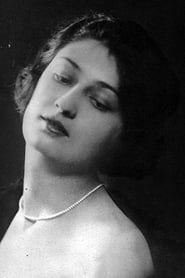


The Inhuman Woman
"A singer who keeps every suitor at bay"
Keys: Space play/pause · ←/→ 10s · F fullscreen · M mute · </> speed
About this film
Famous singer Claire Lescot keeps suitors at arm's length until a young Swedish scientist's sincerity moves her. Marcel L'Herbier's avant-garde drama pairs modernist design with a fatal romance.
Cast & crew
More films like this


More Drama films
View all →







More from Marcel L'Herbier
View all →
More about this film
About the production
Release dateDecember 12, 1924 (France)
Box officeLimited commercial success, primarily shown in art cinemas and to intellectual audiences
ProductionCiné-Studio, Société des Films Marcel L'Herbier
Filmed inParis, France, Studios de Billancourt, Claire Lescot's villa set at Studios de la Victorine
The film was a collaborative effort between L'Herbier and numerous prominent artists of the time, including architect Robert Mallet-Stevens who designed the futuristic sets, painter Fernand Léger who created mechanical sequences, and composer Darius Milhaud who contributed to the musical score. The production took over a year to complete due to its ambitious artistic vision and technical innovations. The famous laboratory scenes were created in collaboration with actual scientists to ensure authenticity.
Themes
Emotional detachment and redemptionThe conflict between art and scienceModern alienation in the machine ageThe power of art to transform human consciousnessGender roles and female independence
Themes & topics
opera singerscientistsuicidetransformationfuturistic villaart decoavant-gardeemotional coldnessredemptionscientific experimentparis1920ssilent filmexpressionismmodernism
Historical background
The Inhuman Woman (1924) reached audiences during the silent feature period, when exhibitors mixed shorts and features on the same program.
Why this film matters
Historians retain The Inhuman Woman as a record of how filmmakers in 1924 addressed popular genres.
Making of
The production of 'L'Inhumaine' was a landmark collaboration between cinema and other arts, embodying the concept of 'total art' (Gesamtkunstwerk) popular in early 20th century avant-garde circles. Director Marcel L'Herbier assembled a dream team of contemporary artists: architect Robert Mallet-Stevens created the stunning Art Deco sets that represented modernity and technological progress, while painter Fernand Léger designed mechanical sequences that reflected the machine age aesthetic. The filming process was revolutionary for its time, utilizing multiple cameras, complex lighting setups, and innovative editing techniques. The famous laboratory sequence required the construction of elaborate mechanical props and the use of prisms and mirrors to create abstract visual effects. Georgette Leblanc, a celebrated opera singer, insisted on performing her own musical numbers, which required the production to accommodate her professional schedule. The film's most challenging scene involved the recreation of a scientific experiment where a machine captures human emotions, requiring extensive special effects work that pushed the boundaries of 1920s cinema technology.
What critics said
Trade coverage from 1924 treated The Inhuman Woman as program material; later writers evaluate it through preservation and genre context.
Did you know?
- The film's original French title 'L'Inhumaine' translates to 'The Inhuman Woman' or 'The Inhuman One'
- Georgette Leblanc, who played Claire Lescot, was actually a famous opera singer in real life, adding authenticity to her performance
- The futuristic villa designed by Robert Mallet-Stevens became an iconic example of Art Deco architecture and influenced many subsequent designs
- Fernand Léger, the famous Cubist painter, created the mechanical ballet sequences that appear in the film's laboratory scenes
- The film featured one of the earliest uses of superimposition techniques to create dream sequences and psychological effects
- Claire Lescot's costumes were designed by Paul Poiret, a leading French fashion designer of the era
- The film was initially criticized for being too avant-garde but later recognized as a masterpiece of French impressionist cinema
- Darius Milhaud composed original music for the film, incorporating jazz elements which were revolutionary for classical cinema scores
- The maharajah character was played by Philippe Hériat, who later became a renowned novelist under the pseudonym Stephen Hudson
- The film's restoration in the 1990s revealed previously unseen details in the elaborate set designs and special effects
Awards & recognition
- Medal of Honor, International Exhibition of Modern Decorative Arts, Paris 1925
Visual style
The cinematography, led by cinematographers Georges Lucas and Jimmy Berliet, was revolutionary for its time, employing innovative techniques that pushed the boundaries of visual storytelling. The film utilized complex lighting setups to create dramatic contrasts and psychological depth, particularly in the laboratory sequences where geometric patterns and abstract compositions reflected the film's modernist aesthetic. The camera work featured unusual angles and movements, including tracking shots that followed characters through the elaborate Art Deco sets, creating a sense of fluid movement through space. The use of superimposition and multiple exposure techniques allowed for the visualization of psychological states and dream sequences. The film's visual style incorporated elements of Cubism and Futurism, with fragmented compositions and dynamic movement that reflected the machine age aesthetic. The color tinting of different scenes added emotional resonance, with each hue carefully chosen to enhance the narrative and thematic content.
Innovations
The film pioneered numerous technical innovations that would influence cinema for decades. It featured some of the earliest uses of superimposition for psychological effect, creating dreamlike sequences that visualized characters' inner states. The mechanical ballet sequences required complex camera movements and multiple exposures to create abstract patterns of light and motion. The laboratory scenes utilized prisms, mirrors, and special filters to create otherworldly visual effects that represented scientific experimentation. The film also experimented with rapid editing techniques and rhythmic montage, influenced by Soviet montage theory. The production employed elaborate miniature effects and matte paintings to create the futuristic settings. The lighting design was particularly innovative, using multiple light sources and colored gels to create dramatic mood effects. These technical achievements were not merely decorative but served the film's thematic concerns about the relationship between humanity, art, and technology.
Music
The original musical score was composed by Darius Milhaud, one of the leading composers of the French modernist school, incorporating elements of jazz, which was revolutionary for a classical film score of the period. The music featured unconventional instrumentation and rhythmic patterns that reflected the film's modernist themes. For the opera sequences within the film, actual operatic pieces were performed by Georgette Leblanc, drawing on her professional experience as a singer. The soundtrack also included mechanical sounds and experimental audio elements that complemented the film's technological themes. In later restorations, new scores have been composed by contemporary musicians who have sought to honor Milhaud's innovative approach while utilizing modern recording techniques. The film's music represents an important moment in the history of film scoring, demonstrating how cinema could incorporate avant-garde musical concepts to enhance its artistic impact.
Famous quotes
I am not inhuman. I am simply... undiscovered.
Science can capture the image of a soul, but only art can give it meaning.
In this age of machines, we must remember we are still human.
The greatest tragedy is not death, but living without feeling.
Music is the mathematics of emotion, science is the emotion of mathematics.
Memorable scenes
- The opening sequence introducing Claire Lescot's futuristic villa, with its sweeping camera movements and Art Deco architecture that established the film's modernist aesthetic
- The mechanical ballet sequence in the laboratory, where abstract patterns of light and motion create a hypnotic visualization of scientific experimentation
- The concert scene where Claire is booed by the audience, featuring dramatic close-ups and rapid editing that convey her psychological breakdown
- The climactic scene in the tomb where Claire experiences emotional transformation through the scientist's invention, utilizing superimposition and symbolic imagery
What audiences thought
The film initially struggled to find a broad audience, appealing primarily to intellectuals, artists, and cinema enthusiasts who appreciated its artistic innovations. General audiences of the 1920s found it challenging and abstract, leading to limited commercial success. However, it developed a cult following among avant-garde circles and was frequently screened at art cinemas and film societies. In subsequent decades, as appreciation for classic and avant-garde cinema grew, the film found new audiences through film festivals, museum screenings, and cinematheque presentations. Modern audiences, particularly those interested in film history and artistic cinema, have embraced the work for its visual beauty and historical significance. The film's restoration and availability on home video have further expanded its reach to contemporary viewers interested in the foundations of cinematic art.
Film connections
Influenced by
- German Expressionist cinema
- French Impressionist film movement
- Cubist painting
- Futurist art
- Dadaism
- Surrealism
- Opera and theatrical tradition
- Scientific advances of the 1920s
- Art Deco design movement
- Literary works by Marcel Proust
This film influenced
- Metropolis (1927)
- The Blue Angel (1930)
- L'Age d'Or (1930)
- Alphaville (1965)
- Blade Runner (1982)
- The Fifth Element (1997)
- The Science of Sleep (2006)
- The Shape of Water (2017)
Film restoration
The film has been preserved and restored by the Cinémathèque Française, with a major restoration completed in 1996 that utilized original nitrate materials and modern digital technology. While some sequences remain incomplete, the majority of the film survives in good condition. The restored version premiered at the Cannes Film Festival and has been screened at major cinematheques and museums worldwide. The restoration revealed previously unseen details in the elaborate sets and special effects, enhancing appreciation of the film's artistic achievements. Original elements are stored in climate-controlled facilities at the French Film Archives.
Where to watch
- Available on Blu-ray from Criterion Collection
- Streaming on The Criterion Channel
- Available for streaming on MUBI
- Can be purchased or rented on Amazon Prime Video
- Available through Kanopy (library streaming service)
- Screenings occasionally held at cinematheques and film museums
- Available on DVD from various specialty distributors